
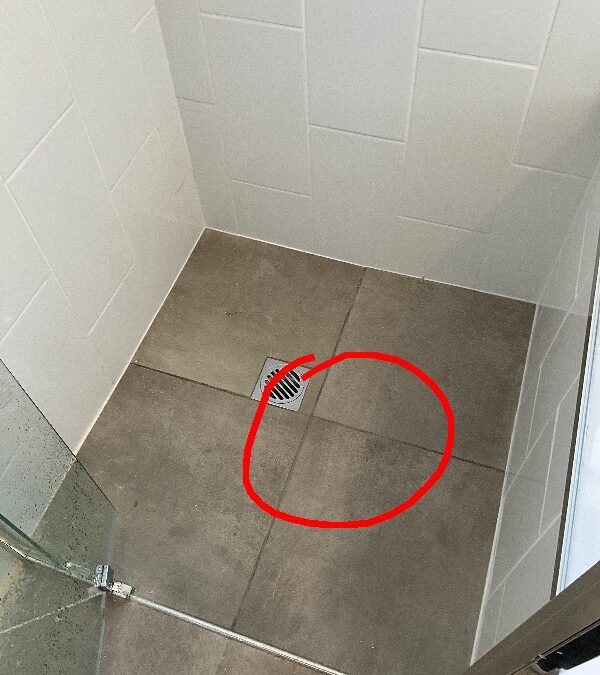
Water pooling in a new shower is worth raising before handover, especially when the same area repeatedly holds water or water escapes onto the bathroom floor. Record where it collects and how the shower drains during normal use. The next step is to establish whether the concern relates to the finished floor, the waste or the shower enclosure, then arrange the appropriate assessment and repair.
A photograph of wet tiles alone does not tell you the cause. This guide explains what to look for, how to describe shower drainage problems and what a useful defect record should contain, with examples from GoInspect handover inspections.
Is water pooling in a new shower a defect?
A shower needs to drain as intended. A repeatable area of standing water deserves assessment rather than being dismissed because the tiles look neat. Equally, the presence of droplets or a wet surface is not enough by itself to identify an installation fault. The location, behaviour of the water and the requirements applying to that shower matter.
The photograph at the top of this article accompanies a GoInspect finding of water pooling in a bathroom shower. The inspector recorded it as a tiling item. In another inspection, the report recorded pooling in the shower area beside a bath, shown below.
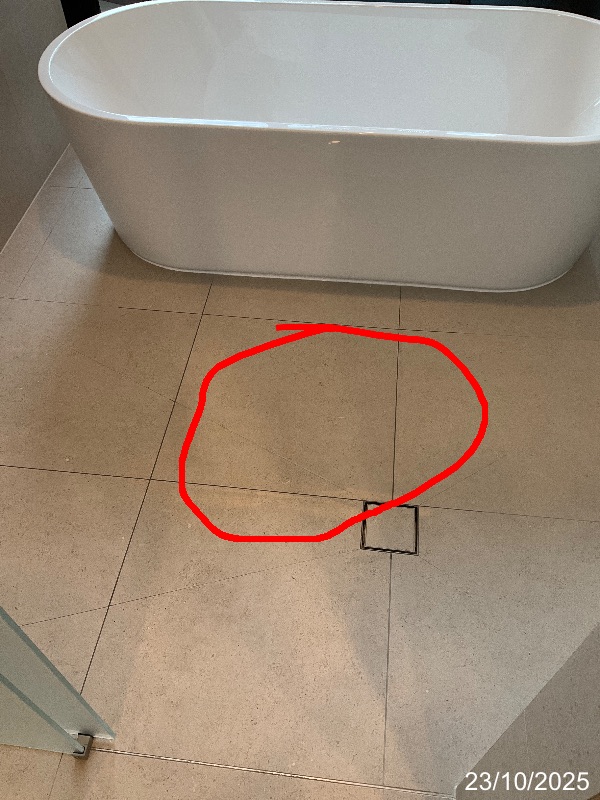
Both reports identify the observed condition and its location. Neither supplies a measured floor gradient or a confirmed concealed cause. That is enough to raise a specific item for assessment; it is not a reason to invent a measurement or prescribe the same repair for every shower.
Shower floor falls and slow drainage: what needs checking?
The fall is the slope that directs water towards the waste. An assessment of shower floor drainage should consider the finished floor and the waste together: where the water collects, whether it reaches the outlet and how the outlet drains.
Ask the builder or inspector to identify the floor-fall requirements applying to your particular shower and explain how these have been checked. The building’s approval, shower design and applicable construction requirements need to be considered. Avoid deciding the result from a gradient quoted online for a different bathroom arrangement.
Describe the behaviour rather than guessing the cause. For example, “water remains beside the back wall after the shower is switched off” is more useful than “the whole bathroom has no fall”. If water builds up around the waste while the shower is running, record that separately from a patch remaining elsewhere afterwards.
Ask the builder what was checked and what work is proposed. Where floor levels, the waste or concealed drainage need investigation, the assessment should use the appropriate trade and applicable requirements. A surface photograph cannot establish the gradient of pipework below the floor.
A leaking shower screen is a separate finding
Water outside the shower may be escaping at the screen, a door junction or another part of the enclosure. Record where it first appears during normal use, with the door in its normal position. An open walk-in shower also needs to be assessed against its actual design; it should not automatically be judged as a fully enclosed recess.
Section 14.3 of the QBCC Standards and Tolerances Guide identifies a component allowing a fully enclosed shower recess to leak during normal use as defective. This makes the distinction between normal use and deliberately spraying water into an opening important.
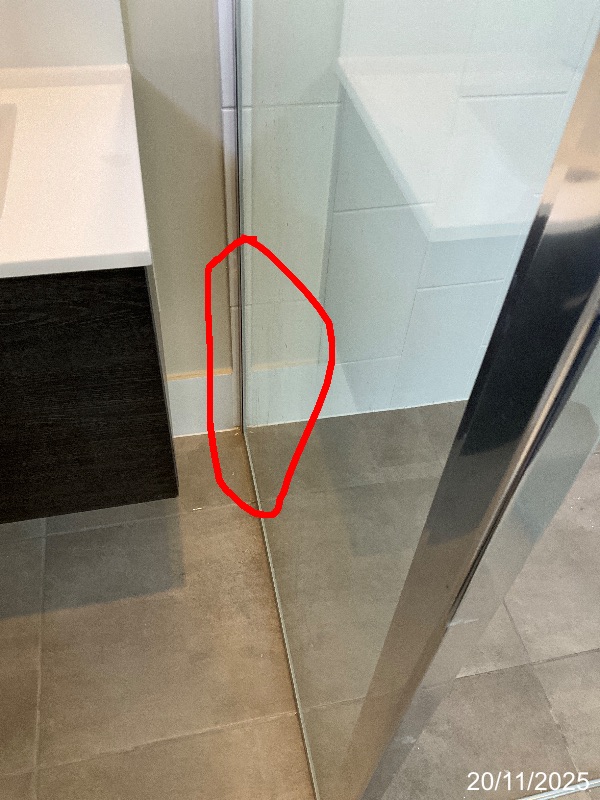
In one GoInspect report, pooling and a leaking screen were separate items in the same ensuite. The pooling was allocated to the tiler; the screen leak was allocated to the screen trade. Keeping them separate gives the builder two clear concerns to coordinate, rather than one vague request to “fix the shower”.
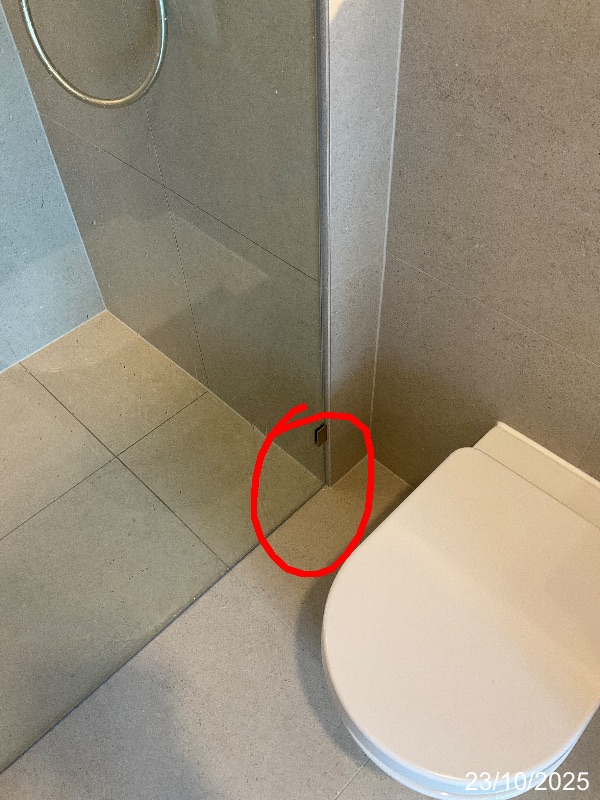
The second screen example shows why the exact position matters. Tell the builder which screen and which junction are affected. Trade allocation helps route the work; it does not, on its own, decide the cause or contractual responsibility.
What to record before handover
Use this short shower defect checklist during an authorised walkthrough or ordinary use. Keep the original photographs and attach the relevant items to your written list.
- Location: identify the bathroom or ensuite and the position relative to the waste, wall or screen.
- Pooling: photograph the affected floor area and note when the water was used and when the photograph was taken.
- Drainage: note water building up, draining slowly or backing up during normal use.
- Escaping water: record where it first appears outside the enclosure and whether the door was closed.
- Visible unfinished work: list missing grout, incomplete silicone or damaged components separately.
- Other effects: photograph dampness or swelling in adjoining areas and raise it promptly.
Do not block the waste, flood the bathroom or remove fittings to demonstrate a problem. Wipe up escaped water once it has been safely recorded. If there is active leakage or developing damage, seek assistance promptly rather than continuing to use the shower to gather more evidence.
Does shower ponding prove waterproofing failure?
No. Pooling, a screen leak and failure of a concealed waterproofing system are different findings. More than one concern may exist, but the visible symptom does not prove the hidden cause. A finished-home inspection cannot certify the membrane beneath the tiles.
If there is suspected water entry into a wall, floor or adjoining room, further investigation may be needed under a separately agreed scope. Our wet-area waterproofing guide explains what remains concealed after tiling. For leaks at taps, toilets and waste connections, use the broader new-home plumbing defect checklist.
After the builder repairs the shower
Keep the original defect number, the builder’s explanation and a record of the work completed. Check whether the original pooling or leakage recurs during normal use, and keep unresolved floor and screen items separate. Fresh silicone or a tidy finish should not replace checking the concern that was reported.
A GoInspect handover inspection records visible, safely accessible workmanship concerns within the agreed scope. Tell us about shower drainage or leakage concerns when booking, so any need for further investigation can be discussed. You can request an inspection quote once the home is substantially finished and ready to assess.
If the concern appears after moving in, notify your builder promptly in writing. Check QBCC’s current defective-work guidance for Queensland eligibility and time limits rather than waiting for a maintenance anniversary.