
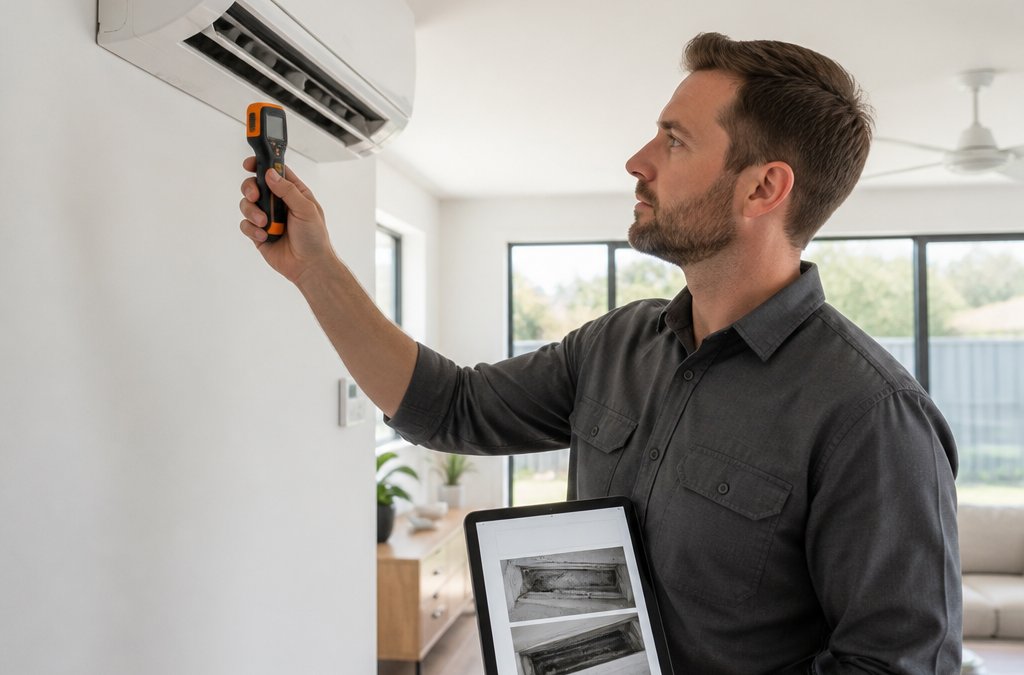
Many new homes in South East Queensland pass the eye test at handover. The walls are painted, the tiles are level, and the kitchen works. Then the first hot week arrives in January, the bedroom split system runs constantly without cooling the room, and the bathroom fan sounds loud while barely moving any air. Air conditioning and mechanical ventilation defects are among the most common faults we find, and they are the ones buyers are least likely to test properly on the day. Here is what to check before you sign off, and why it matters more in a humid subtropical climate.
Table of Contents
- Quick Takeaways
- Why Air Conditioning Defects Get Missed at Handover
- Split System Checks That Take Ten Minutes
- Ducted Systems: What You Cannot See Without Testing
- Mechanical Ventilation Inspection for Bathrooms, Laundries and Kitchens
- Comparing Inspection Approaches at Handover
- Assigning Air Conditioning Defects to the Right Trade
- Installation Mistakes Builders Often Miss
- Booking a Handover Inspection in South East Queensland
- Frequently Asked Questions
- References
Quick Takeaways
| Key Insight | Explanation |
|---|---|
| Test every system, not just the thermostat | Run each split or ducted system on cool, and on heat if it is reverse-cycle, for at least 15 minutes. Then check that the air at each outlet is clearly colder or warmer than the room. |
| Test condensate drainage with water | Pour water into the drain tray where access allows and confirm it flows steadily to the discharge point with no pooling, gurgling or backflow. |
| Check the outdoor unit is level, fixed and clear | Look for clearances on every side the manufacturer specifies, secure fixings, and a location that does not recirculate hot air or push noise onto a neighbour or bedroom window. |
| Ask for the commissioning record | Request the installer’s commissioning sheet. Use it to compare against what you measure, not as a replacement for your own testing. |
| Run every exhaust fan and feel the outlet | Bathroom, laundry and rangehood fans should all move air at the external vent or cowl. A fan that runs but moves no air is a defect. |
| Photograph each defect and name the trade | Date-stamped photos plus a named responsible trade shorten the rectification cycle and stop items bouncing between subcontractors. |
Why Air Conditioning Defects Get Missed at Handover
A new air conditioner almost always cools a room when it is first switched on. The problem is that handover inspections often happen on mild days, or after the builder has run the system briefly to pass commissioning. A unit that looks fine at 22 degrees can struggle badly when Brisbane hits 33 degrees and the house holds heat all afternoon.
Mechanical ventilation has the same blind spot. Bathroom fans, laundry exhaust and rangehood ducts are hidden behind linings and ceilings once the job is closed up, so a fault often only shows when the home is being lived in. By then, the window for the builder to fix it is already narrowing.
In practice, the defects we report most often in this area are not dramatic. They are small installation shortcuts that reduce performance: a drain line that does not fall, a fan that vents into the roof space, or a ducted outlet that was never balanced. Each one is cheap to fix before handover and expensive to chase afterwards.
A split system that cools a room on a mild day tells you very little about how it will perform on a 35 degree afternoon.
This is why a handover inspection should include functional testing, not just a visual walk-through. Running each system under load, checking the output at the vents, and confirming that every exhaust fan actually moves air will catch problems that a buyer would otherwise discover in their first summer.
Split System Checks That Take Ten Minutes
Split systems are the most common air conditioner type in Australia, according to CHOICE, and they are typically used for a room or open-plan area up to about 60m2. The units themselves are priced from $600 to $5500 before installation, which is why installation quality often matters more than the brand on the box. A mid-range unit with a careful install will outperform a premium unit with a rushed one.
Indoor unit mounting and clearances
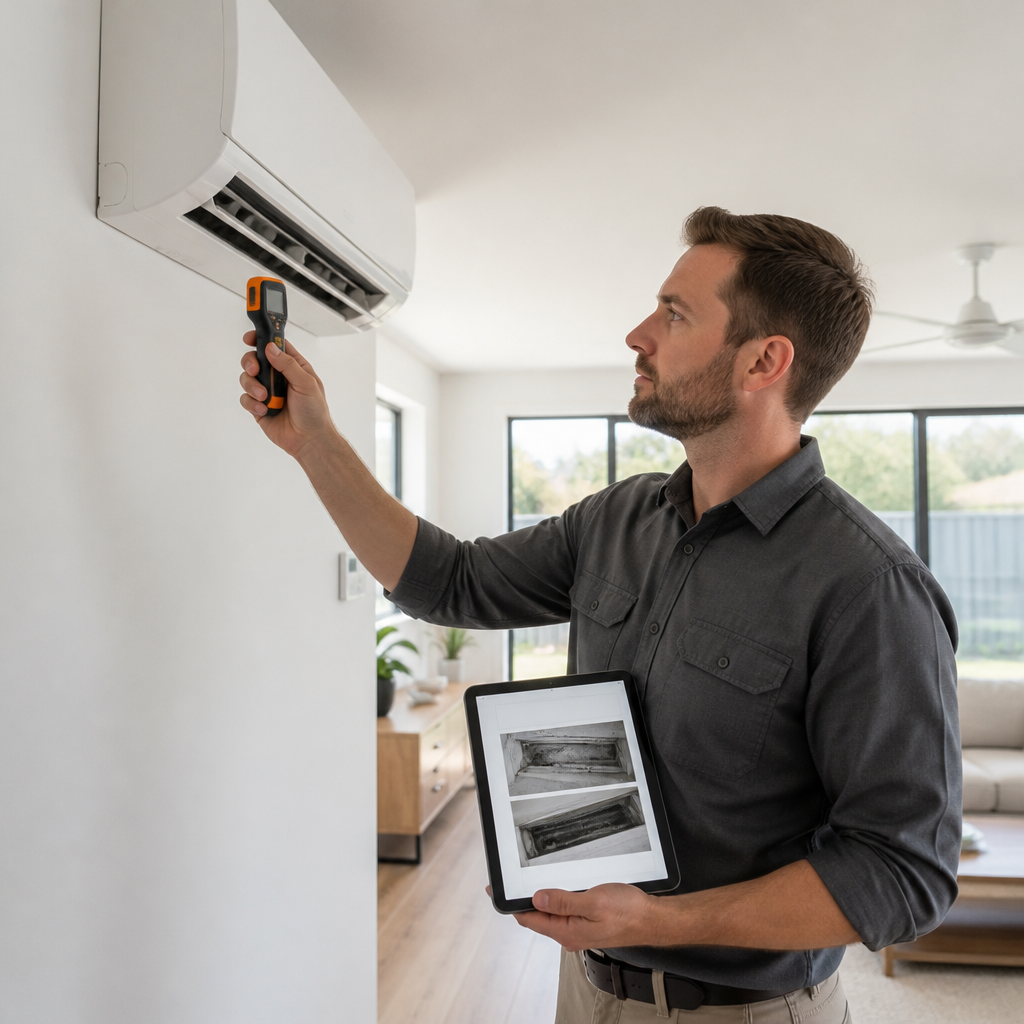
Check that the indoor unit is level, securely mounted, and has the clearances the manufacturer specifies. A unit that sits slightly out of level can drain poorly and rattle, and one mounted too close to a ceiling can restrict airflow. Watch the louvres while the system runs, because a vane that does not move or rattles is a warranty issue waiting to happen.
Run the unit on cool, then heat if it is reverse-cycle, and feel the air at the outlet after about fifteen minutes. The temperature difference should be obvious, and the airflow should be even across the full width of the louvre. If the air feels weak on one side, note it and ask the installer to check.
Pro tip: Bring a basic thermometer if you have one. Measuring the outlet air temperature gives you a number to compare with the one the installer quotes, rather than a feeling that the room is cooler.
Condensate drainage
Drainage is where we see the most avoidable faults on split systems. Typical problems include drain lines with no fall, missing traps where the design calls for them, and no overflow tray when the unit is not hung correctly. Some installs discharge condensate into gutters or onto paving, which causes staining, pooling and, over time, damage to fascias.
Test it yourself where access allows. Pour a cup or two of water into the drain tray and watch where it goes. It should flow steadily to the discharge point without pooling, gurgling or backing up.
Outdoor unit placement and airflow
The outdoor unit needs clear airflow on the sides the manufacturer specifies, a level base, and secure fixings. Units wedged into corners, placed beside a bedroom window, or crowded against a boundary are common complaints. Hot air recirculating back into the condenser is one reason a system struggles on the hottest days.
Also check where the noise goes. An outdoor unit under a bedroom window or against a shared fence can become a neighbour dispute within weeks of moving in, and that is a conversation nobody wants to have during their first summer.
Ducted Systems: What You Cannot See Without Testing
Ducted systems use a central unit, usually in the roof space, with air ducts running to outlets and sensors in each room. CHOICE puts ducted systems at from $9000 fully installed, and notes they can easily reach $15,000 or more. At that cost, a buyer is entitled to see every outlet working, and a visual check of the ceiling grilles tells you very little.
Ceiling-hidden ductwork
You cannot see most of the ducting, so the evidence is at the outlets. Hold your hand over each room’s supply outlet while the system runs and check that air flows from all of them. An outlet that is barely cool or warm, or one that never seems to open, often points to a disconnected or crushed duct joint, which will only get worse with use.
Ask whether the ducts were pressure tested or inspected before the ceiling was closed. If the answer is no, the first real check usually happens after the plaster is finished, and the repair becomes a cut-out job rather than a quick fix.
Return air paths and filters
Ducted systems need a return path for air to get back to the unit. Rooms with closed doors and no transfer grille or door undercut can starve the system, leaving bedrooms warm while the living area becomes overcooled. Check that doors have adequate clearance and that return grilles are present and unobstructed.
Filters should be accessible and fitted correctly. Access panels placed in awkward ceiling spots often end up never being cleaned, which reduces airflow and efficiency within a year.
Room-by-room airflow and balancing
A ducted system that cools the hallway and living area but leaves a corner bedroom warm is usually a balancing problem, not a capacity problem. Ask the installer what dampers were set and why, and check that any zone controls behave as described. It is common to find one room with a damper set fully closed and no record of who set it.
Mechanical Ventilation Inspection for Bathrooms, Laundries and Kitchens
Mechanical ventilation is the fan-driven air exchange that stops bathrooms, laundries and kitchens from holding moisture and cooking odours. In South East Queensland’s humid climate, a poorly performing exhaust fan can mean mould on bathroom ceilings and damp in wardrobes within the first wet season. A fan that switches on but moves little air is a fault, even though it technically works.
Exhaust fan airflow and noise
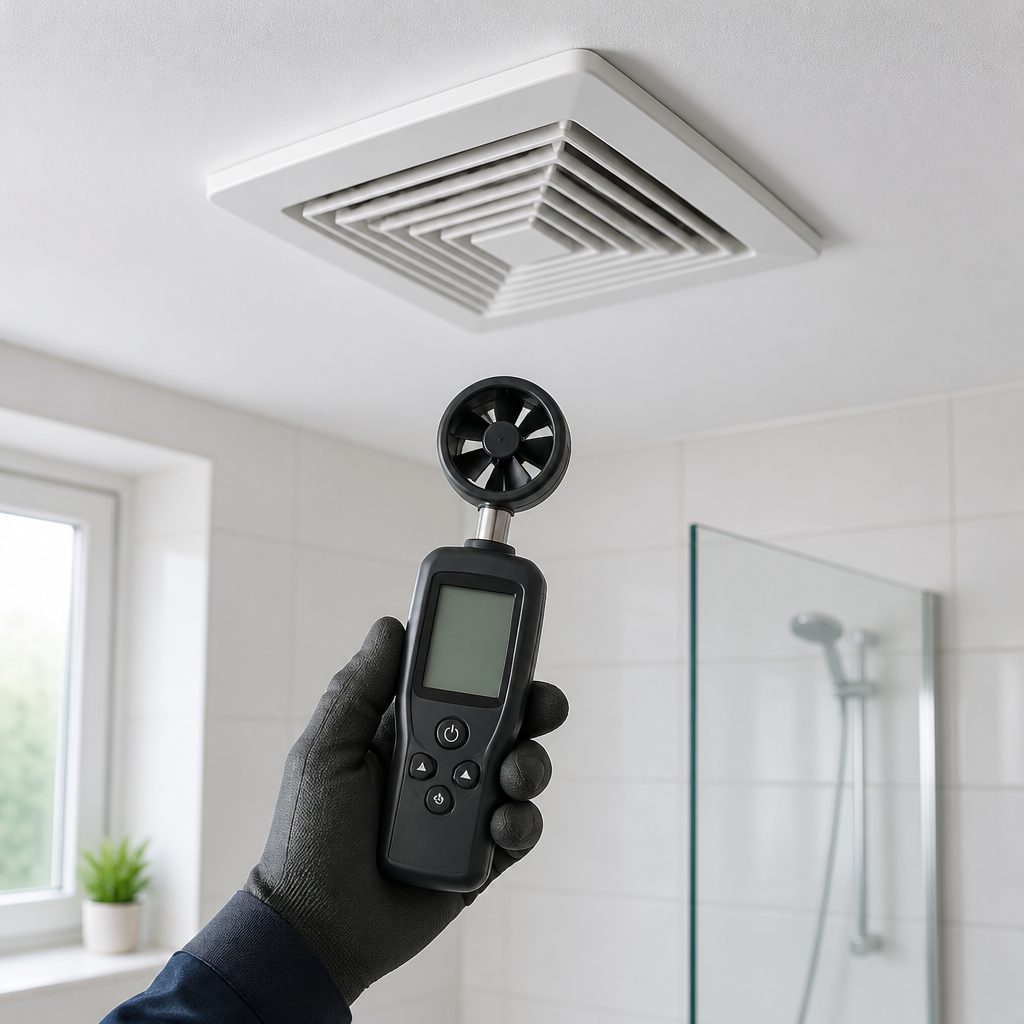
Switch on every exhaust fan in the house and go outside to check the discharge point. You should feel a clear flow of air at the external vent or cowl. A fan that rattles, vibrates or runs quietly without moving air usually has a disconnected duct, a crushed flexible hose, or a motor that was not seated properly.
Noise matters too. The Queensland residential best practice guideline from AIRAH notes that the growing use of residential systems has generated more complaints about noisy air conditioners. Fans and outdoor units both deserve a noise check, because a fan that sounds like a jet engine is a complaint waiting to happen.
Pro tip: Run the bathroom fan with the door closed and listen from the hallway. If you can hear it clearly through the door, the vibration and noise side needs checking, and that is an easy item to add to the defects list.
Rangehood ducting to outside
A rangehood that recirculates rather than venting outside is a common source of grease and humidity in the kitchen. Compare what was installed against the approved plans. A ducted rangehood should have a visible duct run to an external outlet with a backdraft flap, and the duct should not terminate in the roof space. If you cannot confirm the path, ask the builder for the installation detail in writing.
Ventilation in windowless and sealed rooms
Windowless laundries, ensuites and internal bathrooms depend entirely on mechanical ventilation. If the fan was left off the scope or wired to a switch that does not match the plan, the room will hold moisture from the day you move in. Check that every such room has a working fan and that its controls match the electrical drawings.
Comparing Inspection Approaches at Handover
Buyers usually have three realistic options for checking air conditioning and ventilation at handover. Each one catches different faults, and the gaps between them are where defects get missed. The table below compares them side by side.
| Approach | What It Catches | Where It Falls Short |
|---|---|---|
| Self-guided walk-through | Obvious cosmetic faults, missing grilles, visible unit damage | Cannot test performance on a hot day, and cannot see concealed ducting or drainage routes |
| Builder commissioning record | Confirms that tests were recorded at installation | Prepared by the party under pressure to finish, and rarely shows what the buyer actually experiences at the outlets |
| Independent inspection with functional testing | Outlet performance, drainage flow, fan airflow, noise, and installation shortcuts | Works best when booked before handover, not on the morning of settlement |
The third option is the only one that tests the systems rather than simply recording them. It is also the one buyers most often skip, because it adds a cost before settlement. Commissioning records have value, and you should ask for them, but they should sit alongside your own testing, not replace it.
Assigning Air Conditioning Defects to the Right Trade
A defect list that says air conditioning not working gets nowhere. Builders need to know which trade must fix each item, and rectification moves fastest when the report names responsibility clearly. Each air conditioning or ventilation item should be tied to the trade that installed it, whether that is the HVAC installer, the electrician, the plumber, or the carpenter who framed the ceiling space.
Why trade allocation shortens rectification
Trade allocation stops the site team from bouncing a defect between subcontractors. A drain fault may look like a plumbing issue, but it is often the installer’s responsibility because the unit was hung incorrectly. Naming the responsible trade with a clear description sends the item to the right person on the first attempt.
Photo evidence that holds up
Photos are the difference between a defect that gets accepted and one that gets argued. Shoot each fault with a wide shot showing the location, a close shot showing the issue, and a reference shot showing the outlet or unit label. Attach date-stamped photos to each item so the re-inspection is straightforward.
Same-day reporting for handover deadlines
Settlement dates do not move for a slow report. Same-day reporting means the builder receives the list while the site team is still on the project, and the buyer knows whether the home is ready before the contract timeline runs out. If a fault is not fixed before settlement, record it, note the date, and confirm the rectification arrangements in writing.
Installation Mistakes Builders Often Miss
Some faults repeat across builders and sites because they come from how the install is done, not from the equipment itself. We see the same shortcuts on new estates from Ipswich to the Gold Coast, which points to a pattern rather than bad luck. Knowing them in advance tells you exactly where to look.
Refrigerant pipe penetrations through external walls are often left with gaps around the sleeve. Unsealed penetrations let in water, insects and dust, and they can stain the wall lining below. Check that each penetration is neatly sealed and that the pipe insulation is intact along its full run.
Condensate discharging into gutters is another repeat fault. It stains fascias, can rot timber over time, and tends to be ignored because it looks like ordinary rainwater. Confirm where each drain terminates and whether it has a proper outlet point.
Watch for the missing overflow tray too. A unit that is not hung level, or is installed without a tray where one is needed, can overflow into the ceiling cavity, and the damage stays hidden until a stain appears. This is cheap to fix during installation and expensive to fix after the ceiling is up.
Booking a Handover Inspection in South East Queensland
If you are taking possession soon, book the inspection for the week before handover rather than the day itself. That leaves time for the builder to fix items before you settle. Ideally, the systems have been running for a few days so you can test them under realistic conditions.
GoInspect covers new home inspections across Brisbane, the Gold Coast, Logan, Ipswich and Redland Bay. Our pre-handover, pre-settlement and practical completion inspections include functional air conditioning and mechanical ventilation testing, with same-day reporting. Pricing starts from $550 including GST, and the final quote depends on the size and type of property. You can find out more at the GoInspect new home inspection service.
Builders and developers benefit as well. Pre-handover testing of HVAC and ventilation before the buyer’s inspection reduces rework and gives the site team a clear, prioritised list to work from.
Frequently Asked Questions
Can a new air conditioner be faulty even if it cools the room?
Yes. Cooling a room on a mild day does not prove the system has the capacity to handle a hot afternoon. Installation faults such as poor drainage, unsealed refrigerant penetrations, or unbalanced ducts can all reduce performance while the unit still appears to work.
How long should I run an air conditioner during a handover inspection?
Run it for at least 15 to 20 minutes on cool, and on heat if it is reverse-cycle. Ducted systems need a little longer for the outlets to stabilise. If the builder ran the system earlier that day, run it again yourself before you judge the result.
Is mechanical ventilation needed in every new home bathroom?
Not every room has the same requirement, and windowless rooms usually depend on mechanical ventilation. Check the approved plans and the building certification documents rather than relying on a general rule. Then confirm that every fan shown on the plans is installed and works.
What should I do if the builder says a defect is normal?
Ask for the manufacturer’s specification and request that the installer attend to check the item. Record the response in writing with date-stamped photos. An exhaust fan that moves no air at the outlet is not normal, and a drain line that does not fall is not normal either.
Can I inspect the air conditioning before the house is connected to power?
You can check mounting, clearances, drain routing and visible ductwork without power, but you cannot test performance. Functional testing needs the systems running. Book the performance part of the inspection after the power is connected.
Who usually pays to fix air conditioning defects found at handover?
Generally, the builder is responsible for rectifying defects within the scope of the contract and warranty. The exact terms vary, so read your contract and warranty documents before you settle, and make sure every defect is recorded in writing.
Tell us in the comments what happened when you raised an air conditioning or ventilation fault at your own handover, and how quickly your builder responded.
We would love your feedback and any insights you would share with others. What perspective would you add?