

Debris, visible damage and unfinished roof details are worth recording before handover. Give the builder a clear location and photograph, then ask for the appropriate cleaning, assessment or rectification. Keeping cleaning and damage as separate findings helps ensure both are addressed.
A new home roof inspection also needs the right viewing method. Some lower roof areas can be seen from safely accessible windows or ground positions; others need a separately arranged assessment. Confirm the roof areas and inspection method when planning your practical completion inspection (PCI) or handover inspection.
Start with a roof checklist that identifies the actual concern
“Check the roof” is a starting point, but a specific description gives the builder something clearer to act on. Where safely visible, useful concerns to record include:
- Construction debris: loose material, offcuts or deposits left on roof surfaces.
- Sheet or tile damage: visible dents, distorted areas, scratches, cracked tiles or displaced components.
- Gutters and outlets: visible debris, incomplete fittings or an outlet that appears obstructed.
- Flashings and junctions: visibly loose, damaged or unfinished details around walls and roof openings.
- Fixings: an apparently missing or damaged component that needs checking against the particular roof system.
- Staining or water concerns: the exact position, when it appeared and any associated rainfall or leakage.
This is an observation checklist, not a set of universal installation rules. The applicable profile, roof design, product instructions and approved details matter when assessing an item. Describe the concern first rather than prescribing a repair from a photograph.
Debris on a new metal roof: more than a final-clean detail
The photograph at the top of this article accompanies a GoInspect finding to clean debris from a rear lower roof. The material was visible from an upstairs window. The report identified cleaning as its own item, separate from damage recorded on the same roof.
Cleaning matters because material left during building work should be assessed and removed using a method suited to the roof finish. Do not assume that rain will clear everything, or that a deposit can be scraped away without affecting the surface beneath it.
LYSAGHT’s installation-cleaning guidance explains that metallic swarf and other debris should be cleared from roof areas and gutters during installation and at completion. It warns that remaining material can obstruct water flow or leave surface staining as metal particles rust.
Swarf means small metal particles produced by cutting or drilling. That general guidance does not identify the material in our photograph as swarf, or establish the brand of roof shown. Ask the builder to identify an uncertain deposit and arrange suitable cleaning, then assess any remaining marks separately.
Roof-sheet damage should be recorded separately
In the same GoInspect inspection, a second item recorded indents to the rear lower roof and allocated the concern to the roofer. The view below shows the relevant area through an upstairs insect screen. The screen affects the photograph’s clarity, but the report gives the builder the roof location and observed condition to investigate.
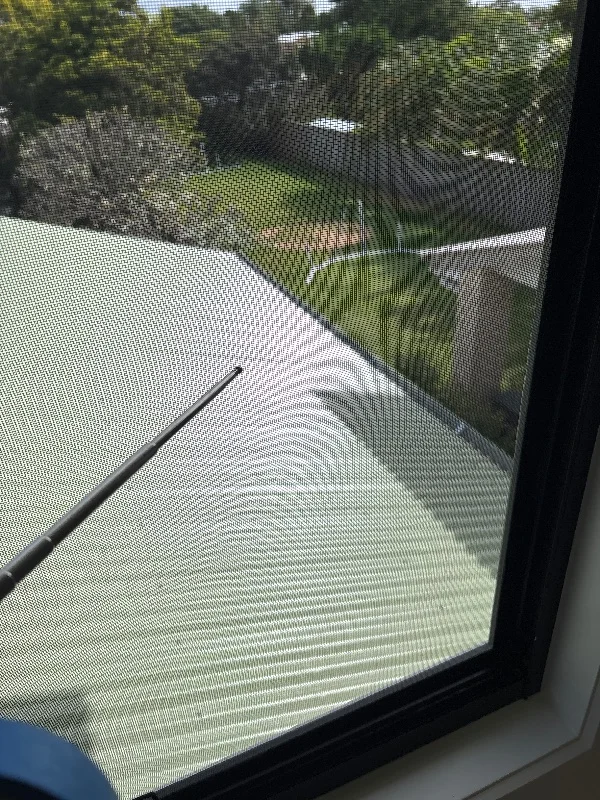
The useful next step is for the builder and roofer to assess the affected sheeting and explain the proposed response. The report does not establish the depth of the indents, their cause, a leak or a required replacement method. Cleaning the roof would not, on its own, resolve the separately recorded damage item.
Similarly, a scratch, a deposit and a patch of surface staining should not all be described as “rusting roof sheets”. Keep the observations separate until their cause and appropriate treatment have been established.
Do gutters and roof outlets need checking too?
Yes. Roof surfaces and rainwater collection areas should be considered together where the agreed inspection allows them to be seen. Record an accessible gutter with visible material in it, noting which roof section it serves. Do not conclude that an unseen downpipe or underground drain is clear merely because the gutter looks tidy.
LYSAGHT’s gutter guidance identifies debris along gutters, around downpipe entries and at overflow locations as items to inspect. It also distinguishes staining from metallic deposits and coating breakdown, which may require different responses.
If water appears to collect in one position, describe where and when you observed it. A still photograph does not measure gutter fall or establish drainage capacity. Ask for the relevant installation or drainage assessment rather than assuming the same cause for every patch of water.
Ask for the correct treatment, not an automatic paint touch-up
Before accepting a proposed coating repair, establish the actual product and the manufacturer’s advice. Matching the colour alone does not establish that a treatment is suitable.
For example, BlueScope’s COLORBOND steel guidance does not recommend touch-up paints: air-drying paint can weather differently from the factory finish and leave a patchy appearance. This is product-specific advice, not identification of the roofing in these report photographs.
Ask the builder what was assessed, which instructions support the proposed work and how completion will be recorded. Avoid scraping, painting, applying sealant or moving roof components yourself to demonstrate the concern.
How to arrange the right roof check at handover
Tell GoInspect about a known roof concern when booking. Provide the roof section, any existing photographs, relevant plans and information about access. A lower roof visible from a window is different from an upper roof surface or a concealed junction.
GoInspect’s handover and PCI service records visible, safely accessible workmanship, damage and incomplete work within the agreed scope. External roof walking is not included as standard. Ask about a separate drone roof inspection where suitable; its availability, areas covered and limitations are confirmed for the property. Aerial photographs help show visible conditions but do not establish every concealed detail or prove watertightness.
There is no universal requirement for every owner to book the same number of visits. Choose the assessment that answers the concern, with access and timing agreed in advance. If work needs checking before it becomes concealed, discuss a suitable construction-stage inspection early.
Keep a clear record of cleaning and repairs
Retain the original item numbers, photographs and builder’s response. Ask for the cleaning and damage items to be addressed individually, with a record of the work completed. If a follow-up check is needed, agree what it will cover and how the relevant area can be viewed.
If a roof concern appears after moving in, record it and notify the builder promptly in writing. For Queensland disputes, check QBCC’s current defective-work guidance for eligibility and time limits rather than assuming handover ends your options.
To arrange your inspection, use our quote and booking form and include any roof concerns. Clear locations, suitable photographs and a defined inspection scope give you and the builder a useful record of the work needing attention.