
A new kitchen or laundry is one of the best parts of moving into a new home. Before cupboards fill up and furniture arrives, take a moment to look at the cabinet doors and exposed edges. A small chip is easier to describe clearly when the room is still empty.
A real example from a GoInspect report
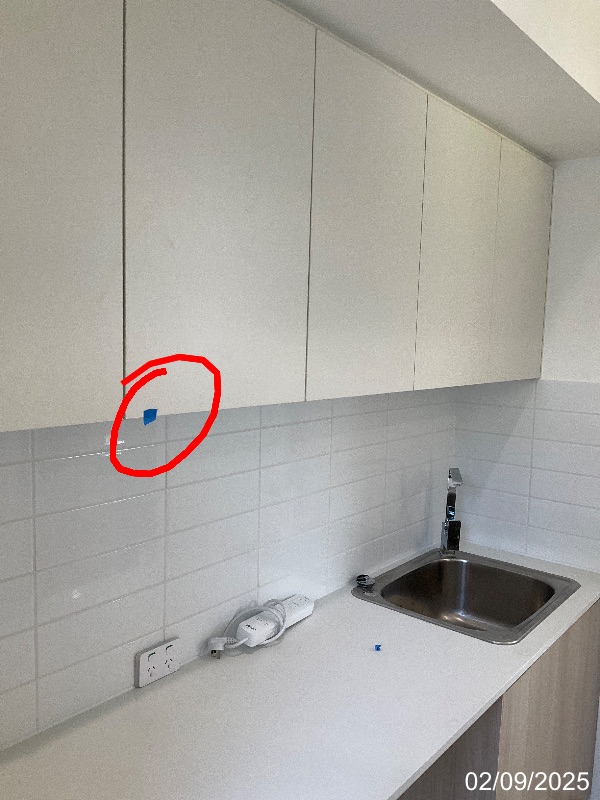
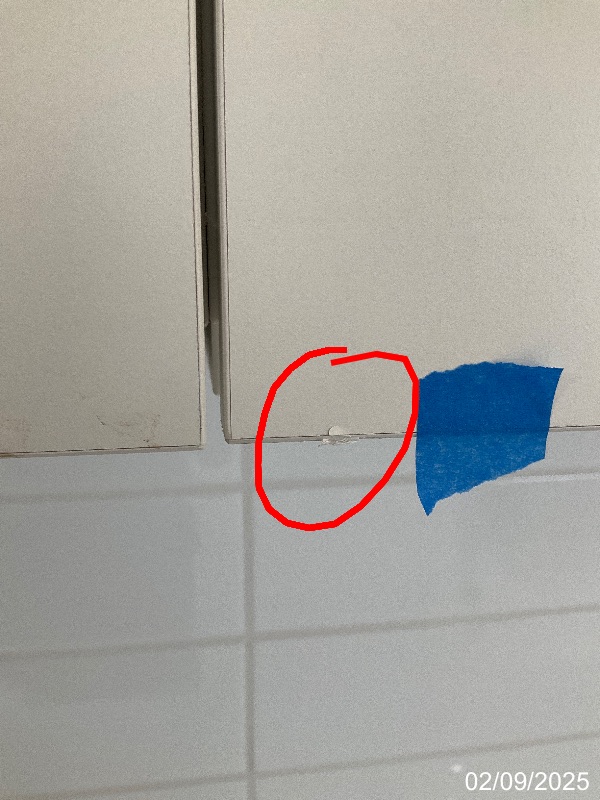
In an anonymised GoInspect handover sample report, an entry records a chip at the base of an overhead laundry cabinet door. An overview identifies the cupboard above the laundry bench; a close-up shows the marked lower edge beside blue tape.
The original report annotations draw attention to the affected area. They do not show how or when the damage occurred. This example is about documenting a visible finish issue, rather than diagnosing a hidden cabinet defect.
What to check before moving in
- Door faces and corners: look for chips, scratches and other visible damage in ordinary viewing conditions.
- Exposed edges: note any damaged or unfinished edge, especially around the base and sides of doors.
- Ordinary operation: gently open accessible doors and drawers. Note catching, rubbing or contact with nearby fittings; do not force them.
- Location: identify the room and exact cupboard, not simply “damaged cabinetry”.
- Access: tell the inspector if packaging or stored materials prevent a clear view.
Do not scrape a mark, peel away edging or attempt a touch-up before recording the concern. Follow the manufacturer’s care instructions and let the builder arrange assessment.
How to make a useful photo record
Take one overview to locate the cupboard and one close-up of the affected edge. Keep the original files and a dated written note. Avoid relying on an extreme close-up alone: the builder needs to find the correct door.
For the sample above, a useful description would identify the overhead laundry cabinet door and the chip at its base. Avoid guessing that the whole cabinet needs replacing or that moisture has caused the damage when the evidence does not establish that.
Is every mark automatically a defect?
No. Assessment depends on the material, the condition observed, the contract and applicable requirements. Cleaning residue, surface damage and a poorly finished edge need different responses. A visible chip deserves assessment, but a photograph alone cannot settle the cause, responsibility or appropriate remedy.
Discussing it at handover
For Queensland homes, QBCC’s handover guidance explains the defects document: it records agreed minor defects and omissions, when they will be addressed, and separately lists items raised only by the owner. Keep a copy of the written record and any agreed rectification arrangements.
If you disagree about an item, record the concern clearly and seek advice appropriate to the issue. An inspection report does not determine payment or settlement rights.
How GoInspect can help
A handover inspection checks visible, safely accessible work within the agreed scope and records identified issues for the builder to review. It does not verify concealed construction or include appliance testing.
Explore our defect examples or get an inspection quote before your move-in day.