

Caboolture and North Lakes have become two of the busiest places in Moreton Bay for new housing, and that growth brings a predictable problem: homes get handed over with defects that were built in, not added later. Many buyers walk through a new house once, see clean paint and fresh carpet, and sign. Months later they are chasing a builder over cracked tiles, a door that won’t latch, or a bathroom that drains slowly. A new home inspection in Caboolture booked before settlement gives you bargaining power in that conversation. This guide explains what to check, when to check it, and who should pay to fix it.
Table of Contents
- Quick Takeaways
- Why the Growth Corridor Demands a Closer Look
- Caboolture Builds: Defects We See Most at Handover
- North Lakes Homes: Townhouses and Tight Lots
- Timing Your Handover Inspection
- Who Pays to Fix What You Find
- Choosing the Right Inspection Stage
- Building Approvals and Compliance Records
- Frequently Asked Questions
- References
Quick Takeaways
| Key Insight | Explanation |
|---|---|
| Builders in the corridor run multiple sites | Shared site teams mean each handover gets less supervision, so expect a handful of defects on almost any new home. |
| Book before the final walkthrough | A pre-handover report gives you a written list to put to the builder before you accept the keys. |
| Check the envelope and drainage first | Gutter falls, ponding near slab edges and cladding junctions cause problems that show up after the first heavy storm. |
| Demand trade-specific defect entries | Vague notes such as “bathroom issues” get dismissed. Entries that name the trade, location and photo get fixed. |
| Plan a re-inspection before settlement | Verify that repairs were actually completed before you sign, not weeks later when the crew has left site. |
| Ask for approval documents in writing | Missing approvals for building work become your problem the day you try to resell. |
Why the Growth Corridor Demands a Closer Look
Moreton Bay’s growth corridor mixes established suburbs with large new estates, and the new estates are where most handover problems start. Builders often run several sites at once, which means each handover gets a shorter window of supervision than a one-off custom build would. In practice, that is when small errors slip through: a missed flashing detail, a rushed grout line, or a window that was never adjusted after the frame settled.

Fast build programs and thin supervision
When one site manager is responsible for several houses, the final clean and walkthrough can turn into a box-ticking exercise. Tradespeople may have moved on to the next lot before anyone checks their work. That is why a buyer’s independent eye matters more in a fast-moving estate than it does on a single custom build.
A common mistake is assuming the builder’s internal quality check covers everything. It usually covers what the builder’s own process is designed to catch. That is not the same as what you will live with for the next ten years.
What a new estate handover usually looks like
Most handovers in these estates follow a similar sequence. The builder confirms the home is ready, there is a walkthrough with a site representative, and you receive a list of items to be finished before you take keys. The list is only as complete as the person writing it, which is why the walkthrough should be treated as the start of the check, not the end.
Pay attention to the term practical completion. It generally marks the point where the building work is finished to the contract standard. It is a useful reference point, but it does not mean every defect has been found.
Caboolture Builds: Defects We See Most at Handover
Caboolture’s newer estates include many single-storey family homes on mid-sized lots. Across these builds, the same categories of defects appear again and again, and most of them are cheap to fix before handover and expensive to chase afterwards.
Internal finishes and fittings
Plasterboard joins that show under low light, doors out of square so they don’t latch, cabinet doors that rub, and tiles that sound hollow when tapped are the usual suspects. Silicone gaps in wet areas are another common finding. Each one looks minor on the day but becomes a repair request later.
In practice, inspect walls with the overhead lights off and a torch held at a low angle. Show home lighting hides more than most builders would admit to.
External envelope and drainage
Check that gutters fall toward the downpipes, that cladding meets window frames cleanly, and that drainage points are clear. Ponding water near slab edges is a red flag, because it tells you where water will go once the first heavy storm arrives. Confirm that surface water runs away from the house rather than toward it.
Pro tip: Run every tap, shower and toilet for several minutes before the inspection starts, and note any slow drainage or long wait for hot water. Those observations are easy to forget once you are standing in the kitchen with a builder waiting for your signature.
North Lakes Homes: Townhouses and Tight Lots
North Lakes has a strong mix of townhouses, villas and two-storey family homes on smaller lots. These builds bring problems you rarely see on acreage or large rural blocks, including shared walls, limited side access and drainage that has to work within tight boundaries.
Shared walls and fire separation
If the property is attached to a neighbour, ask the builder for documentation of the separating wall construction and the sealing around penetrations. A buyer’s inspection cannot certify fire ratings from a walkthrough alone. It can, however, spot missing sealant, unfinished junctions and gaps around services that should have been closed off.
Request documentation from the builder rather than relying on verbal assurances. If the answer is “it’s standard”, ask to see it written down.
Small lot drainage and side access
On narrow side returns, water tends to pool where paving meets the wall. Check the fall of the paving, the height of the finished ground against the damp-proof course, and whether the air conditioning condenser or a downpipe discharges onto a neighbour’s boundary.
Access is also a practical problem. If you cannot reach the eaves or the back of the roof without a ladder, the report should say so. A report should list areas that were not accessible rather than quietly skipping them.
Timing Your Handover Inspection
The most common question we hear is when to book. The inspection should happen after the builder says the home is ready, but before you are committed to settlement, with enough time left for a re-inspection. Booking too late leaves you negotiating under pressure.
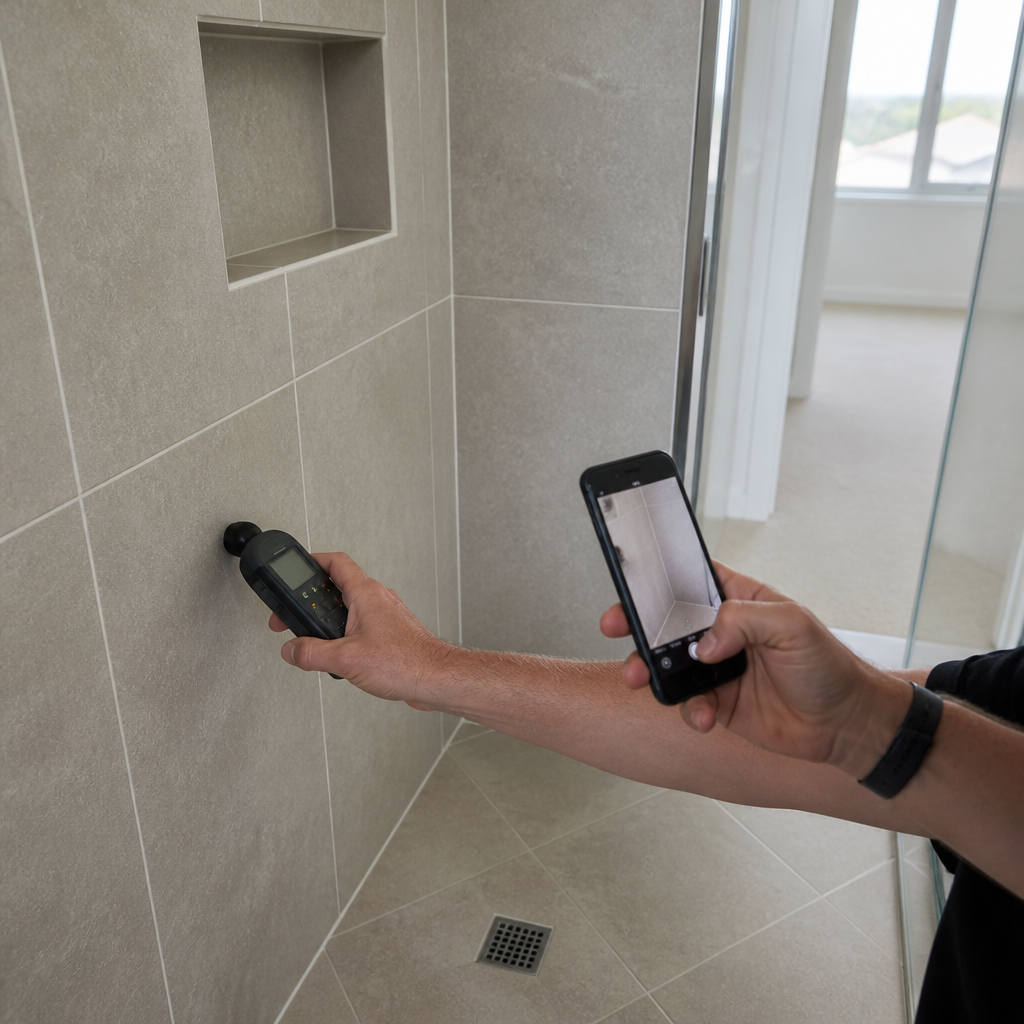
Before the builder’s final walkthrough
A pre-handover inspection gives you a defect list to put in front of the builder before the walkthrough. That turns the walkthrough into a checklist review rather than your first real look at the house. You arrive with photos, trade allocations and a clear list of what must be fixed.
Builders often batch repairs, so ask for a written timeline for each item. A verbal promise to “sort it out next week” is not a plan.
After practical completion and before settlement
A practical completion inspection confirms that the work meets the contract standard at a point in time. A pre-settlement inspection then checks whether the items from earlier reports have actually been fixed. If your first report had more than a handful of items, book the second visit rather than assuming the repairs are done.
Any item still open at that stage should be recorded and discussed with your conveyancer or solicitor before you sign. Do not let an unresolved defect slide into settlement on the strength of an email.
Pro tip: Schedule the re-inspection within a few days of the builder’s repairs, not weeks later. Fixes are easiest to verify while the trade’s name is still on the job and the crew can be called back.
Who Pays to Fix What You Find
After receiving a defect report, most buyers ask one question first: who is responsible for fixing this? The answer depends on the contract, the nature of the defect and whether the item is a construction fault or a maintenance issue. A good report should make that distinction easy to see.
Assigning defects to specific trades
Vague notes like “bathroom issues” get pushed back, and builders are good at pushing them back. A defect that names the trade, the exact location and includes a photo is much harder to dismiss. Each entry should identify whether the item belongs to the plasterer, tiler, carpenter, plumber or another trade.
At GoInspect, every defect is tied to a trade and a photo, and reports are issued the same day so the builder can act while the site is still open. That speed matters, because a crew that has left site is far harder to bring back.
Reading a defect report for responsibility
Sort every item into three groups: items the builder must fix before handover, items to resolve before settlement, and maintenance items that will be yours once the keys change hands. Builders will often try to move a construction defect into the maintenance group. Push back with the photo and the relevant clause in your contract.
A defect documented on the day is a repair request. The same defect found six months later is a dispute.
Ask the builder to sign off each item in writing, including the date and the trade responsible. A signed list is the record you will rely on if the repair does not hold.
Choosing the Right Inspection Stage
Not every buyer needs every type of inspection, but the stage you choose affects how much leverage you have. The table below compares the main options for buyers and developers working in the corridor.
| Inspection Stage | What It Covers | Best Used When |
|---|---|---|
| Pre-handover inspection | The finished home before the builder’s walkthrough, with a defect list supported by photos and trade allocation | You want a complete list to put to the builder before keys change hands |
| Practical completion inspection | Confirms the work matches the contract standard at the point of completion | You are a developer or builder confirming a project is ready for handover |
| Pre-settlement inspection | Re-checks items from earlier reports and confirms that repairs were carried out | Repairs have been done and you want them verified before settlement |
In practice, many buyers need two visits: one before handover and one before settlement. Booking only one leaves a gap. If you have to choose a single visit, choose the pre-handover inspection, because it gives you the most time to act on what it finds.
Building Approvals and Compliance Records
Moreton Bay Regional Council’s guidance on building compliance inspections makes a point that buyers should take seriously: if you are selling a property, buyers may need proof that any building work has been approved. Read from the buyer’s side, the same principle means a missing approval can become your problem the day you try to resell.
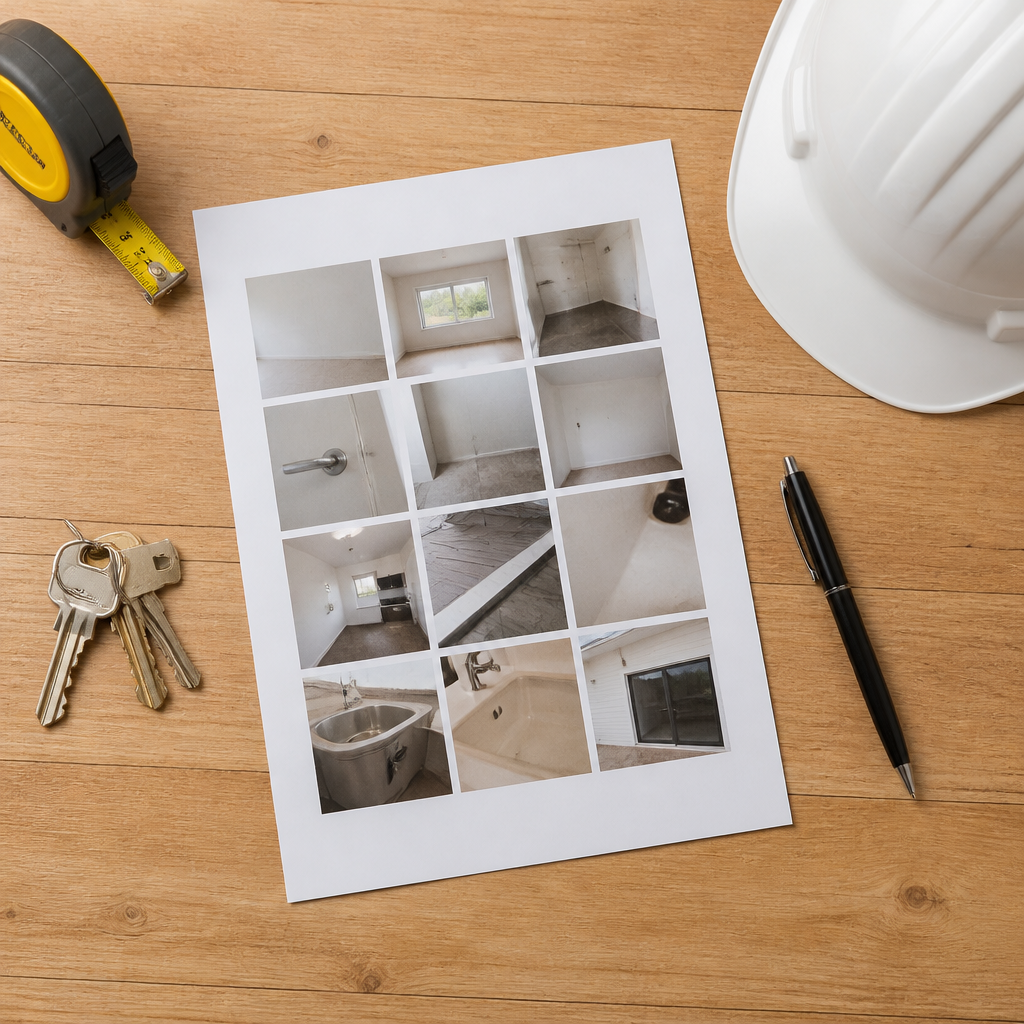
What to request from the builder
Ask for the approved plans, the building approval documents, the certifier’s inspection records, and any final inspection or compliance records that apply to the work. Keep everything in one folder. A summary email from the builder is not a substitute for the documents themselves.
If something is missing, treat it as a settlement issue rather than a paperwork delay. Missing records are much easier to resolve before you take ownership.
Why a missing approval stops a resale
A buyer’s inspection can spot visible signs of work that may not match the plans, such as an enclosed patio, a carport that differs from the drawings or an added room with no obvious paperwork. Our role is to report what we can see. Confirming whether approvals exist is a separate step, and it should be done through the council or the certifier.
Pro tip: Ask the builder for the certifier’s name and contact details in writing, so you can verify inspection records directly rather than relying on copies the builder chooses to send you.
Frequently Asked Questions
How long does a new home inspection in Caboolture take?
Most new home inspections take a few hours, depending on the size of the home and how many items need to be documented. Townhouses and larger family homes take longer, especially when the inspection includes detailed photos for each defect.
Is an inspection still worth it if the home is under builder warranty?
Yes. A warranty only helps if the defect is recorded clearly and linked to the right trade. An inspection report creates that record at handover, so you are not relying on memory when you make a claim.
Do North Lakes townhouses need the same checks as detached homes?
They need the same core checks, plus extra attention to shared walls, sealing around penetrations and drainage on tight side boundaries. These are the areas where attached builds most often produce problems that are hard to see from a standard walkthrough.
Should I attend the inspection myself?
Yes, where you can. Walking the property with the inspector lets you see what they see, ask questions on the spot and understand which items are urgent. It also makes it harder for anyone to later say an item was never mentioned.
What is the difference between a pre-handover and a pre-settlement inspection?
A pre-handover inspection documents defects before you take keys, so the builder has a list to act on. A pre-settlement inspection checks whether those defects have been fixed before you complete the purchase. Many buyers benefit from both.
How much does a new home inspection cost?
GoInspect inspections start from $550 including GST. The final price depends on the property and the type of inspection you need, so ask for a quote before booking.
If you have handed over a new home in Caboolture, North Lakes or anywhere else in Moreton Bay, share which defect surprised you most at handover and how the builder responded.