
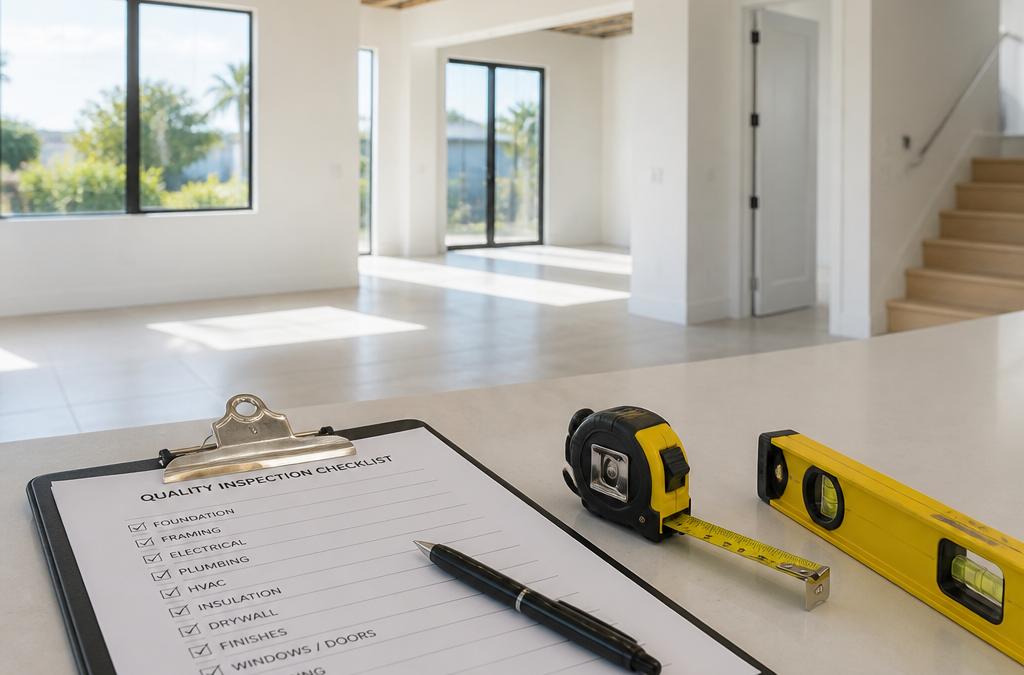
Most Gold Coast buyers walk through their near-complete home with the site supervisor, nod at the fresh paint and tiled floors, and assume a brand-new build is defect-free. That assumption is expensive. New home inspections on the Gold Coast consistently turn up waterproofing failures, cracked render, and drainage issues that are invisible to an untrained eye but costly to fix once settlement is complete and legal responsibility has shifted entirely to you. The Gold Coast construction market has been running at high volume for several years, and high build volumes combined with subcontractor shortages create the exact conditions where defects are not the exception. They are expected. This guide explains what a pre-handover inspection covers, when to book, what defects are most common in this market, and how to use your report to actually get things fixed.
Table of Contents
- Quick Takeaways
- What Is a New Home Inspection on the Gold Coast?
- What a Licensed Inspector Actually Checks
- Common Defects Found in Gold Coast New Builds
- When to Book Your Pre-Handover Inspection
- Inspection Types Compared
- How Photo-Enhanced Defect Reports Change the Outcome
- Investors and Developers: Different Stakes, Same Inspection Logic
- Frequently Asked Questions
- References
Quick Takeaways
| Key Insight | Explanation |
|---|---|
| New does not mean defect-free | Gold Coast new builds regularly present waterproofing failures, cracked render, and drainage falls that do not comply with Australian Standards, all invisible to a standard walkthrough. |
| Book at least 5-7 business days before handover | Booking too late means rushed access coordination with the builder and no time to have defects documented before you are pressured to sign off. |
| Licensed inspectors use AS 4349.1 as their benchmark | Australian Standard AS 4349.1 sets the national benchmark for pre-purchase property inspections. Inspectors working to this standard provide legally credible reports. |
| Trade attribution in the report matters | A report that assigns each defect to the responsible trade, such as the tiler or waterproofer, prevents builders from deflecting responsibility to subcontractors. |
| QBCC complaints require documented evidence | If a builder disputes defects, a photo-documented report from a licensed inspector significantly strengthens any complaint lodged with the Queensland Building and Construction Commission. |
| Apartment buyers need specialist high-rise inspectors | Off-the-plan Gold Coast apartments have different defect risks than houses. An inspector experienced with high-rise developments will check different items than a standard residential inspector. |
| Same-day reports protect you at handover | Same-day reporting means your defect documentation exists before you leave the property, giving you immediate grounds to delay signing off if serious issues are found. |
What Is a New Home Inspection on the Gold Coast?
A new home inspection on the Gold Coast is a professional assessment of a newly constructed residential property conducted by a licensed building inspector before the buyer formally accepts the property from the builder. It is not the same as a standard pest and building inspection on an established home, and the two should not be confused when booking.
The inspection happens at a specific legal moment: after the builder declares practical completion but before you sign the handover documents. That window is your best and, in most cases, only real opportunity to catch defects while the builder still bears legal responsibility for the work. Once you accept the keys and sign off, the burden shifts significantly toward you to prove defects existed at handover rather than arising afterward.
A Gold Coast building inspector working at this stage is not looking for cosmetic preferences. They are assessing whether the build meets the requirements of the National Construction Code, relevant Australian Standards, and the contract specifications you agreed to. Defects that fall short of those benchmarks are legitimate grounds for rectification requests before settlement is finalised.
What a Licensed Inspector Actually Checks
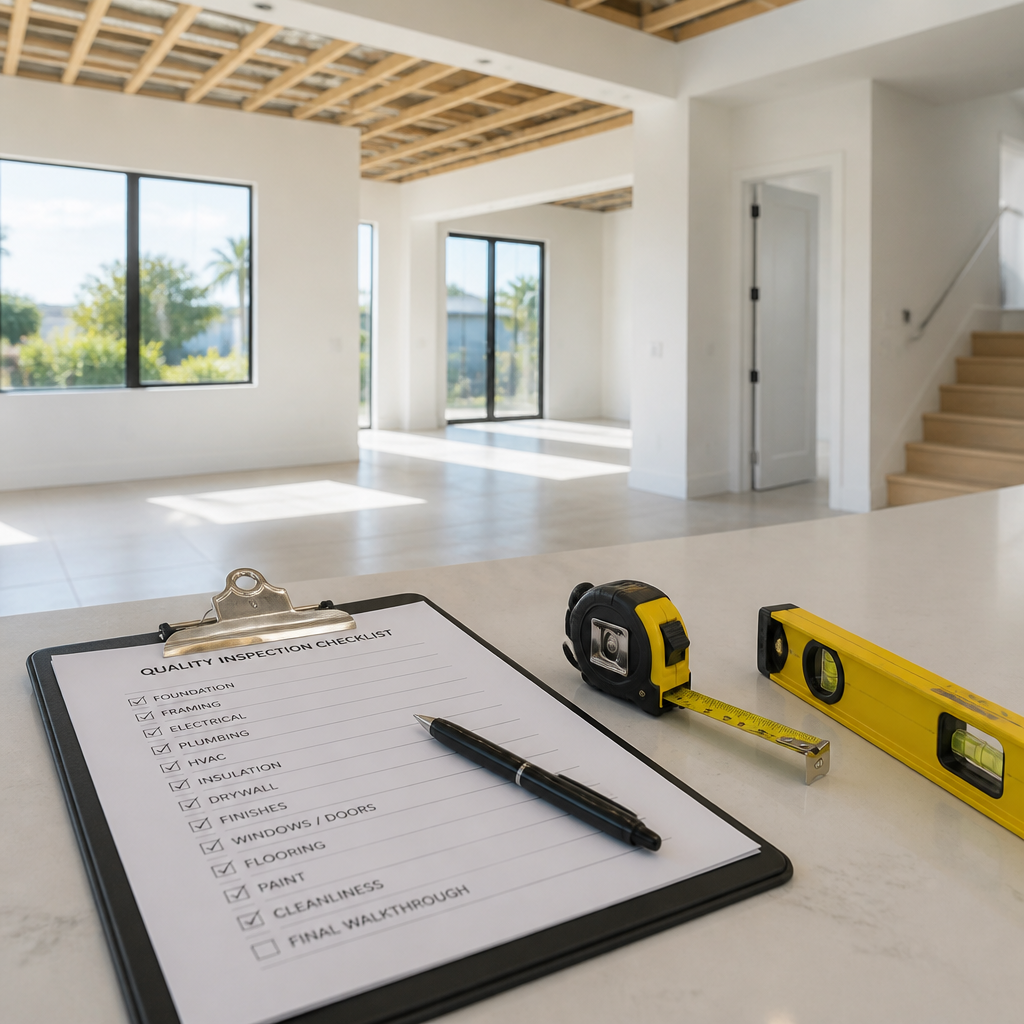
A thorough pre-handover inspection on the Gold Coast covers far more than a quick walkthrough with a site supervisor. A licensed inspector works systematically through the property using a structured checklist matched to the requirements of Australian Standard AS 4349.1, the national benchmark for pre-purchase property inspections, adapted for new construction.
Structural and Framing Elements
Inspectors assess roof framing, wall framing, and subfloor structures where accessible. They look for signs of inadequate bracing, incorrect timber spacing, and moisture intrusion in subfloor areas. These are not visible during a standard walkthrough and require someone trained to access and read what they find.
External Walls, Cladding, and Render
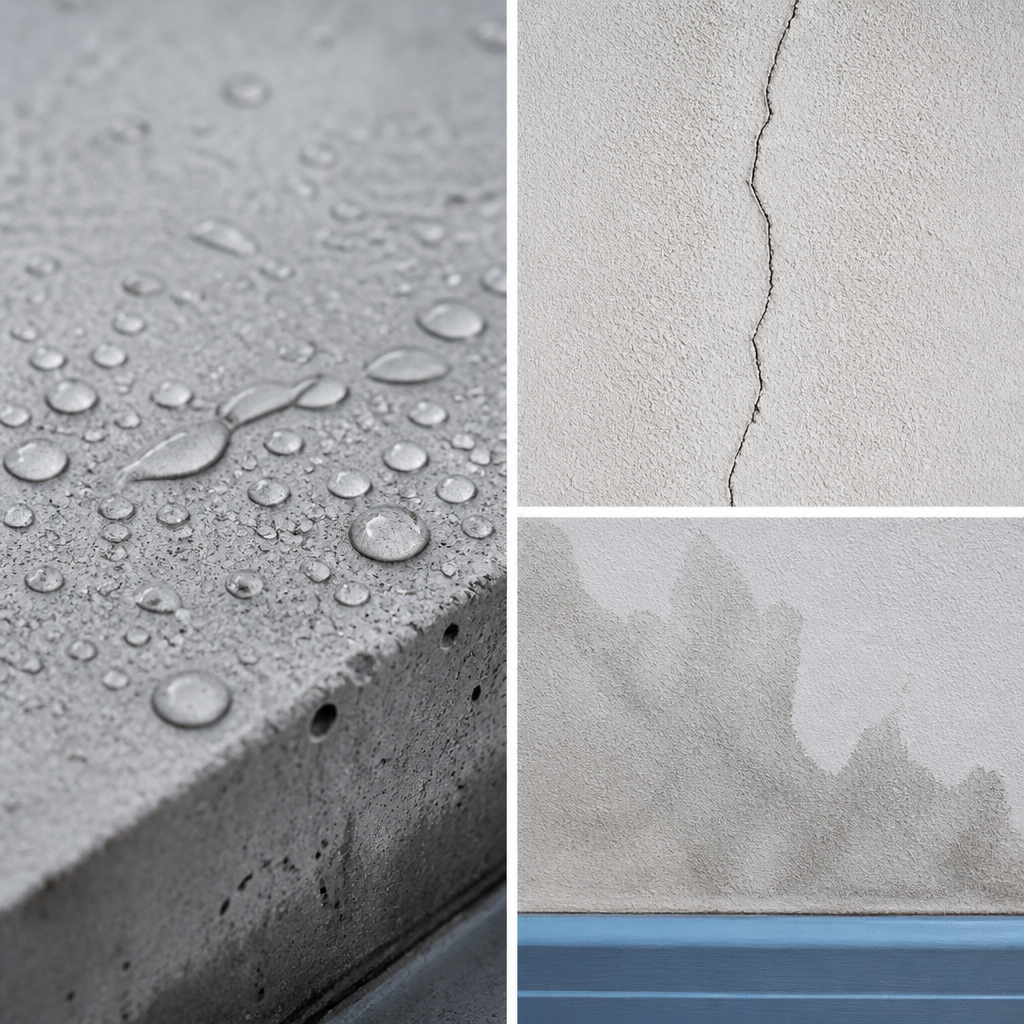
Inspectors examine external walls for cracking in render, inconsistent mortar joints in brickwork, inadequate weepholes, and flashings that are incorrectly installed or missing entirely. On the Gold Coast, where rendered block and lightweight cladding systems are common in new estates, cracking and delaminating render appears frequently on inspection reports.
Roof and Tile Condition
Roof tile bedding and pointing is checked for adequacy. Inadequate pointing is one of the most frequently cited defects in Gold Coast new homes. Inspectors also check roof drainage, gutters, downpipes, and the condition of all penetrations through the roof plane.
Wet Areas and Waterproofing
Shower recesses, bathrooms, and laundries are checked for correct waterproofing installation. Waterproofing membrane failures in wet areas are among the highest-risk defects found in new Gold Coast builds because they do not become visible until water damage has already started, often months after settlement. A tiler finishing a bathroom after a plumber has roughed in creates exactly the conditions for waterproofing membrane punctures that only show up after the fact.
Balcony Balustrades and Safety Items
Balcony balustrade fixings that do not meet minimum height or structural requirements are a safety issue, not just a cosmetic one. Inspectors check balustrade installation against the National Construction Code requirements. Electrical fixtures that have been installed but not commissioned are also recorded.
Pro tip: Ask your inspector to specifically document drainage falls in wet areas and on balconies. Drainage falls that do not meet the minimum gradient under AS 3740 are consistently found in Gold Coast new builds and are expensive to rectify after tiling is complete.
Common Defects Found in Gold Coast New Builds
The Gold Coast construction market has been running at high volume for several consecutive years. High build volumes combined with subcontractor shortages create conditions where defects are not the exception. They are expected. The most frequently cited defects in Gold Coast new homes include cracked or delaminating render, inadequate roof tile bedding and pointing, poorly installed shower recesses without correct waterproofing, balcony balustrade fixings that do not meet minimum requirements, and electrical fixtures that have been installed but not commissioned.
None of these are visible to an untrained buyer walking through a display-level finish. Incomplete or misaligned architraves and skirting boards appear at the cosmetic end of defect reports, but they tend to distract buyers from the structural and waterproofing issues that carry real financial risk. The data consistently shows that defect density is highest on projects where multiple subcontractors have overlapping scopes. That is the norm on any Gold Coast house or apartment project, not the exception.
A tiler finishing a bathroom after a plumber has roughed in creates the exact conditions for waterproofing membrane punctures, which only show up as water damage months after settlement. That is precisely why an independent inspection exists: to find those failures before they become your problem.
Beyond the house itself, site drainage is a recurring issue in Gold Coast new estates where lots are cut, filled, and levelled. Inadequate site drainage can direct water toward the slab edge or subfloor, and that is not something a buyer would identify during a pre-settlement walkthrough without knowing what to look for.
When to Book Your Pre-Handover Inspection
Booking a Gold Coast building inspector for a new home is straightforward, but the timing of when you book is where most buyers go wrong. The general rule is to book at least five to seven business days before your expected handover or settlement date. This gives the inspection company time to coordinate access with your builder and ensures the inspector can attend during normal construction hours.
The Builder’s Notice of Practical Completion
Your builder will issue a formal notice of practical completion when they consider the home ready for handover. In Queensland, you typically have a short period to respond. If you wait until you receive that notice before booking an inspector, you are already cutting it fine. Book an inspector as soon as you know the expected completion date, even if it shifts slightly, so you are not scrambling when the notice arrives.
Apartment and Off-the-Plan Timelines
For off-the-plan apartment purchases on the Gold Coast, the timeline works slightly differently. The builder issues a notice of practical completion and the buyer typically has a short period to complete settlement. Booking a licensed inspector who specialises in high-rise defect inspections is particularly important here because the defect profile of a multi-storey apartment differs substantially from a detached house. GoInspect provides customised inspection reports specifically for high-rise developments across the Gold Coast.
What Happens if You Miss the Window
If you sign off on handover without an inspection, you do not lose all recourse. Queensland’s statutory warranties under the Queensland Home Warranty Scheme provide some protection for certain defect categories after handover. However, proving that a defect existed at handover, rather than arising from your own use, becomes significantly harder without a dated, photographic inspection report as evidence.
Pro tip: Do not rely on your builder’s own supervisor walkthrough as a substitute for an independent inspection. Site supervisors are employed by the builder. Their job is to manage the completion process, not to identify and document every defect that could become a warranty claim or a QBCC complaint.
Inspection Types Compared
| Inspection Type | When It Happens | What It Focuses On |
|---|---|---|
| Pre-Handover Inspection | Before you accept the keys from the builder, after practical completion is declared | Structural integrity, waterproofing, finishes, compliance with NCC and contract specifications, all defects before responsibility transfers to the buyer |
| Practical Completion Inspection | At the formal completion stage, used interchangeably with pre-handover in most Gold Coast residential contracts | Same scope as pre-handover; most relevant for house-and-land packages and new estates where contracts specify a practical completion milestone |
| Pre-Settlement Inspection (Apartment) | For off-the-plan purchases, conducted in the short settlement window after the builder declares practical completion | High-rise specific defects including common area finishes, individual apartment waterproofing, balustrades, mechanical and electrical commissioning, and fire safety items |
All three inspection types serve the same fundamental purpose: independent verification that the property meets the standard you contracted and paid for, before legal and financial responsibility passes to you. The differences are timing and property type, not philosophy.
How Photo-Enhanced Defect Reports Change the Outcome
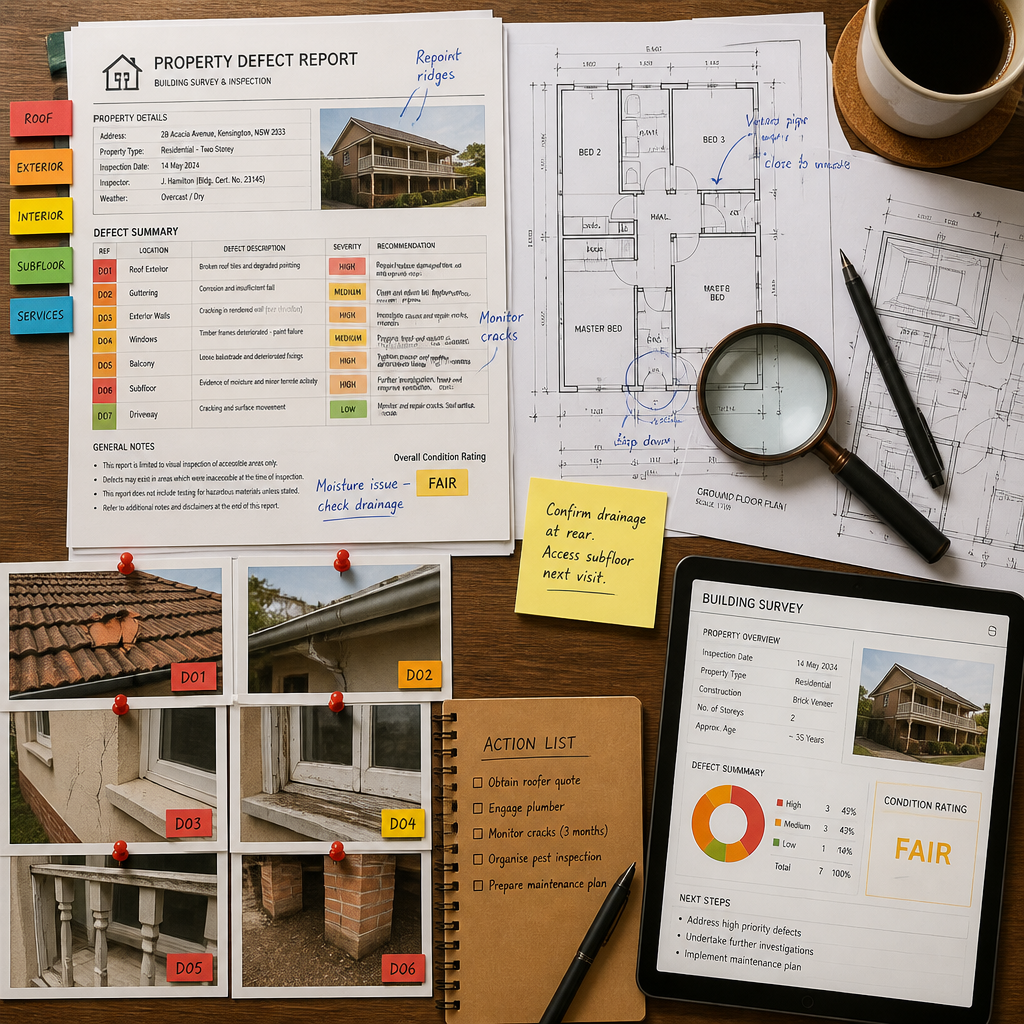
The quality and format of an inspection report directly determines how effective it is when you hand it to your builder. A list of written defects with no photographs is easy to dispute. A site supervisor can claim a defect was lighting-related, a camera angle, or fixed before the report was written. A photo-enhanced defect report removes that ambiguity.
GoInspect’s reports attribute each defect to the responsible trade, which matters because it prevents the builder from routing your defect list to a subcontractor who then disputes responsibility. When the report says the waterproofing membrane failure at the shower recess is the tiler’s responsibility, the builder cannot easily redirect that claim. Same-day reporting means your documentation exists before you leave the property on handover day.
If the builder does not respond or disputes the defects, you can lodge a complaint with the Queensland Building and Construction Commission. The QBCC oversees building disputes and can require builders to rectify defective work. A formal, photo-documented inspection report from a licensed inspector significantly strengthens your QBCC complaint compared to a verbal claim or an informal defects list.
In practice, most builders respond to a well-documented defect report without escalation to the QBCC. The report creates accountability because it is specific, dated, photographed, and signed by a licensed professional. That combination makes disputing individual items difficult and expensive for the builder compared to simply rectifying the work.
Investors and Developers: Different Stakes, Same Inspection Logic
Property investors purchasing new Gold Coast homes face a specific risk that owner-occupiers sometimes overlook: they are often not present during the construction phase or at handover. A remote investor in Sydney or Melbourne reviewing a 40-page photo-enhanced report can understand exactly what was found without having been in the room. That remote accessibility is not a minor convenience. It is the difference between an informed decision and signing off on a defective property because you were not there to notice the problems.
Investors purchasing through a self-managed super fund carry additional obligations. The property must be suitable for investment purposes at acquisition. A documented inspection report is evidence of due diligence that a fund trustee can point to if the property’s condition is ever questioned.
For builders and developers, the inspection logic flips direction. GoInspect also works on the builder’s side of the process, conducting inspections that identify defects before the buyer’s own inspector finds them. Catching and rectifying defects before handover is faster and cheaper than managing QBCC complaints or post-settlement disputes. Developers managing multiple Gold Coast projects simultaneously use customised inspection programs to maintain consistent build quality across trades and sites.
GoInspect’s pre-handover inspection service is available across Brisbane, Gold Coast, Logan, Ipswich, and Redland Bay, with pricing starting from $550 including GST. Same-day reporting is standard, which means your defect documentation exists the day the inspection occurs, not days later when settlement pressure may already be building. You can book or find out more at GoInspect’s homeowners and investors page or review what a Gold Coast pre-handover inspection covers in detail.
Frequently Asked Questions
How much does a new home inspection on the Gold Coast cost?
GoInspect’s pre-handover inspection service starts from $550 including GST for Gold Coast properties. The exact cost varies based on the size and type of the property, including whether it is a detached house, townhouse, or apartment in a high-rise development. Customised inspection programs are available for developers managing multiple sites.
Do I need an inspection if the builder has done their own quality check?
Yes. A builder’s internal quality check is conducted by people employed by the builder. Their interest is in managing the completion process efficiently, not in identifying every defect that could become a warranty or QBCC complaint. An independent licensed inspector has no commercial relationship with the builder and no reason to overlook anything that does not meet the required standard.
What happens if the inspector finds serious defects before handover?
You provide the builder with the formal inspection report in writing and request rectification in writing. Serious structural or waterproofing defects are legitimate grounds to delay signing the handover documents until the builder rectifies the work and the inspector can confirm it. If the builder refuses or disputes the findings, you can lodge a complaint with the QBCC, which has the authority to require rectification of defective work by licensed contractors.
Can I use a standard building and pest inspector for a new home?
A standard pre-purchase inspection on an established property and a pre-handover inspection on a new build are different assessments. New home inspections require an inspector familiar with construction defects, compliance with the National Construction Code, Australian Standard AS 4349.1 as adapted for new construction, and the trade-by-trade accountability that determines who is responsible for each defect. Not all inspectors work to this scope. Always confirm your inspector is licensed and experienced specifically with new construction in Queensland.
What Gold Coast areas does GoInspect cover?
GoInspect covers the Gold Coast as part of a broader service area that includes Brisbane, Logan, Ipswich, and Redland Bay. The company provides both standard residential inspections and customised inspection programs for high-rise developments and larger housing projects across these regions.
Is a pre-handover inspection different from a practical completion inspection?
In most Gold Coast residential contracts, the terms are used interchangeably. Both refer to the independent inspection conducted after the builder declares the property practically complete and before the buyer formally accepts the handover. For off-the-plan apartments, the equivalent is a pre-settlement inspection, which has a slightly different timeline tied to the settlement window rather than a traditional keys handover.
Can investors who are not on the Gold Coast still use GoInspect?
Yes. GoInspect’s photo-enhanced reports are designed to be reviewed remotely. Each defect is photographed, described clearly, and attributed to the responsible trade. An investor based interstate can review a detailed report and understand exactly what was found without needing to be present at the inspection or at handover.
If you are currently navigating a new build on the Gold Coast, we would be glad to hear what questions came up during your handover process or what defects you were surprised to find. Share your experience in the comments or get in touch directly.
We would love your feedback and any insights you would share with others. What perspective would you add?
References
- GoInspect: What a Gold Coast new home inspection covers and how to book
- GoInspect: What Gold Coast buyers must know about new home inspections
- Legal aspects of pre-handover inspections in Australia, including QBCC rights and buyer protections
- GoInspect: Pre-handover inspection process, QBCC complaints, and what to expect from your report