
To read a building inspection report, start with the inspection scope and notes, then read each finding alongside its location and photographs. Make a list of questions, send the relevant findings to your builder and keep a written record of the response. A defect count or severity label alone will not tell you what needs attention or whether a repair has been completed.
For a new home, a practical completion inspection (PCI), also called a handover inspection, records visible defects and incomplete work within the agreed scope. This guide explains how to turn that photographic building defect report into a useful action list without guessing causes or treating the report as an approval certificate.
Read the inspection notes before counting defects
Check the property, inspection date and service first. An initial handover report and a follow-up report answer different questions. Then read the access limitations and inspection notes: they explain what was available to inspect and how the findings should be understood.
In one GoInspect handover report, the notes explain that covered or inaccessible parts of the structure could not be inspected. They also state that appliances were not tested and that the final handover clean remained to be completed. Those notes matter even if an appliance or an area of the room appears in a photograph.
The same report explains how bedrooms are numbered. A location such as “Bedroom 2” is only useful if everyone uses the same room identification. Check these details before sending a tradesperson to the wrong room.
How to read an individual defect entry
Work through each finding in this order. Keep its original item reference when you ask a question or record a response, so the photographs and later correspondence stay connected.
- Location: identify the room, external area or building element. Read any more specific position in the description.
- Observed condition: distinguish what the inspector found from a possible explanation or a recommendation for further assessment.
- Photographs: use the wider view to locate the item and the closer view to understand the marked area. Read both with the written description.
- Trade: use the trade label to help route the item through the builder’s team. It is not, by itself, a legal decision about who caused the problem or pays for it.
- Next step: identify what needs clarification, completion, repair or further investigation. Ask the inspector if the meaning is unclear.
Do not assume every report uses the same layout or classification system. The useful test is whether you can understand the finding, locate it and discuss an appropriate response.
Two examples: from report finding to builder question
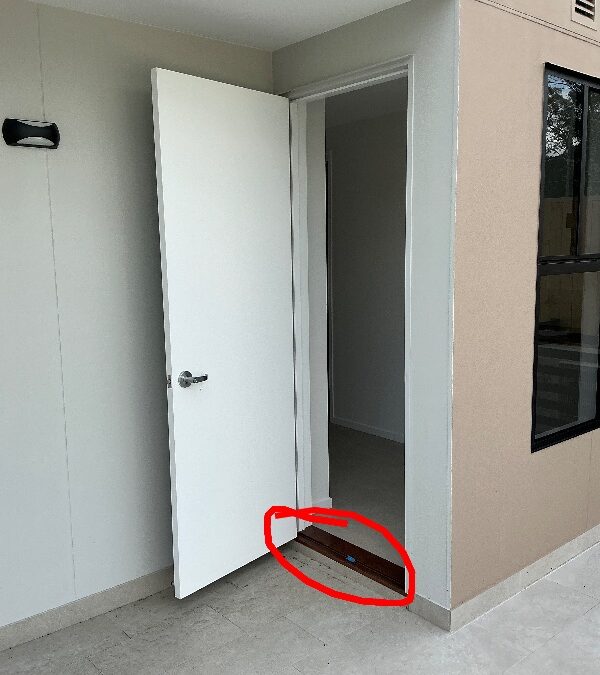
A missing weather seal at an external laundry door
The photograph above accompanies a GoInspect finding that the weather seal was missing from the bottom of an external laundry door. The report identifies the laundry location and allocates the item to the builder.
A useful question is: “When will the missing weather seal be fitted, and how will the completed installation be checked?” Keep the original finding attached to that question. There is no need to turn it into an unsupported claim that the door has already leaked or that the entire doorway must be replaced.
A powder-room privacy lock that does not engage
Another entry in the same report records that the powder-room privacy lock does not engage and allocates the item to the carpenter. The photograph identifies the door hardware; the description records the operational finding.
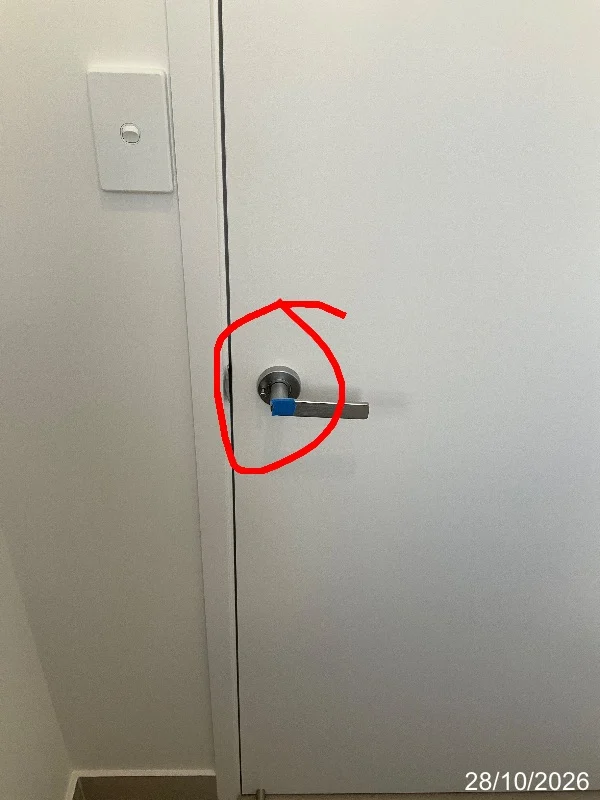
The practical follow-up is to ask for the lock operation to be rectified and checked. A photograph of the same handle after a visit may help identify the location, but checking whether the lock now engages requires an operational check. Match the follow-up to the original issue.
Defect totals and severity labels need context
Read the descriptions rather than judging the property by the total alone. One entry may concern one fitting; another may describe a repeated condition. In the report used here, minor paint and plaster defects were identified with coloured tape, with more significant findings itemised separately. The itemised total therefore should not be described as a count of every mark in the home.
If your report uses priority or severity labels, ask what they mean in that report. A software label is not automatically the same as a legal classification, an insurance category or an instruction to delay settlement. Read any safety warning or recommendation for specialist assessment promptly and discuss the appropriate next step.
An unlisted item also should not be treated as proof that every concealed component is sound. Finished tiles, for example, do not reveal the whole waterproofing installation beneath them.
Build a short action list without rewriting the findings
Keep the complete report and make a separate working list for follow-up. Use a few consistent fields:
- Original report reference and location.
- Brief finding, preserving the inspector’s meaning.
- Question or requested response.
- Builder’s response and proposed completion date.
- Current status and how completion will be checked.
For the laundry door, that might be “missing bottom weather seal — builder to confirm installation date — awaiting response”. For the privacy lock, it might be “does not engage — carpenter adjustment requested — operation to be checked”. These are examples of follow-up wording, not a claim that either repair has occurred.
Keep disputed items separate from agreed repairs and items awaiting clarification. If your builder disagrees with a finding, ask for the reason and any relevant supporting information in writing, then discuss it with your inspector. An item need not disappear from your records simply because it is disputed.
Your report and the handover defects document
An independent report and the builder’s handover defects document have different roles. Your report records the inspector’s findings. QBCC’s handover guidance explains recording agreed minor defects and omissions, when they will be attended to, and separately listing matters the owner believes exist but the contractor does not agree with.
Use the report to support that discussion and keep copies of the completed documents. The report does not itself decide practical completion, grant occupancy approval or authorise withholding payment. Obtain advice about your particular contract if completion, payment or settlement is disputed.
Checking the response and completed work
Record what the builder says has been completed and what remains open. Where appropriate, arrange a building re-inspection to check reported repairs within the agreed scope. Keep the original report and the follow-up record rather than replacing the earlier evidence.
If matters remain unresolved, notify the builder promptly and consult QBCC’s current defective-work guidance. Different processes have different eligibility requirements and time limits; the inspection date alone does not set every deadline.
Takeaway: read the scope, understand each finding and track the response against the original reference. For a photographic record of your completed new home, see GoInspect’s handover inspection service or request an inspection quote.