
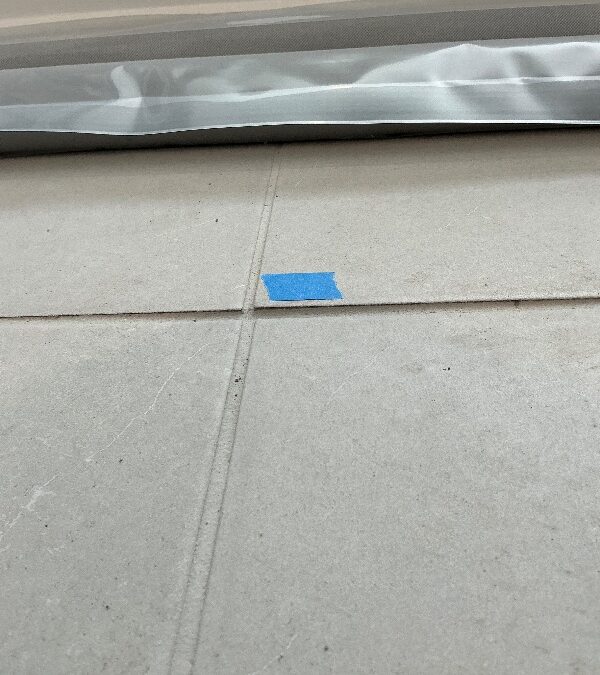
Tile lippage is a step between the edges of neighbouring tiles. If you notice a raised edge in your new home, record its location and have it assessed before handover. Whether it is defective depends on the measured difference, tile finish, joint width and applicable requirements. A shadow in a photograph is a useful clue, but it is not a measurement.
At a practical completion inspection (PCI), the useful question is: which joint needs attention, how has it been assessed, and what response is proposed? Two GoInspect findings below show why it helps to check both floor and wall tiles.
Takeaway: identify the exact joint, keep an overview and close-up, and ask for the assessment and proposed repair in writing. Avoid accepting or rejecting the whole tiled area on a single general tolerance.
Tile lippage, an uneven floor or a fall to a waste?
These describe different things. Lippage concerns the local step across a tile joint. Flatness concerns the surface over a longer distance. A fall is the slope intended to direct water towards an outlet.
A bathroom floor can slope towards a waste while the neighbouring tile edges meet neatly. Equally, a floor that looks broadly flat can have a raised edge at one joint. If your concern is water remaining on the floor, record that separately and read our guide to falls to floor wastes. A local tile-edge observation does not settle the drainage question.
Be specific when discussing uneven tiles in a new home. “The floor is not level” could mean several different concerns. “Raised edge at the joint beside the window” gives the builder a much clearer starting point.
What does the QBCC guide say about tile lippage?
Section 12.7 of the QBCC Standards and Tolerances Guide, December 2023 addresses uneven tiling. Its lippage criteria apply within the first 12 months after completion:
- The general threshold is a height difference greater than 2 mm.
- For tiles ground flat, including polished tiles, the guide gives 1.5 mm.
- It also gives 1 mm where joints are 3 mm wide or narrower.
Read the full section when applying these figures. It also discusses manufacturing distortion and surface alignment. The guide is a reference: legislation, codes, standards and manufacturer requirements take precedence, and a contract can specify a higher standard.
Ask which criterion applies to your tiles and how the difference was measured. The guide’s assessment period is not a reason to wait before reporting a concern or a summary of every complaint or warranty deadline.
A floor-tile finding: identify the joint first
In a GoInspect preliminary inspection, the tiler’s finding identified tile lippage requiring attention. The opening photograph shows a close-up of the floor joint marked with blue tape. The accompanying overview in the report places it beside a window, making the same joint easier to find again.
The record illustrates the value of location detail. A close-up may explain the edge condition well, while an overview helps the supervisor find it among many similar tiles. Together they are more useful than a general instruction to “check the floors”.
For a comparable concern in your home, ask the inspector or builder to record the measurement and relevant tile details. The photograph here does not establish the size of the step, identify the tile product or show a completed repair.
Wall-tile lippage deserves attention too
A separate GoInspect handover report recorded a lipped wall tile above an ensuite doorway. The marked joint was high on the wall, rather than in the main floor area. Looking only at the floor would have missed this finding.
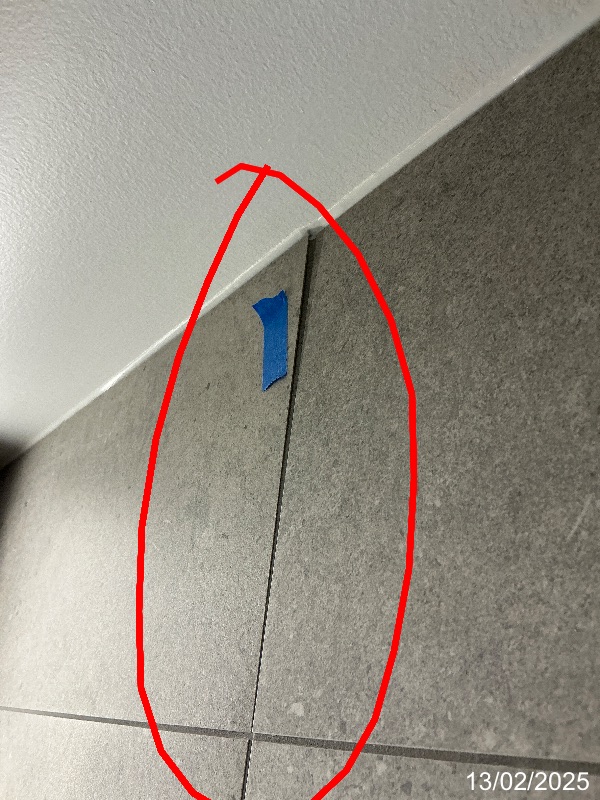
Look across accessible tiled walls, including above doors and beside windows or fittings. You can identify a location for assessment from the floor; there is no need to climb or reach over fixtures. Where an edge looks different, take a wider photograph showing the doorway or another fixed reference, followed by a closer view if safely possible.
Describe the visible condition without guessing the cause. This finding records the projecting edge. It does not establish whether the cause was the tile, bedding, wall preparation or another installation detail.
What to record before your handover inspection
- Exact location. Name the room and a fixed reference, such as the joint beside the doorway. Mark the location on a plan if several joints need attention.
- Visible condition. Describe the raised edge and any separate chipped corner, cracked tile or missing grout. Keep different observations distinct.
- Photographs. Keep an overview and close-up. Retain the original files and avoid filters or edits that change the appearance of the edge.
- Assessment details. Ask for the measured height difference, joint width, tile identification where available and the criterion used.
- Builder response. Record whether the item is accepted, disputed or needs further investigation, and what happens next.
Arrange for the surfaces to be clean enough to inspect. Dust, protection and stored materials can obscure joints. Tell your inspector about the specific locations beforehand so they can be considered during the new-home inspection.
Questions to ask about a proposed repair
Start with the result the builder intends to achieve. Will the work address the tile-edge difference, and how will that be checked? Ask what surrounding tiles, trims, grout or other finishes will be affected, and whether matching replacement material is available.
If tiles in a wet area need removal, ask how the proposed work will protect or reinstate the affected waterproofing system. A finished tile surface does not reveal the full condition of the concealed membrane, so the repair plan may need input from the relevant installer.
Keep the original finding and response together. When reviewing the work, return to the same joint, check the surrounding finish and record any unresolved concern. A message saying “done” is less useful than a response that identifies the item and explains the work completed.
For Queensland handovers, QBCC’s practical completion guidance explains documenting issues and agreeing follow-up with the builder. An inspection finding alone does not determine payment obligations; refer to your contract and obtain appropriate advice if a dispute arises.
Get a clear record before handover
A GoInspect handover inspection can assess visible, safely accessible workmanship within the agreed scope and document the concerns identified. Tell us about raised tile edges or disputed joints when arranging the visit. You can request a quote for your property and confirm readiness and access.
The goal is a finding your builder can locate and respond to: the joint, the condition, the assessment and the next action.