
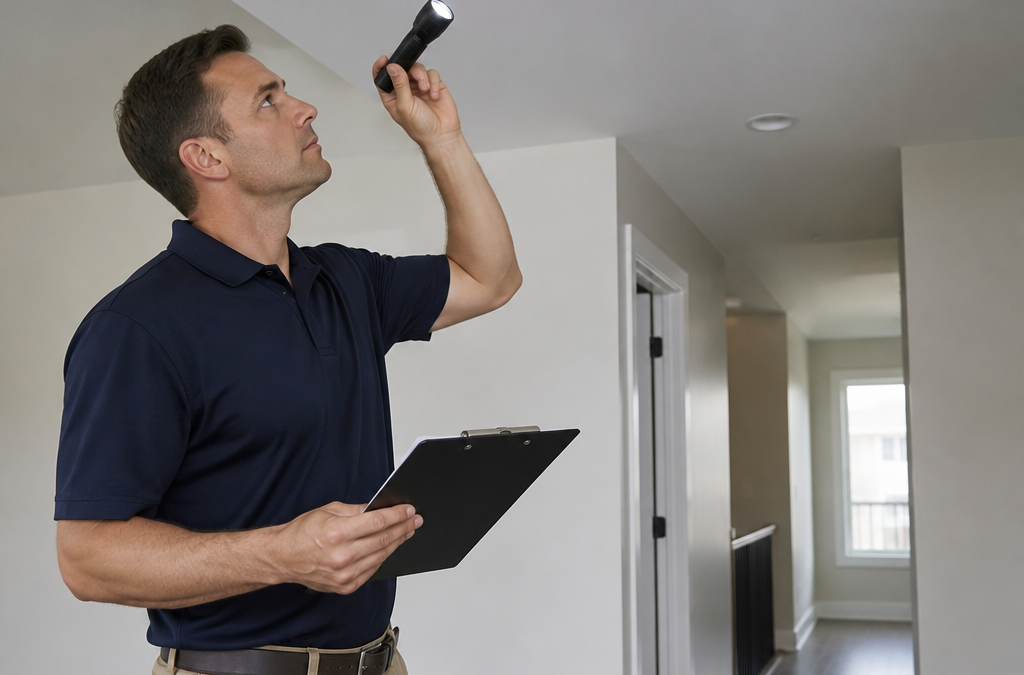
Buying a new townhouse in a Brisbane housing development is one of the largest financial commitments most people will ever make, and yet a surprising number of buyers walk into the handover meeting without an independent inspection report in hand. That is a costly mistake. New townhouses come with shared walls, shared roofs, body corporate obligations, and a far more compressed construction timeline than a standalone house, all of which create specific defect risks that a standard walkthrough with the builder simply will not catch. A proper townhouse inspection Brisbane buyers arrange before they accept the keys is the clearest line between entering settlement with documented protection and entering it blind.
Table of Contents
- What Makes a Townhouse Inspection Different
- Quick Takeaways
- Common Defects in New Brisbane Townhouses
- When to Book Your Townhouse Handover Inspection
- Inspection Types Compared
- Body Corporate and Shared Property: What Gets Inspected
- Your Rights Under Queensland Warranty Law
- What a Photo-Enhanced Defect Report Actually Does
- Frequently Asked Questions
- References
What Makes a Townhouse Inspection Different
A townhouse is not just a smaller house on a tighter block. It is a structurally connected dwelling that shares at least one wall, and often a roof structure, with one or more neighbouring lots. That shared construction creates defect exposure points that do not exist in a freestanding home, and it changes who is responsible for what once you settle.
In most new townhouse developments across Brisbane, Gold Coast, Logan, Ipswich, and Redland Bay, the properties are built under a community titles scheme. That means some elements, such as external roofing, shared driveways, and boundary fencing, may be classified as common property maintained by the body corporate, while the internal structure and fit-out remain the individual lot owner’s responsibility. Getting that boundary wrong after settlement is expensive. Getting an inspection that checks both before settlement is not.
The other key difference is construction pace. Townhouse projects are almost always built in stages, with multiple trades working across multiple lots simultaneously. That production-line approach increases the likelihood of a trade skipping a step on one lot while completing it correctly on another. An independent inspector who works across new housing developments regularly will know exactly which shortcuts are most common on these types of builds.
Quick Takeaways
| Key Insight | Explanation |
|---|---|
| Townhouse inspections have unique scope | Shared walls and roof structures create defect risks that do not appear in freestanding home inspections. Your inspector needs experience with attached dwellings, not just standalone houses. |
| The timing window is narrow and fixed | The inspection must happen after the builder issues a practical completion notice but before you attend the handover meeting and accept the keys. Miss that window and your negotiating position weakens dramatically. |
| Waterproofing is the highest-risk defect category | Bathrooms, ensuites, balconies, and laundry areas in new townhouses are common sites for waterproofing failures that become invisible once tiling is complete but cause severe damage within one to three years. |
| Check Queensland defect assistance and time limits | Contractual obligations, QBCC rectification assistance and Home Warranty Scheme cover have different conditions. Check current QBCC eligibility and deadlines; notify the builder promptly and obtain advice where needed. |
| Builder walkthroughs are not independent | The site supervisor conducting the builder’s own pre-completion walkthrough works for the builder. That is a direct conflict of interest. Their report carries no legal weight for the buyer. |
| Trade responsibility assignment matters | A report that assigns each defect to the responsible trade, tiler, plumber, carpenter, or electrician, removes the back-and-forth between builders and subcontractors that delays rectification. |
| High-rise and multi-lot developments need specialist reports | A generic residential report format does not cover the specific elements of a strata or community title development. Inspect with a provider who customises reports for multi-lot townhouse projects. |
Common Defects in New Brisbane Townhouses
The defects that appear most often in new townhouse building inspections across South-East Queensland fall into a predictable set of categories. Knowing them before your inspection gives you a clearer sense of what the report should cover and why certain findings matter more than others.

Waterproofing Failures in Wet Areas and Balconies
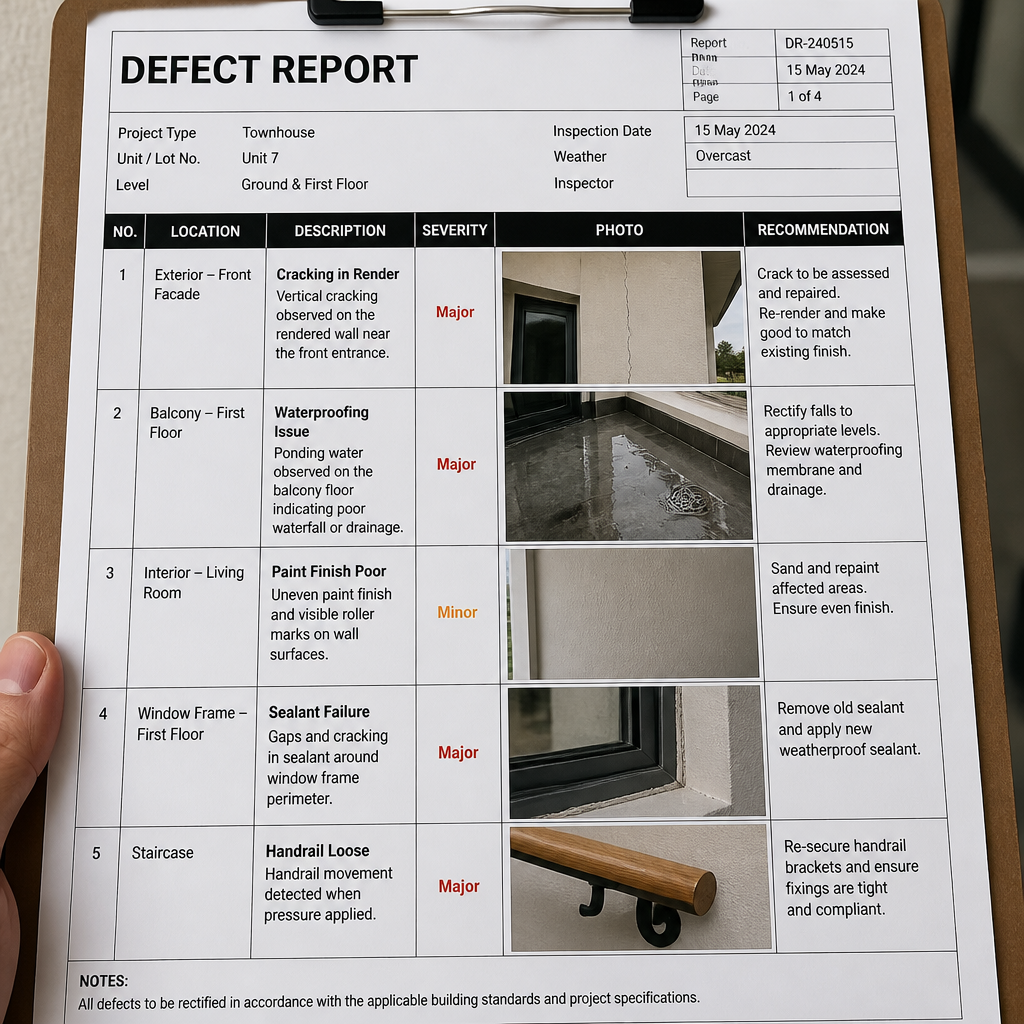
Waterproofing defects are the single most consequential category in new townhouses. Bathrooms, ensuites, laundries, and outdoor balconies are all required under the National Construction Code to have compliant waterproofing membranes installed before tiling. Once the tiles go down, no visual inspection can confirm whether the membrane was applied correctly, at the right thickness, or at all. In townhouses, balcony waterproofing failures are especially serious because the balcony of one lot often sits directly above the living space of another, turning a defect in one dwelling into damage in a neighbour’s property.
An inspector who identifies inadequate membrane coverage, missing upturns, or improper draining fall before settlement gives the buyer the strongest possible grounds to demand rectification at the builder’s cost, rather than fighting over it years later when the water damage has already spread.
Cracking in Shared and Party Walls
Townhouse party walls, the structural walls shared between two adjoining lots, experience different stress loads than external walls. Settlement movement, differential foundation behaviour between lots, and the vibration caused by construction activity on adjacent units all contribute to cracking patterns that can appear at corners, around window reveals, and along the ceiling line. Not all cracking is structural, but all cracking in a new build deserves a documented record. An inspector distinguishes between cosmetic shrinkage cracks and those indicating movement that may worsen.
Incomplete or Non-Compliant Fit-Out
On townhouse projects built at speed across multiple stages, fit-out trades frequently miss items. Common findings include missing door seals, improperly set out cabinetry, ungrouted or poorly grouted tiled surfaces, window reveal gaps that breach weatherproofing requirements, and balustrade heights that fall short of the Building Code of Australia minimum. These items are straightforward to fix before handover and extremely inconvenient to negotiate after settlement.
Roof and Ceiling Space Issues
Roof and concealed-area coverage depends on the agreed inspection scope and safe access. GoInspect’s standard residential inspection does not include an external roof inspection. A drone roof inspection can be arranged for an additional fee. Confirm any roof-void, subfloor or other specialist access requirements before booking; an inspection cannot assess every concealed element.
Pro tip: Ask your inspector specifically whether they check the roof space and balcony waterproofing in every townhouse inspection. Some providers limit their scope to what is “reasonably accessible,” which can mean critical areas are left unchecked. At GoInspect, the inspection scope for townhouses is defined before the booking, so there are no surprises in the report.
When to Book Your Townhouse Handover Inspection
Timing is everything with a townhouse handover inspection. The inspection must be booked and completed after the builder formally notifies you that practical completion has been reached, but before you attend the handover meeting, accept the keys, or make the final payment. Under Queensland residential building contracts, builders are generally required to give buyers advance written notice before the handover inspection date. That window is your operational space for booking an independent inspector.
Do not wait until the morning of the handover meeting. In practice, buyers who try to arrange an inspection at the last minute often find that availability is tight or that the report cannot be completed in time to be useful. Book as soon as you receive the practical completion notice. Same-day reporting capability, where the inspector delivers the full written report on the day of the inspection, is a significant advantage in this situation because it means you can walk into the handover meeting with documented findings in hand.
The defects that cost buyers the most are never the ones visible at handover. They are the ones no one documented before settlement, when fixing them was still the builder’s contractual problem.
If your development is staged and your townhouse is completed ahead of other lots in the same complex, be aware that ongoing construction activity nearby may still affect your property. A good inspector will note any areas where external finishes or shared elements cannot yet be fully assessed because adjacent lots are not complete, and flag those for follow-up.
Inspection Types Compared
Buyers purchasing in new townhouse developments often encounter several different types of inspections at different stages. Understanding what each one covers, and more importantly what each one does not cover, is the foundation of a sound inspection strategy.
| Inspection Type | When It Happens | Who Benefits and What It Covers |
|---|---|---|
| Pre-handover / Practical Completion Inspection | After practical completion notice, before keys are accepted | Buyer-commissioned. Covers all accessible areas: fit-out, wet areas, roof, structure, services. Produces a legally referenced defect report for rectification negotiations. This is the most important inspection for townhouse buyers. |
| Builder’s Internal Pre-Completion Walkthrough | Days before the scheduled handover | Conducted by the builder’s own supervisor. Intended to catch obvious items before the buyer sees the property. Not independent, not legally usable by the buyer, and does not substitute for an external inspection. |
| Post-Settlement Defect Liability Inspection | Within the 12-month defect liability period after settlement | Useful for identifying defects that only emerge after occupation, such as seasonal moisture movement or items missed at handover. Works best when a pre-handover baseline report already exists for comparison. |
The clear recommendation for any buyer in a new Brisbane townhouse development is to commission the pre-handover inspection without exception. The other two inspection types serve useful secondary purposes but cannot replace the pre-handover report as the foundation of your defect documentation.
Body Corporate and Shared Property: What Gets Inspected
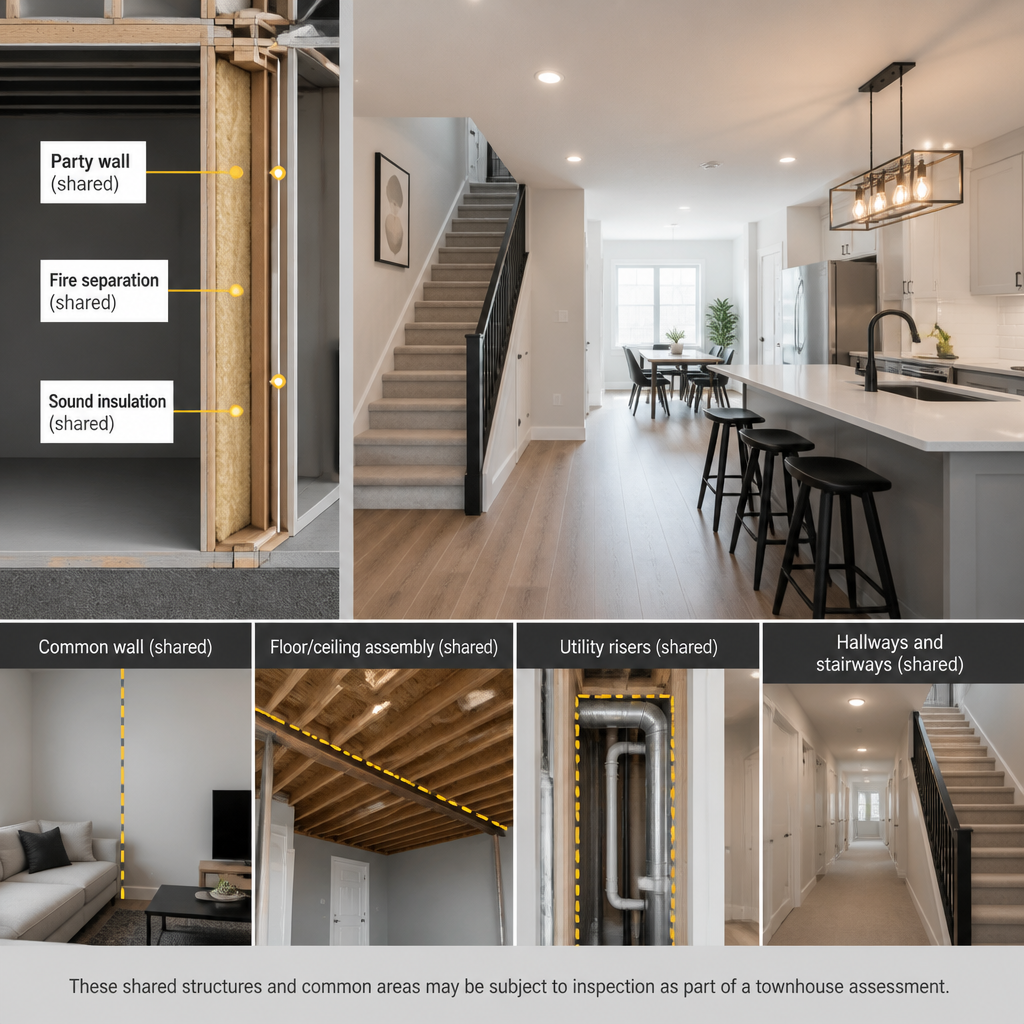
Agree the accessible areas and any specialist roof or concealed-area checks with your inspector before booking. Record access limitations in the report.
That said, a competent inspector will note anything visible in shared or common areas that suggests a defect affecting your lot. If a shared driveway has a drainage fall that will direct water toward your garage door, that is a finding worth documenting. If the shared roof shows visible flashing defects from the roofline of your lot, that goes in the report too. The practical value of those observations is significant even if the formal rectification obligation sits with the developer or the body corporate rather than with your individual builder.
For buyers purchasing in a community titles scheme, it is also worth obtaining and reviewing the body corporate records before settlement. Meeting minutes from the development period sometimes document known defects or outstanding builder obligations that the general disclosure documents do not surface. Combining a thorough lot inspection with a body corporate records search gives you the most complete picture before settlement.
Pro tip: If you are buying a townhouse in a multi-lot development that is still under construction, ask GoInspect about inspection reports customised for high-rise and multi-lot strata projects. A generic residential report format does not capture the specific elements of community title property, and the difference in report quality matters when you are escalating defects to the developer.
Your Rights Under Queensland Warranty Law
For Queensland work, contractual defect arrangements, QBCC rectification assistance and Queensland Home Warranty Scheme claims have different eligibility rules and deadlines. Notify your builder promptly in writing and check the current QBCC time limits and eligibility and Home Warranty Scheme claim requirements. Do not assume a maintenance period extends every complaint or insurance deadline.
The warranty scheme exists because builders occasionally become insolvent, disappear, or simply refuse to rectify defects they are contractually obligated to fix. It is a safety net. But accessing it effectively requires documentation. A pre-handover inspection report that identifies defects at the point of practical completion creates a dated, independent record that is far more useful in a warranty claim than a buyer’s recollection of what appeared to be wrong on the day of handover.
Document the concern and raise it with the builder promptly. Check the current QBCC requirements linked above and obtain advice about the contract and any approaching deadlines.
What a Photo-Enhanced Defect Report Actually Does
The format of the inspection report matters as much as the inspection itself. A written list of defects without photographs is difficult to act on. The builder cannot identify which specific tile grout joint is missing, which wall corner shows cracking, or which balcony drain is improperly set out from a text description alone. That ambiguity is not accidental. Vague defect descriptions slow down rectification because they create room for dispute about whether a defect was fixed adequately or even existed at all.
A photo-enhanced defect report removes that ambiguity entirely. Each defect is photographed in context, labelled with its location, and assigned to the responsible trade. The builder’s site supervisor receives a document that points to exactly what needs to be fixed and who is responsible for fixing it. That specificity is what makes defect rectification move from disagreement to action.
GoInspect’s same-day reporting means the full photo-enhanced report is available on the day of the inspection, before you attend the handover meeting. That is the most useful version of the report. A report delivered three days after you have already accepted the keys is still a document you can use to pursue rectification under the defect liability period, but it cannot be used to condition your acceptance of the property. Timing and report quality together determine how much protection the inspection actually gives you.
Your GoInspect price depends on the inspection service, property type, size and location. Use the current online quote calculator for your property rather than relying on an old starting price. Builder and developer projects need a project-specific quote.
Frequently Asked Questions
What does a townhouse inspection cover that a standard house inspection does not?
Agree the accessible areas and any specialist roof or concealed-area checks with your inspector before booking. Record access limitations in the report.
Can I use the builder’s own pre-completion walkthrough instead of booking an independent inspection?
No. The builder’s pre-completion walkthrough is conducted by the builder’s own staff, which creates a direct conflict of interest. It is not an independent assessment, and the report it produces carries no legal weight for the buyer. The builder’s internal walkthrough may identify some items for their trades to address before handover, but it is not designed to protect your interests, document defects for warranty purposes, or give you a baseline record you can use during the defect liability period.
When is the right time to book a townhouse handover inspection in Brisbane?
Book your inspection as soon as you receive the builder’s formal written notice that practical completion has been reached. The inspection needs to happen after that notice is issued but before you attend the handover meeting and accept the keys. Do not leave the booking until the day before the handover meeting. Same-day report delivery from your inspector means the findings can be available in time for the handover meeting itself, which is when they are most useful for negotiation.
What happens if defects are found during the townhouse inspection?
The inspection report becomes the basis for a formal defect list that is presented to the builder before settlement. Under Queensland residential building contracts, the builder is contractually required to rectify defects identified before practical completion is formally accepted. In practice, this means the buyer can request that items be fixed before keys are handed over, or that the builder provides a written commitment with a timeline for rectification of items that cannot be fixed immediately. After settlement, the twelve-month defect liability period continues to apply for defects that emerge during occupation.
Does body corporate cover defects in my townhouse?
Agree the accessible areas and any specialist roof or concealed-area checks with your inspector before booking. Record access limitations in the report.
How much does a townhouse inspection cost in Brisbane?
Check your current residential inspection price, or request a project quote for a builder or developer inspection program.
What is the QBCC warranty period for a new townhouse in Queensland?
Document the concern and raise it with the builder promptly. Check the current QBCC requirements linked above and obtain advice about the contract and any approaching deadlines.
Have you had a townhouse inspection in a new Brisbane development? Share what you found or what you wish you had known before handover, your experience helps other buyers make more informed decisions.
References
- GoInspect guide to handover inspections for new home buyers in Brisbane
- What to expect from a pre-handover inspection in Brisbane
- HIA overview of QBCC Home Warranty Insurance for residential construction in Queensland
- Legal guide to defective building work and warranty rights in Queensland
- What to check in strata and body corporate records before buying in Queensland