
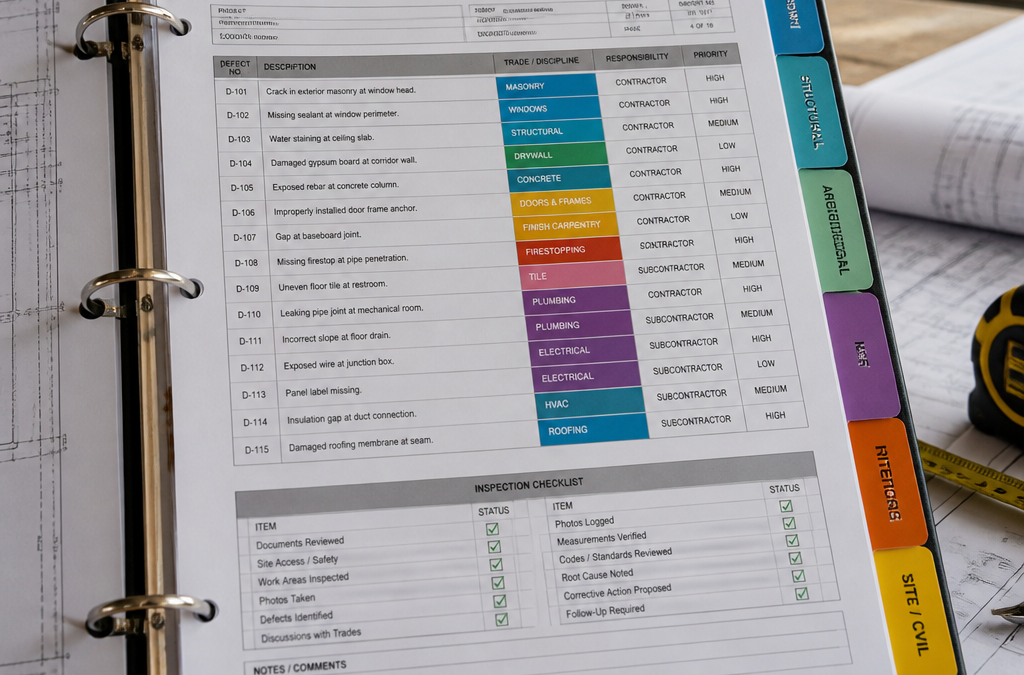
When a plasterer patches over a framer’s mistake, or a painter rolls over a waterproofing failure, the defect does not disappear. It just becomes harder to assign, harder to rectify, and almost impossible to invoice back to the trade responsible. That is the core problem with generic defect reports: they document what is wrong but refuse to name who is responsible. A trade-specific defect report fixes this by linking every defect to the subcontractor whose scope created it, giving builders a direct action plan instead of a vague punch list to argue over. For builders and developers managing multiple subcontractors across Brisbane, Gold Coast, Logan, Ipswich, and Redland Bay, this distinction is not administrative tidiness. It is the difference between a smooth handover and a six-month rectification saga.
Table of Contents
- Why Generic Defect Reports Fail Builders
- What a Trade-Specific Defect Report Actually Contains
- How Photo Documentation Changes Subcontractor Accountability
- The Builder Workflow: From Inspection to Rectification
- Comparing Report Approaches for Builders and Developers
- Construction Quality Assurance Beyond the Defect List
- How Developers Use Trade Reports Across Multiple Lots
- Frequently Asked Questions
- References
Why Generic Defect Reports Fail Builders
A generic defect report hands a builder a list of problems with no owner attached. The site supervisor then spends hours trying to determine whether a cracked render is a bricklayer issue, a renderer issue, or a movement problem caused by inadequate frame tolerances. Everyone disputes responsibility, no one mobilises, and the client complaint sits open for weeks.
The structural failure of a generic report is not just administrative. It directly inflates rework costs. When defects are not assigned to a specific trade on first contact, the wrong subcontractor is often recalled, the right one disputes liability, and the builder ends up absorbing the cost that should have been recoverable from the responsible party.
A common mistake is treating defect reporting as a documentation exercise rather than a cost recovery and accountability mechanism. Builders who view their defect reports this way consistently struggle to hold subcontractors to account, because the report itself provides no clear basis for a contra charge or a warranty callout.
A defect report that does not name the responsible trade is not a management tool. It is a record of confusion.
What a Trade-Specific Defect Report Actually Contains
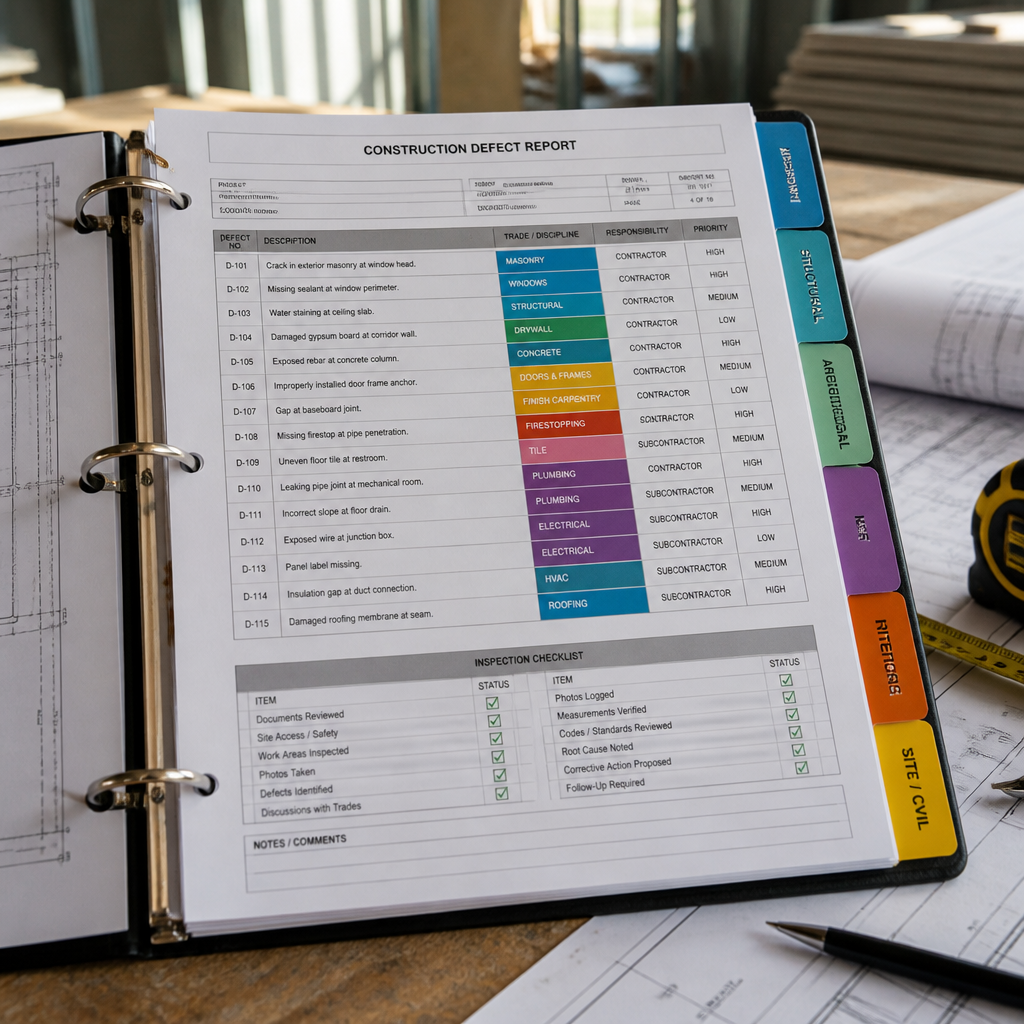
A properly constructed trade-specific defect report does several things that a standard punch list does not. It identifies the defect, pinpoints its location, attaches photographic evidence, and then assigns the item to the specific trade whose work created the issue. That final step is where accountability becomes concrete.
The trade categories a report must cover
In practice, a thorough pre-handover or practical completion inspection will move through every active trade on a residential or commercial build. The report should include fields for framing, brickwork, roofing, plastering, tiling, painting, joinery, wet areas, electrical fittings, plumbing fixtures, and external works. Each defect entry is tagged to one of these categories, not left as a general site note.
GoInspect’s reports for builders and developers across South East Queensland follow exactly this structure. Every defect is assigned to the responsible trade so the builder knows precisely which subcontractor needs to return to the site, and the subcontractor has no room to argue that the defect falls outside their scope.
What separates a usable report from a box-ticking exercise
A usable report for a builder includes the defect description in specific, measurable terms. Vague descriptions are the single fastest way to stall resolution. “Paint finish poor” is not actionable. “Roller lap marks on internal wall surface, northeast bedroom, attributable to painting trade, requiring full repaint of wall face” is actionable and defensible if the subcontractor disputes responsibility.
Pro tip: When briefing an inspection provider, ask explicitly whether their report assigns each defect to a named trade category. If the provider delivers a general site report without trade attribution, it is not fit for purpose as a subcontractor accountability tool.
How Photo Documentation Changes Subcontractor Accountability
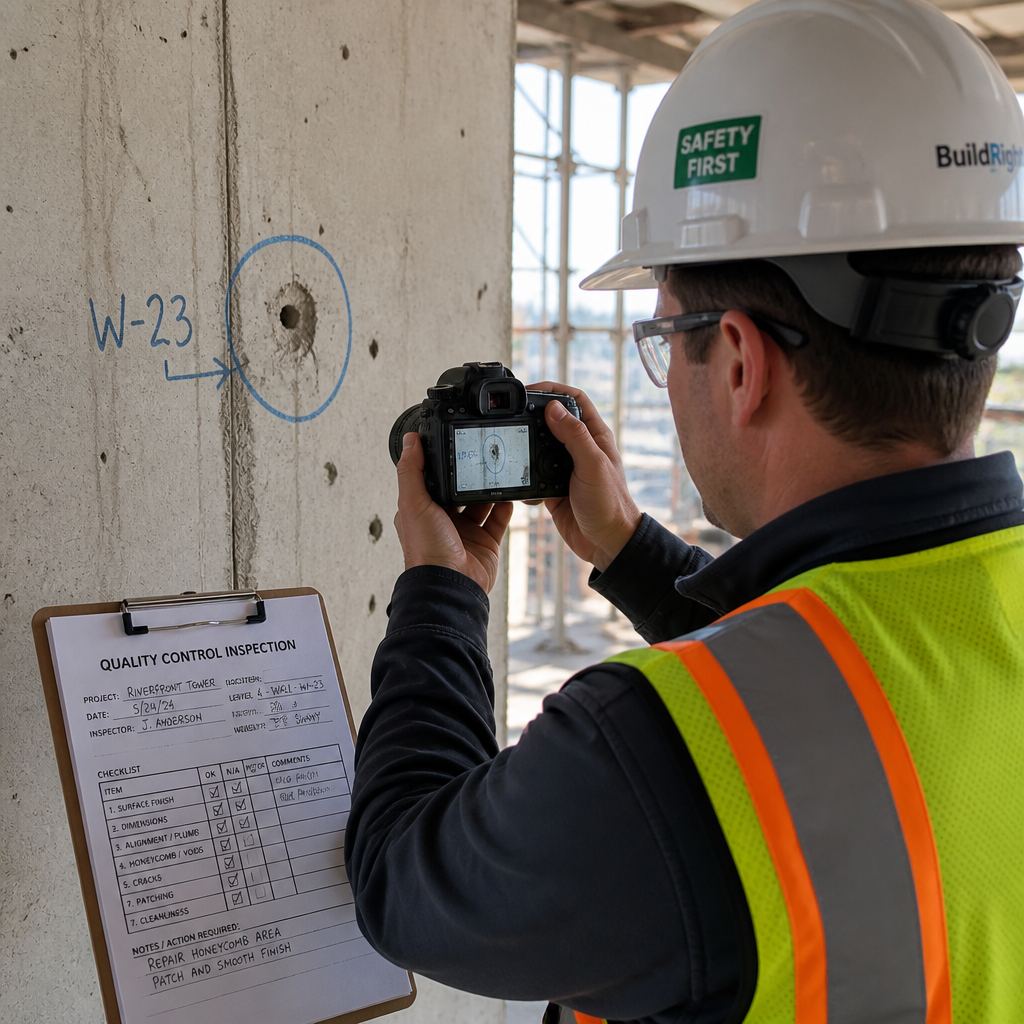
The single most effective element in a trade-specific defect report is a photograph taken at the time of inspection and embedded directly against the relevant defect entry. Without a photo, a subcontractor can return to site, observe a repainted wall or a re-grouted tile, and claim the defect never existed or was caused by a subsequent trade. With a timestamped photo attached to the defect entry, that argument collapses.
Photo documentation also eliminates the “I wasn’t notified” defence. When a defect is photographed, timestamped, trade-attributed, and delivered in a same-day report, the subcontractor has a verifiable record that they were on notice from a specific date. That matters enormously if the dispute escalates to a formal complaint or a QBCC proceeding.
Same-day reporting and why timing matters
Builders operating in active residential construction markets cannot afford to wait three or four days for an inspection report. Subcontractors are scheduled in windows, and if a defect is not communicated within the same scheduling cycle, the site moves on and the rectification window closes.
GoInspect delivers photo-enhanced defect reports on the same day as the inspection. For builders coordinating multiple trades across Brisbane, Gold Coast, and Logan, this means a defect identified at a morning inspection can be communicated to the responsible subcontractor by the afternoon of the same day, keeping the rectification inside the existing scheduling timeline rather than creating a new one.
Pro tip: Match your inspection booking to your subcontractor scheduling cycle. If trades are booked in weekly slots, a same-day report gives you a full week to mobilise the right subcontractor for rectification before the next scheduling window closes.
The Builder Workflow: From Inspection to Rectification
The most efficient defect rectification workflow for a builder has four steps, and the trade-specific report is what makes each step function correctly. First, an independent licensed inspector conducts the pre-handover or practical completion inspection. Second, the report is issued with defects assigned to specific trades. Third, the builder organises rectification by the identified subcontractors. Fourth, defects are confirmed as rectified and the property is cleared for handover to the client.
What breaks this workflow most often is step two. If the report does not assign defects to trades, the builder cannot execute step three without conducting their own investigation. That investigation takes time, creates disputes, and often results in the wrong subcontractor being recalled first.
Using the report as a contra charge instrument
A well-structured trade-specific defect report is also a financial document. Where a subcontractor’s defective work requires a third party to rectify because the original subcontractor cannot or will not return, the builder needs documented evidence that the defect was that trade’s responsibility. A report that names the trade, describes the defect with specificity, and attaches timestamped photographs provides exactly that evidence for a contra charge deduction from a subcontractor’s final payment.
This is why builders and developers increasingly treat pre-handover inspections not as a client service obligation but as an internal construction quality assurance tool. The cost of a professional inspection is recoverable many times over if it enables even one contra charge to be successfully applied.
Comparing Report Approaches for Builders and Developers
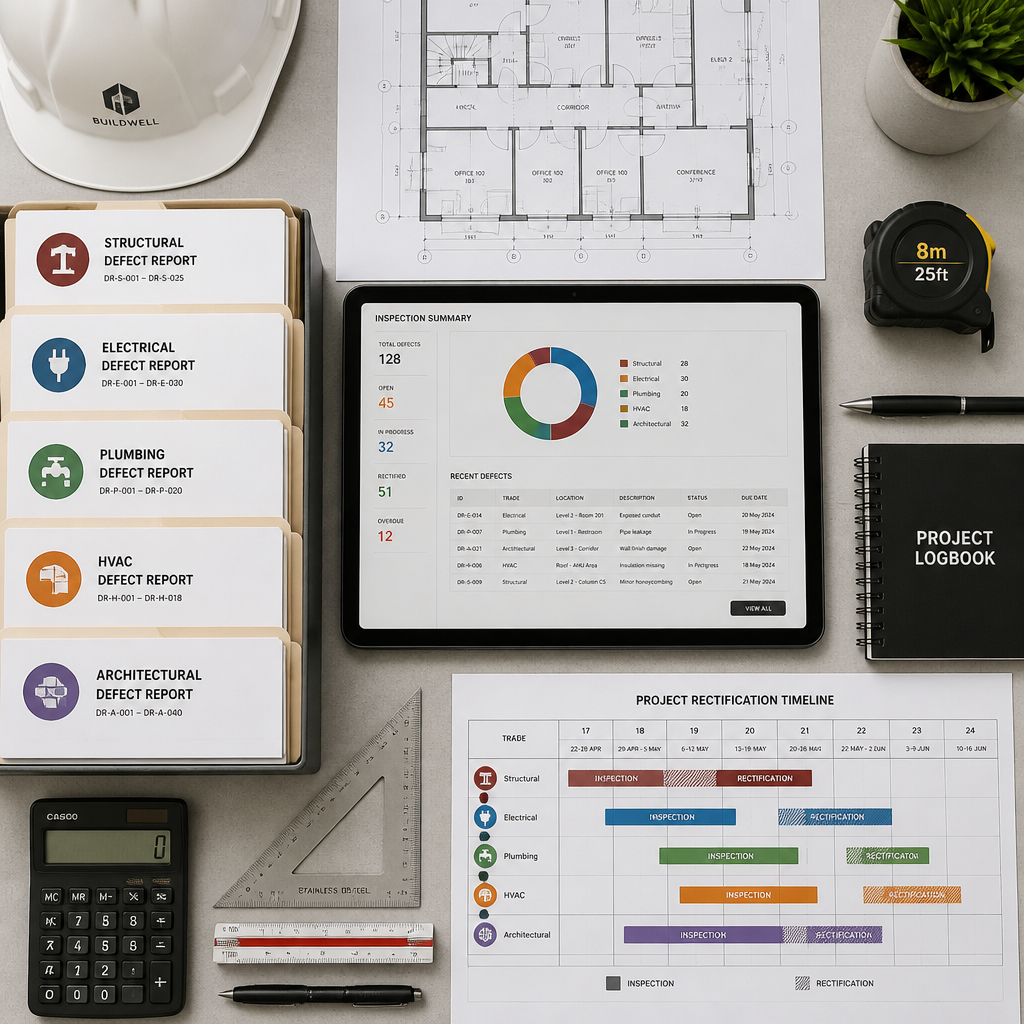
Not all inspection and reporting approaches deliver the same value for builder accountability. The table below compares three common approaches builders encounter when managing pre-handover quality across residential and mixed-use developments.
| Report Approach | Trade Attribution | Builder Accountability Value |
|---|---|---|
| Generic punch list (no trade assignment, text only) | None. Builder must determine responsibility internally. | Low. Creates internal investigation overhead. Difficult to use for contra charges or QBCC disputes. |
| Trade-attributed report without photos (defects named by trade, no visual evidence) | Present but unverified. Subcontractor can dispute the finding without photographic evidence. | Moderate. Better than a generic list but vulnerable to denial without photos to support the claim. |
| Trade-specific, photo-enhanced defect report (each defect attributed to a trade with embedded timestamped photos, same-day delivery) | Full. Each defect is assigned to the responsible trade with visual evidence and a delivery timestamp. | High. Directly supports subcontractor notification, contra charge documentation, and formal dispute records. Minimises mobilisation delay. |
Construction Quality Assurance Beyond the Defect List
Trade-specific defect reports do more than capture problems at handover. When used consistently across a builder’s project pipeline, they generate pattern data that informs subcontractor selection and management. If a painting subcontractor appears as the responsible trade across multiple defect reports over a six-month period, that is not bad luck. That is a systemic quality failure in that subcontractor relationship.
This pattern-recognition function is what separates builders who use inspection reports strategically from those who treat them as a one-time handover formality. Tracking defect responsibility by trade across projects allows a builder to make evidence-based decisions about which subcontractors to retain, which to performance manage, and which to replace.
Hold points and the role of inspections during construction
Pre-handover inspections are the most common use case, but the logic of trade-specific reporting applies equally to hold points during construction. A hold point inspection before plastering covers framing and rough-in work. A hold point before painting covers plaster and render quality. Each inspection creates a timestamped record of the condition of the work at that stage, which is valuable evidence if a dispute arises about when a defect was introduced and by which trade.
Builders working in South East Queensland’s active residential market, where multiple trades rotate across multiple sites simultaneously, benefit significantly from this approach. It prevents the common scenario where a defect discovered at handover triggers a blame cycle between trades, because the hold point record shows which trade was the last to work on that element before the defect was found.
Construction quality assurance at this level is not about bureaucracy. It is about removing the ambiguity that allows defects to go unclaimed and unresolved.
How Developers Use Trade Reports Across Multiple Lots
For a developer managing a staged land release across Logan, Redland Bay, or Ipswich, the challenge is different from a single-site builder. They are overseeing multiple builder-subcontractor relationships simultaneously, often with shared trades working across different lots in the same estate. A trade-specific defect report at the lot level gives the developer visibility into where quality is breaking down and which shared subcontractors are creating problems across multiple sites.
Developers who commission independent pre-handover inspections rather than relying on builders’ internal sign-offs have a structural advantage in client relations. When a defect is identified and rectified before the buyer takes possession, the developer does not inherit a warranty claim, a QBCC complaint, or a reputational issue from a client who moved into a defective home. The inspection cost is absorbed into the development budget; the warranty claim avoidance is measurable.
High-rise and apartment development specifics
For high-rise developments in Brisbane, Gold Coast Surfers Paradise and similar markets, defect reporting requires a different structure than a standard residential inspection. Apartment buildings involve trades operating across multiple levels and units, with shared mechanical, electrical, and hydraulic systems that cross trade boundaries. A customised defect report for a high-rise development must track defects by unit, by level, and by trade category to give the developer and the builder a manageable rectification matrix rather than an unstructured defect dump.
GoInspect provides customised reports for high-rise and apartment developments in addition to standard residential inspections, with defects structured in a way that allows rectification teams to clear entire floors or trade categories systematically rather than moving randomly between unit and system defects.
Frequently Asked Questions
What is a trade-specific defect report and how does it differ from a standard defect list?
A trade-specific defect report assigns every identified defect to the subcontractor trade responsible for that element of the build, such as the painter, tiler, plumber, or waterproofer. A standard defect list records what is wrong but does not attribute responsibility to a specific trade, which forces the builder to conduct their own internal investigation before they can act. The trade-specific format gives builders a direct action plan and a documented basis for subcontractor accountability.
Can builders use a trade-specific defect report to support a contra charge against a subcontractor?
Yes, and this is one of the most practical financial applications of the format. A report that names the responsible trade, describes the defect in specific terms, and includes timestamped photographic evidence provides the documented record a builder needs to justify a contra charge deduction if rectification is carried out by a third party at the original subcontractor’s expense. Without this documentation, contra charge disputes are difficult to sustain.
How does same-day reporting affect the rectification timeline on a residential build?
Same-day delivery means the defect information reaches the builder while the relevant trades are still within their scheduling window. If a subcontractor is returning to the site within the next week, a same-day report gives the builder time to brief them on specific rectification requirements before that visit. Delayed reports often result in trades visiting the site without a clear scope, completing partial work, and requiring further callouts that add cost and delay the handover date.
Do independent pre-handover inspections replace the builder’s own quality checks?
No. Independent inspections are a verification layer, not a substitute for the builder’s internal site supervision and quality checks. The value of an independent inspection is that it provides an objective assessment that neither the builder nor the client can dispute on grounds of bias. In practice, the most effective approach combines the builder’s own quality processes with an independent licensed inspector’s report at practical completion, particularly because the independent report carries weight in any subsequent QBCC proceeding or contractual dispute.
How should a builder brief an inspection provider to ensure the report is trade-specific?
Ask the provider directly whether their report format assigns defects to named trade categories, whether photos are embedded against each defect entry rather than collected in a separate appendix, and whether the report is delivered on the day of inspection. Also confirm that the inspector is fully licensed under Queensland building regulations, as reports produced outside licensed supervision have limited standing in formal dispute processes. A provider who cannot answer these questions clearly is unlikely to deliver a report that meets the accountability standards builders need.
Are trade-specific defect reports useful for apartment and high-rise developments or only for detached homes?
They are useful for both, but the report structure needs to reflect the complexity of the development. A high-rise report must organise defects by unit, level, and trade category to be manageable. A flat list of defects for a 50-unit building is operationally unworkable. Inspection providers who offer customised report structures for apartment and high-rise developments give developers and builders a document they can actually use to coordinate trade-by-trade, floor-by-floor rectification rather than a document that simply proves defects exist.
If you are a builder or developer working through defect management on a current project, we would like to hear how your inspection process is structured and what has worked or not worked for subcontractor accountability in South East Queensland.
We would love your feedback and any insights you would share with others. What perspective would you add?
References
- GoInspect builders and developers inspection services: trade-attributed defect reports for South East Queensland
- Why trade-attributed pre-handover inspection reports matter in Queensland’s residential construction market
- Non-conformance reports in construction: tracking defects, subcontractor accountability, and resolution workflows
- Who is responsible for quality control in construction: subcontractor accountability and digital inspection management
- Construction quality assurance and quality control: defect prevention, inspection standards, and subcontractor management