
Roughly one in three new homes in Queensland is handed over with defects that were never caught before settlement. That statistic, drawn from years of field work across Brisbane, the Gold Coast, Logan, Ipswich, and Redland Bay, is not a scare tactic. It is what GoInspect inspectors document every single week. New home defects Queensland is not a niche problem affecting a handful of unlucky buyers. It is a systemic pattern tied to trade sequencing, subcontractor pressure, and compressed build timelines. This article names the ten defects that appear most often, explains exactly why they occur, and tells you what to do about them before you hand over your keys or your money.
Table of Contents
- Quick Takeaways
- 1. Waterproofing Failures in Wet Areas
- 2. Roof and Gutter Defects
- 3. Cracking in Render and Masonry
- 4. Window and Door Misalignment
- 5. Plumbing Installation Faults
- 6. Electrical Deficiencies
- 7. Flooring Issues
- 8. Paintwork Defects
- 9. Structural and Slab Issues
- 10. Inadequate Ventilation and Insulation
- Comparison of Inspection Approaches
- Frequently Asked Questions
- References
Quick Takeaways
| Key Insight | Explanation |
|---|---|
| Waterproofing is the highest-risk trade in SEQ new builds | Wet area waterproofing failures are the single most common defect category GoInspect identifies, and they are almost always invisible at handover without a trained eye. |
| Most defects involve more than one trade | A roof leak often combines roofing, flashing, and gutter work. Identifying which trade is responsible is critical for getting defects rectified without builder disputes. |
| Photo-enhanced reports accelerate rectification | Builders respond faster to defect reports that include photos, GPS-tagged locations, and trade attribution. Vague written lists stall the process. |
| Settlement is the deadline that matters | Once settlement is complete and defects are not documented, your leverage to compel rectification drops significantly. Pre-settlement inspection is not optional for investors or owner-occupiers. |
| Building defects Brisbane share patterns with Gold Coast and Ipswich builds | High humidity, reactive soils, and compressed construction timelines affect all of South East Queensland. The same defect categories repeat across every corridor. |
| Common construction defects are not always visible | Many structural, plumbing, and electrical defects are concealed behind linings. A licensed inspector with the right equipment finds what a walk-through never will. |
| Starting at $550 including GST, a professional inspection costs far less than one unfixed defect | A single waterproofing rectification in a bathroom typically costs $3,000 to $8,000. The inspection fee is a fraction of that. |
1. Waterproofing Failures in Wet Areas
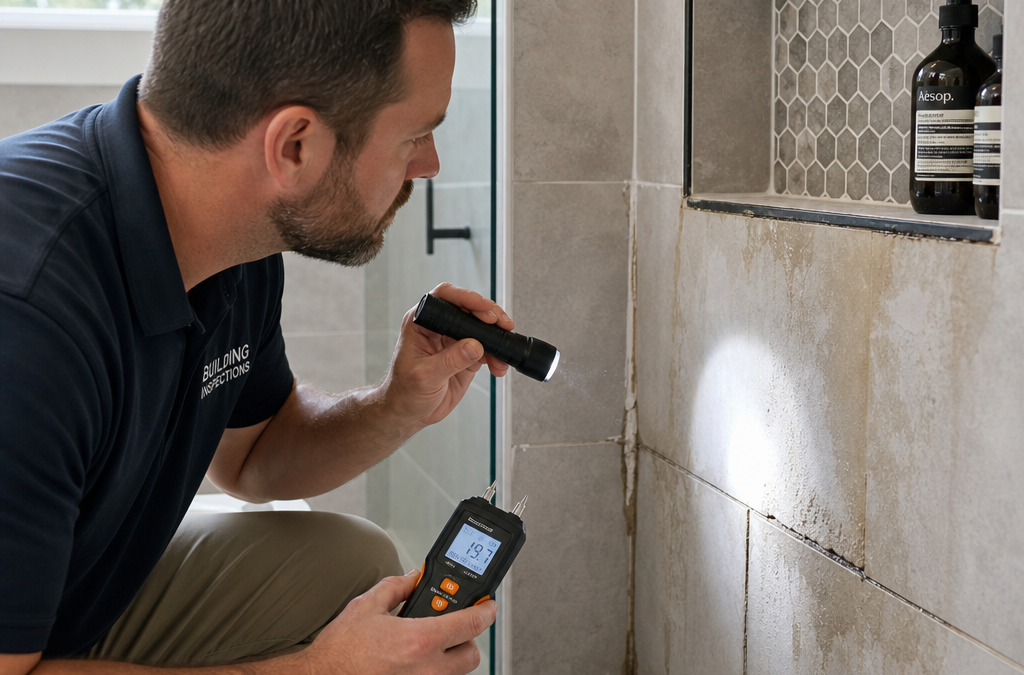
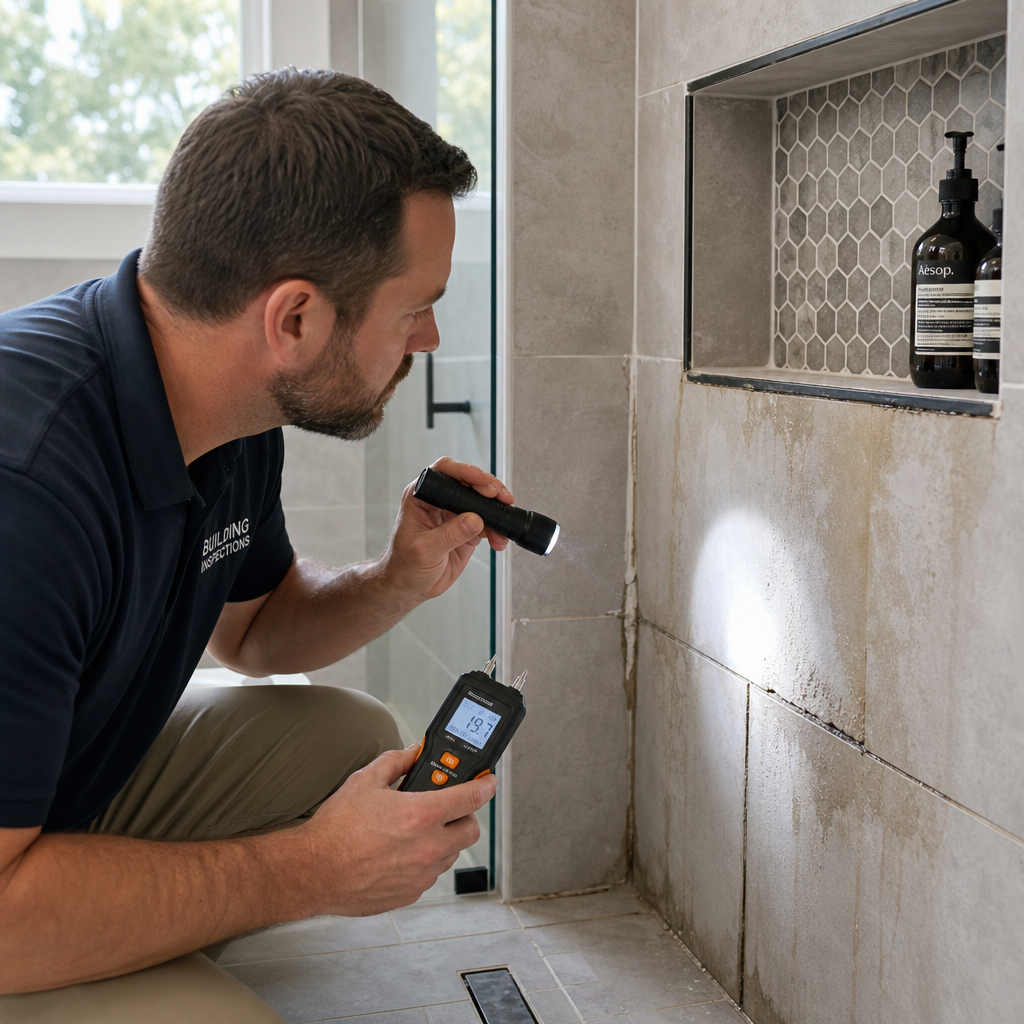
Waterproofing is the defect category that generates the most rectification disputes on South East Queensland new builds, and it is also the one that is easiest to miss during a casual walkthrough. In practice, the problem is almost never that waterproofing membrane was not applied. The problem is that it was applied incorrectly, applied to a substrate that was not fully cured, or terminated short of the required height under the relevant Australian Standard AS 3740.
Bathrooms, ensuites, laundries, and balconies are the primary risk zones. GoInspect inspectors consistently find membrane that stops 20 to 30 mm below the required 150 mm height behind shower screens, or that was applied before silicone joints at penetrations were properly sealed. The result is water ingress that may not become visible for 6 to 18 months, long after practical completion.
Why This Defect Is So Common in SEQ
Tile contractors in Queensland often waterproof and tile in rapid succession to meet builder program dates. When substrate moisture content is too high or cure times are cut short, adhesion fails. High humidity in Brisbane, the Gold Coast, and Redland Bay accelerates moisture-related substrate problems that then compromise the membrane bond.
Pro tip: Ask your inspector specifically whether the membrane height was measured at the shower base and wall junction, not just visually checked. This is where most failures start and where AS 3740 compliance is most often missed.
2. Roof and Gutter Defects
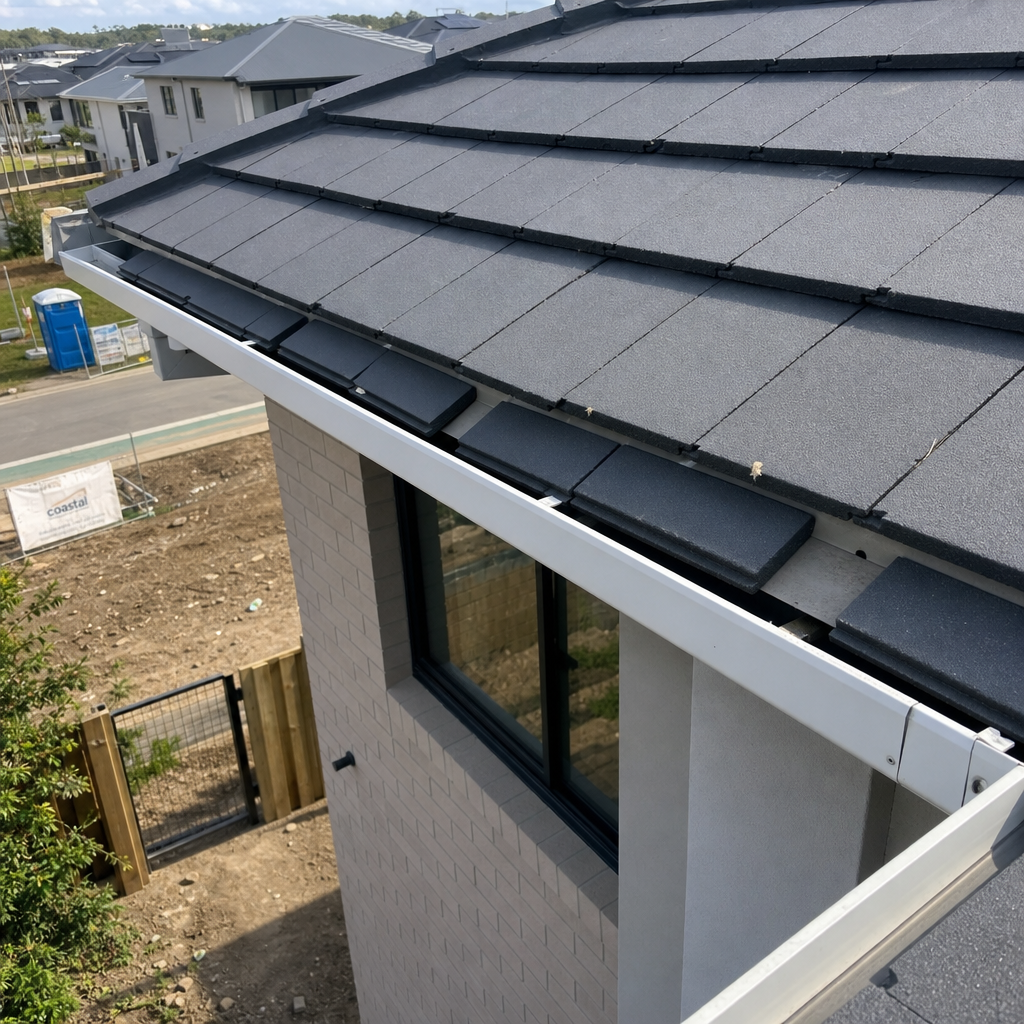
Roof defects are the second most frequent finding on GoInspect reports across Brisbane and the Gold Coast. This category includes incorrectly installed ridge cappings, missing or misapplied flashing at penetrations (such as plumbing vents and skylights), inadequate gutter falls, and poorly secured sarking. None of these are visible from ground level without equipment.
The consequence is not always immediate. SEQ’s weather pattern means a roof can perform adequately through a dry stretch and then fail dramatically during a single summer storm event. By the time the staining appears on the ceiling, the defect has often been active for months and the damage to insulation batts and ceiling linings is already significant.
Gutter Falls and Overflow Risk
Gutters installed without adequate fall toward downpipes pool water against fascia boards and eventually cause timber rot and rust staining on external cladding. In Ipswich and Logan, where reactive clay soils already stress slab edges, ongoing pooling near the perimeter compounds footing risk. GoInspect reports document gutter fall with measurements, not just a visual assessment, so there is no ambiguity in the defect notice to the builder.
“Defects identified during a pre-handover inspection and documented with photographic evidence are substantially more likely to be rectified by builders within the statutory timeframe.” – Queensland Building and Construction Commission, Guidance for New Home Owners
3. Cracking in Render and Masonry
Not all cracking in new homes is structural. In fact, most render cracking in SEQ new builds falls into the category of cosmetic or workmanship defects rather than structural failures. However, distinguishing between the two requires experience, because some crack patterns do signal movement in the slab or frame that needs investigation.
Common construction defects in this category include shrinkage cracking in render applied too thickly in a single coat, cracking at control joints that were omitted or incorrectly placed, and step cracking in brick veneer that follows mortar joints in a staircase pattern. Step cracking in veneer is the one that warrants the closest attention, as it can indicate differential slab movement.
The Render Application Problem in Queensland’s Climate
SEQ’s heat and low humidity in certain months causes render to cure too rapidly when applied in direct sun. Render that loses moisture before it gains strength will crack along stress lines. This is a workmanship defect tied to application conditions, and it is the builder’s responsibility to rectify, but only if it is documented before handover.
Pro tip: Crack width matters. A crack wider than 0.5 mm at any point in external render should be documented and flagged for monitoring, not just reported as cosmetic. GoInspect’s reports categorise cracks by width and pattern so builders cannot dismiss them without proper response.
4. Window and Door Misalignment
Window and door defects on new builds fall into three practical groups: frame alignment problems, sealing and weather resistance failures, and hardware that does not operate correctly. All three appear frequently on building defects Brisbane reports, and all three are the result of the same root cause: window installation is often completed before frames are fully plumb and the structure has settled into its final position.
In practice, doors that drag on frames, windows that cannot be fully opened or latched, and gaps between frames and walls that let in driving rain are not minor cosmetic issues. They affect weathertightness, security, and energy efficiency. A window that is not properly sealed at the head flashing can direct water behind the cladding for years.
Security Hardware and Compliance
Queensland’s building code requires window and door hardware to meet minimum security standards, particularly in new residential builds. Inspectors regularly find deadbolts that do not engage fully, window locks that are loose in the frame, and sliding door tracks that allow panels to be lifted out. These are compliance defects, not just inconveniences, and they should be listed explicitly in the defect schedule presented to the builder.
5. Plumbing Installation Faults
Plumbing defects in new homes range from minor to serious. On the minor end, inspectors find taps that are not flush with tiles, incorrect hot and cold orientation, and showerheads with inadequate flow. On the serious end, the findings include incorrect pipe fall under slab causing drainage backup, incorrectly trapped waste points, and hot water system installations that do not comply with AS/NZS 3500.
A common mistake is assuming that because the plumbing passed a rough-in inspection during construction, the finished installation is defect-free. Rough-in inspections check pipe positioning and pressure test results. They do not check finished fixture alignment, access panel provision, or the performance of the completed system under normal household use.
Hot Water System Compliance
Solar and heat pump hot water systems in SEQ new builds are increasingly common, driven by both market preference and NCC energy efficiency requirements. Inspectors find installation defects including incorrect pipe insulation, missing pressure relief valve discharge lines, and sensor cable routing that exposes cabling to UV degradation. These defects carry safety implications, not just performance implications.
6. Electrical Deficiencies
Electrical deficiencies in new homes are particularly concerning because most of them are concealed behind linings and cannot be found without testing equipment. GoInspect inspectors use non-contact voltage testers and outlet testers to check GPO polarity, circuit continuity, and RCD functionality. These checks consistently reveal problems that passed the electrical contractor’s own sign-off.
The most common electrical findings include double-pole circuit breakers installed where single-pole breakers are specified, GPOs wired with reversed polarity, bathroom exhaust fans connected without appropriate moisture-rated fittings, and switchboard labelling that does not accurately reflect circuit allocation. None of these are visible without testing.
Insufficient Power Points for Modern Homes
A practical defect that falls outside compliance but within reasonable expectation is insufficient GPO provision relative to the electrical plan submitted with the building approval. If the approved plans show four GPOs in the kitchen and the finished installation has two, that is a defect. Inspectors cross-reference the finished fit-out against approved documentation, which casual walkthroughs never do.
7. Flooring Issues
Flooring defects are among the most visible new home defects Queensland buyers report after moving in, but they are also among the easiest to document before handover if the inspector knows what to look for. Hollow tile syndrome is the most common: tiles that sound hollow when tapped indicate insufficient adhesive coverage underneath, and these tiles will crack or de-bond under normal household traffic.
The Australian Standard AS 3958.1 requires a minimum 95 percent adhesive coverage for wet area tiles and 80 percent for dry area tiles. In practice, GoInspect inspectors find tile installations in new SEQ homes routinely falling below these thresholds, particularly in bathrooms where tile adhesive was spread too thin to meet program deadlines.
Timber and Vinyl Plank Defects
Engineered timber and vinyl plank flooring defects include insufficient expansion gaps at walls and fixed elements, lippage between planks that exceeds the allowable 1 mm tolerance under AS 1884, and subfloor levelling that was not completed before installation. Lippage feels like a minor aesthetic issue until someone trips on it, at which point it becomes a liability and rectification cost that falls entirely on the homeowner.
8. Paintwork Defects
Paintwork defects are not simply about appearance, though appearance is part of the story. Builders and painters are required to meet a defined standard of finish under the relevant Australian Standard and the contract specification. In practice, the standard requires paint to be assessed from a standing position in natural light, looking at the surface from a normal viewing angle, not with a torch at a raking angle.
Common defects include roller texture variation between coats, brush marks at cut-in lines, holidays (unpainted patches) at ceiling and wall junctions, and paint applied over unfilled nail holes and setting compound that was not sanded flush. These are workmanship defects, not wear and tear, and they are the builder’s responsibility to rectify before handover.
Exterior Paint Performance in SEQ
Queensland’s UV intensity and humidity create a demanding environment for exterior paint systems. Defects on new builds include insufficient coat thickness, primer omitted on raw timber elements, and paint applied in direct sun causing blistering within the first wet season. GoInspect reports document paint defects with close-range photographs that provide unambiguous evidence for the defect schedule.
9. Structural and Slab Issues
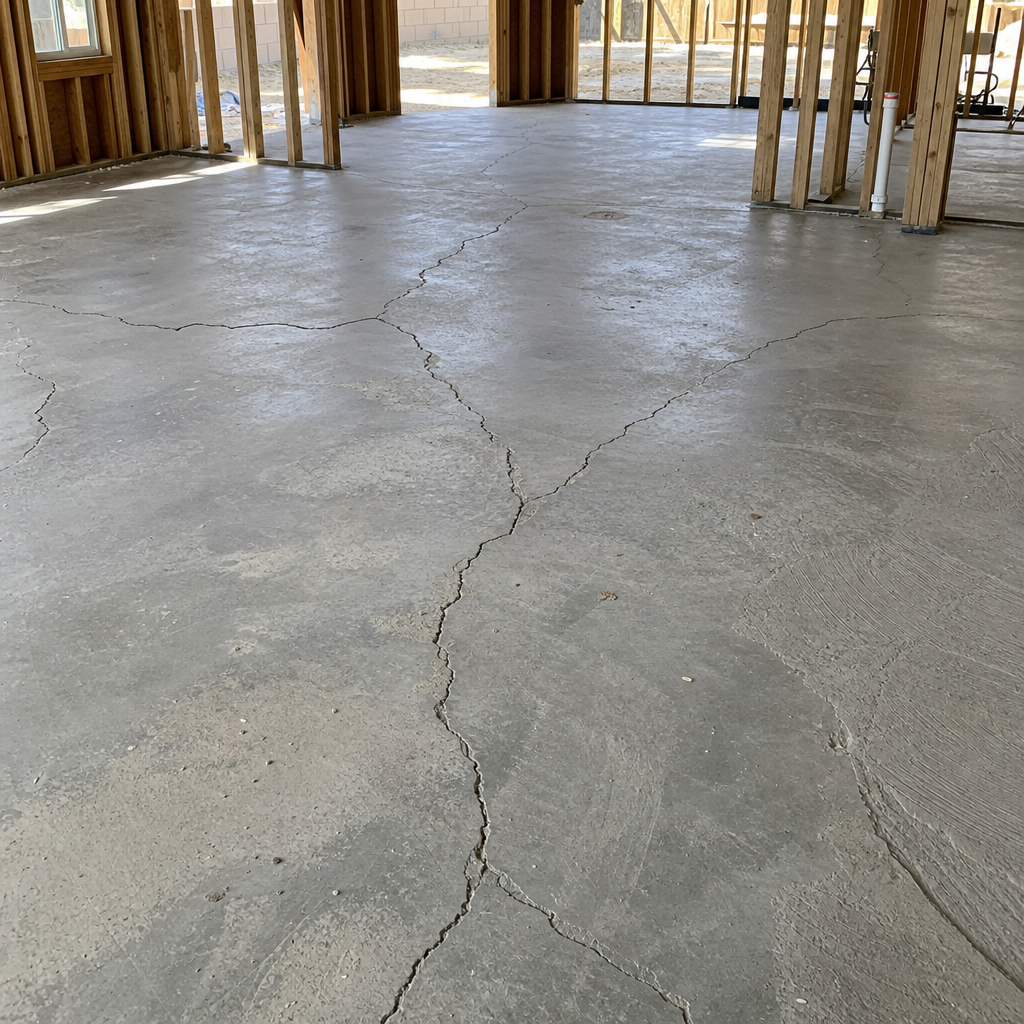
Structural and slab defects are the category that generates the most anxiety among buyers, and rightly so. In SEQ, reactive clay soils across Ipswich, Logan, and parts of Brisbane mean that slab design and construction are genuinely high-stakes activities. The most common finding is not catastrophic structural failure; it is edge beam cracking, slab curl at perimeter, and surface defects in the slab finish that indicate pour and cure problems.
What inspectors look for includes crack patterns that suggest reactive soil movement, insufficient slab coverage over reinforcement, and slab levels that are outside tolerance, which affects floor finishes and door operation throughout the home. These findings require documentation and, in some cases, referral to a structural engineer for assessment before handover.
Pro tip: If your build site is on Class M or Class H soil in the Ipswich or Logan corridor, ask GoInspect to specifically document slab edge beam condition and any cracking within the first 3 metres of external walls. These zones carry the highest movement risk and are where early defects appear first.
10. Inadequate Ventilation and Insulation
Ventilation and insulation defects are the category most frequently missed by buyers doing their own walkthrough, because they are invisible at handover. You cannot see insulation once linings are in. You cannot feel inadequate roof ventilation until the home has been through a full Queensland summer. GoInspect inspectors access the roof space and inspect insulation installation directly, and the findings are consistently disappointing.
Insulation batts that were disturbed during later trade access and not replaced, batts installed with the foil face in the wrong direction, and gaps at wall-to-ceiling junctions where no insulation was installed are the three most common findings. Each of these directly reduces the thermal performance of the home and increases ongoing energy costs for the occupant. Under the NCC 2022 energy efficiency provisions that apply to all new builds in Queensland, correct insulation installation is not optional.
Subfloor and Wall Cavity Ventilation
For raised timber floor homes, particularly in the older suburbs of Brisbane and Redland Bay, subfloor ventilation is a separate inspection item. Blocked or insufficient subfloor ventilation allows moisture to accumulate, which accelerates timber decay, promotes mould growth, and creates conditions for termite activity. These conditions are fully preventable if identified at practical completion and documented for rectification.
Comparison of Inspection Approaches
Not every inspection service operates the same way, and the differences matter when you are trying to get defects rectified. The table below compares the three main approaches buyers and investors encounter when arranging a new home inspection in South East Queensland.
| Approach | What You Get | Limitation |
|---|---|---|
| Builder’s own practical completion inspection | A builder-managed walkthrough, typically with the site supervisor, that identifies obvious cosmetic items the builder agrees to fix | No independent oversight. Defects that require the builder to acknowledge fault are routinely omitted or minimised. Trade responsibility is never assigned. |
| Generic building inspection (not new-home specialist) | A written defect list, sometimes with photos, from a generalist inspector covering structural and pest items primarily | Generalist inspectors are not trained to assess NCC compliance for new construction, waterproofing standards, or contractor responsibility attribution. Reports are harder to act on. |
| GoInspect pre-handover inspection | A photo-enhanced defect report with trade responsibility assigned to each item, same-day delivery, and coverage across all ten defect categories described in this article | Requires the buyer to book independently and coordinate access with the builder, which some builders resist. This resistance is itself a signal worth noting. |
The data consistently shows that defect reports with photographic evidence and specific trade attribution produce faster rectification outcomes than written lists. Builders can dispute a written description. They cannot dispute a photograph with a measurement reference showing waterproofing membrane 80 mm below the required height.
Frequently Asked Questions
What is the most common defect found in new homes in South East Queensland?
Waterproofing failure in wet areas is the most frequently identified defect across GoInspect reports for Brisbane, the Gold Coast, Logan, Ipswich, and Redland Bay. It appears in the majority of inspections and is almost never visible to the untrained eye at handover, which is precisely why it goes unaddressed so often.
When is the best time to arrange a new home inspection?
The best time is before practical completion sign-off, while the builder still has contractual and statutory obligations to rectify defects. A pre-handover inspection or practical completion inspection gives you documented evidence of defects before you accept the property. Waiting until after settlement significantly reduces your practical ability to compel rectification.
Can I use the defect report to withhold settlement?
You should get specific legal advice for your situation, but a documented defect report from a licensed inspector substantially strengthens your position in any dispute with a builder. Queensland’s building legislation provides statutory warranty protection for new homes, and documented defects are the foundation of any warranty claim through the Queensland Building and Construction Commission.
Do building defects in Brisbane differ from those in Ipswich or the Gold Coast?
The categories are consistent across all SEQ corridors, but the specific risks vary by location. Ipswich and Logan reactive soil sites have higher incidence of slab-related defects. Coastal Gold Coast and Redland Bay builds show more waterproofing and corrosion-related defects due to salt air exposure. Brisbane builds across older infill sites sometimes carry subfloor ventilation and drainage complexity that greenfield estates do not.
How long does a GoInspect pre-handover inspection take and what does it cost?
A standard residential new home inspection takes between two and four hours depending on the size and complexity of the build. Reports are delivered the same day. GoInspect’s pre-handover inspection pricing starts at $550 including GST, which is less than a single defect rectification typically costs once settlement is complete and the builder’s urgency to cooperate has reduced.
What happens if the builder refuses to rectify defects listed in the report?
A photographic defect report from a licensed inspector provides the documentary foundation for a formal complaint to the Queensland Building and Construction Commission, which has powers to compel rectification under the Queensland Home Warranty Scheme. Without documented evidence, QBCC complaints are significantly harder to progress. This is why the format and quality of the report matters, not just the fact that an inspection was done.
Are new home inspections only useful for owner-occupiers or do investors need them too?
Investors arguably need them more. An owner-occupier living in a home will notice defects as they emerge and can pursue rectification. An investor with tenants in the property is often the last to know about building performance issues, by which time defects have compounded. A pre-settlement inspection on an investment property protects the asset value from day one and creates a documented baseline for any future warranty claims.
If you have recently had a new home inspection in South East Queensland, share what surprised you most in the comments, your experience could help another buyer know exactly what to watch for.
References
- Queensland Building and Construction Commission, official regulatory guidance for new home defects and statutory warranty rights in Queensland
- Queensland legislation database, including the Queensland Building and Construction Commission Act and Home Warranty Scheme provisions
- Australian Building Codes Board, National Construction Code requirements covering waterproofing, insulation, and structural standards applicable to new Queensland homes
- Standards Australia, including AS 3740 waterproofing of domestic wet areas and AS 3958 ceramic tile installation standards referenced in this article
- Forbes, consumer and property industry reporting on construction defect costs and home inspection value for buyers and investors