
Choosing the wrong building inspector for your new Queensland home can cost you tens of thousands of dollars in defects that get handed over undetected. The Queensland Building and Construction Commission (QBCC) receives thousands of complaints every year about defective new home construction, and most of those defects were visible before handover. The question is not whether a new home needs a pre-handover inspection. The question is how to choose a building inspector in Queensland who will actually catch everything, document it properly, and give you a report you can act on the same day.
Table of Contents
- Quick Takeaways
- Why Your Inspector Choice Makes or Breaks Handover
- Licensing and Credentials: What Is Non-Negotiable in Queensland
- Report Quality: Photos, Trade Responsibility, and Same-Day Delivery
- Types of Inspection: Pre-Handover, Pre-Settlement, and Practical Completion
- Comparing Inspection Approaches for Queensland New Homes
- Red Flags That Tell You to Walk Away from an Inspector
- Cost and Value: What You Should Expect to Pay
- Frequently Asked Questions
- References
Quick Takeaways
| Key Insight | Explanation |
|---|---|
| Licensing is mandatory, not optional | In Queensland, your inspector must hold a current QBCC contractor or inspector licence. Unlicensed inspectors have no legal standing and their reports carry no weight with builders. |
| Photo-enhanced reports change outcomes | A text-only defect list is easy for builders to dispute. Reports with referenced photos of each defect create a clear, undeniable record that accelerates rectification. |
| Trade-level responsibility assignment matters | Knowing a defect exists is not enough. Knowing whether it falls on the bricklayer, plasterer, or tiler tells your builder exactly who needs to return and fix it. |
| Same-day reporting is a practical requirement | Builders set tight handover windows. An inspector who delivers a report three days later gives you no time to raise defects before you are contractually obligated to settle. |
| High-rise inspections require customised reports | Apartment and multi-dwelling inspections involve common property, fire systems, and body corporate obligations. A generic residential report template is inadequate for these builds. |
| Experience in your specific suburb matters | An inspector who regularly works across Brisbane, Gold Coast, Logan, Ipswich, and Redland Bay understands the soil conditions, common construction methods, and local builder standards in those areas. |
| Price alone is a dangerous selection criterion | A $250 inspection that misses $40,000 in defects is not a bargain. Evaluate inspectors on credentials, report depth, and response time, not the lowest quote. |
Why Your Inspector Choice Makes or Breaks Handover
Most new homeowners in Queensland assume that because a home is brand new, it will be defect-free. In practice, that assumption is wrong in the majority of cases. Construction involves dozens of subcontractors working across multiple stages, and the coordination between trades is where defects consistently appear. Waterproofing failures, structural cracking, incorrect roof pitching, and incomplete insulation are among the most common issues found at the practical completion stage.
The inspector you choose determines whether those defects are caught before you take possession or discovered after settlement when the leverage to demand free rectification drops dramatically. A licensed building inspector in Queensland with hands-on construction experience reads a site differently from someone who completed a short certification course and prints off a generic checklist.
Choosing based on the first Google result or the cheapest quote is a common mistake that costs Queensland homeowners real money. The right choice requires evaluating credentials, report format, turnaround time, and direct experience with your type of build.
Licensing and Credentials: What Is Non-Negotiable in Queensland
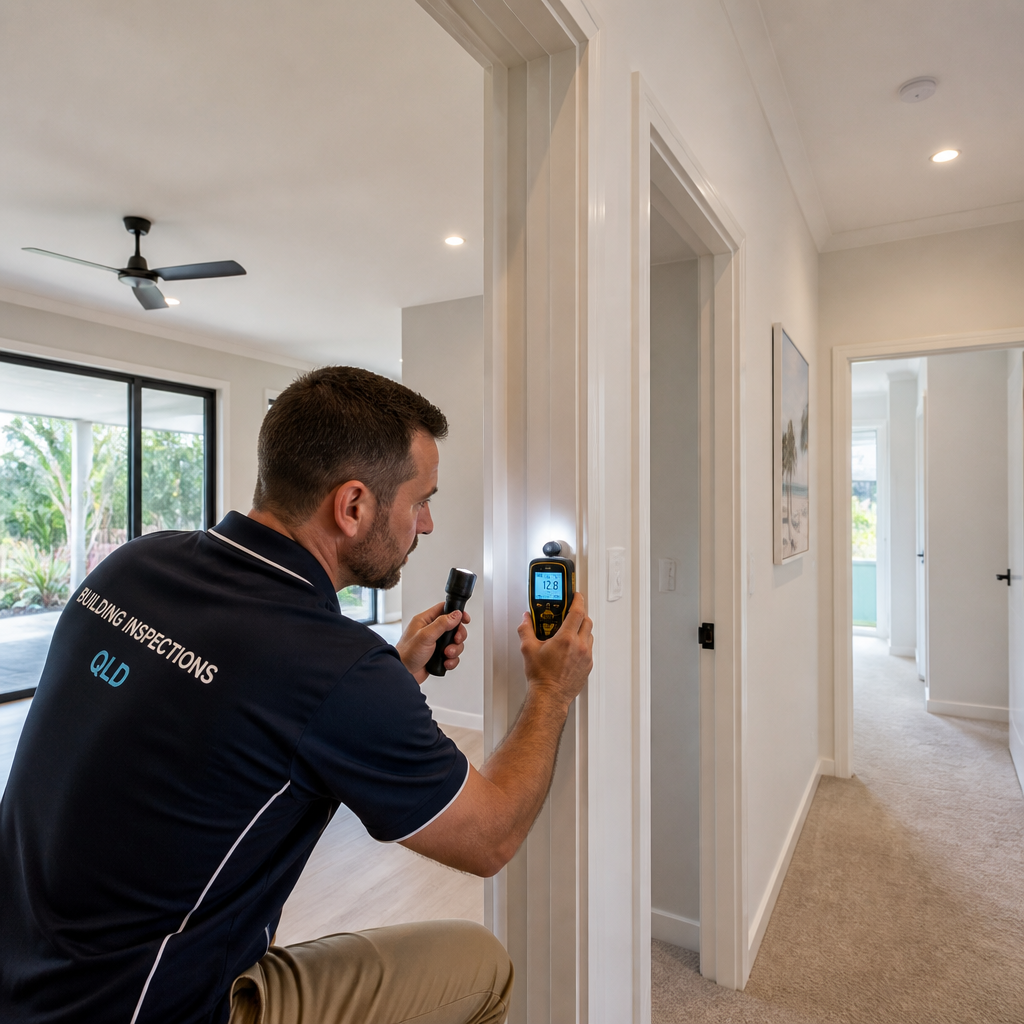
Queensland has a specific licensing framework administered by the QBCC. Any person conducting a building inspection for payment must hold a valid QBCC licence. This is not a bureaucratic formality. It means the inspector has demonstrated minimum competency standards, carries professional indemnity insurance, and is accountable to a regulatory body if their work is substandard.
What QBCC Licensing Actually Covers
A QBCC licence for building inspection work requires the holder to have technical knowledge of the National Construction Code, Queensland Development Code, and Australian Standards relevant to residential construction. When you verify an inspector’s licence on the QBCC public register, you can confirm whether their licence is current, whether any disciplinary actions have been taken, and what categories of work they are authorised to inspect.
Do not accept verbal assurances. Check the register directly at qbcc.qld.gov.au before booking any inspector.
Additional Credentials Worth Checking
Beyond the QBCC licence, look for membership in professional bodies such as the Australian Institute of Building Surveyors (AIBS) or the Master Builders Association. These are not replacements for licensing but they indicate an inspector who invests in continuing education and operates within a professional peer community. Inspectors who work regularly with builders and developers on large-scale projects, including high-rise apartment buildings, typically have a broader technical foundation than those who only do standard residential work.
Pro tip: When an inspector quotes you, ask for their QBCC licence number before confirming the booking. Any inspector who hesitates or deflects this request is an immediate red flag.
Report Quality: Photos, Trade Responsibility, and Same-Day Delivery
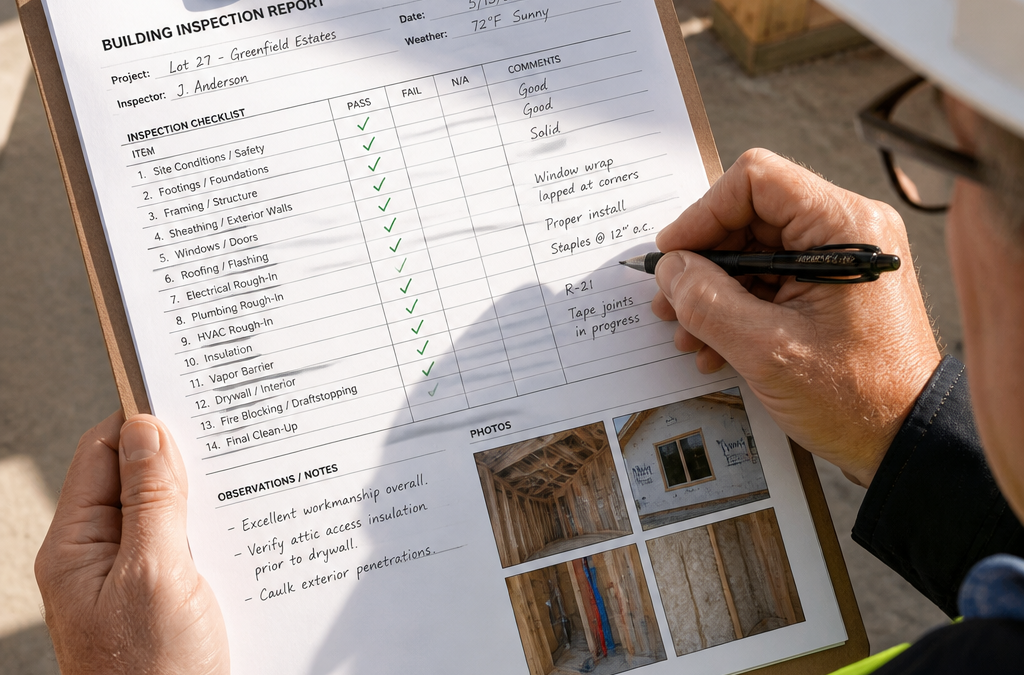
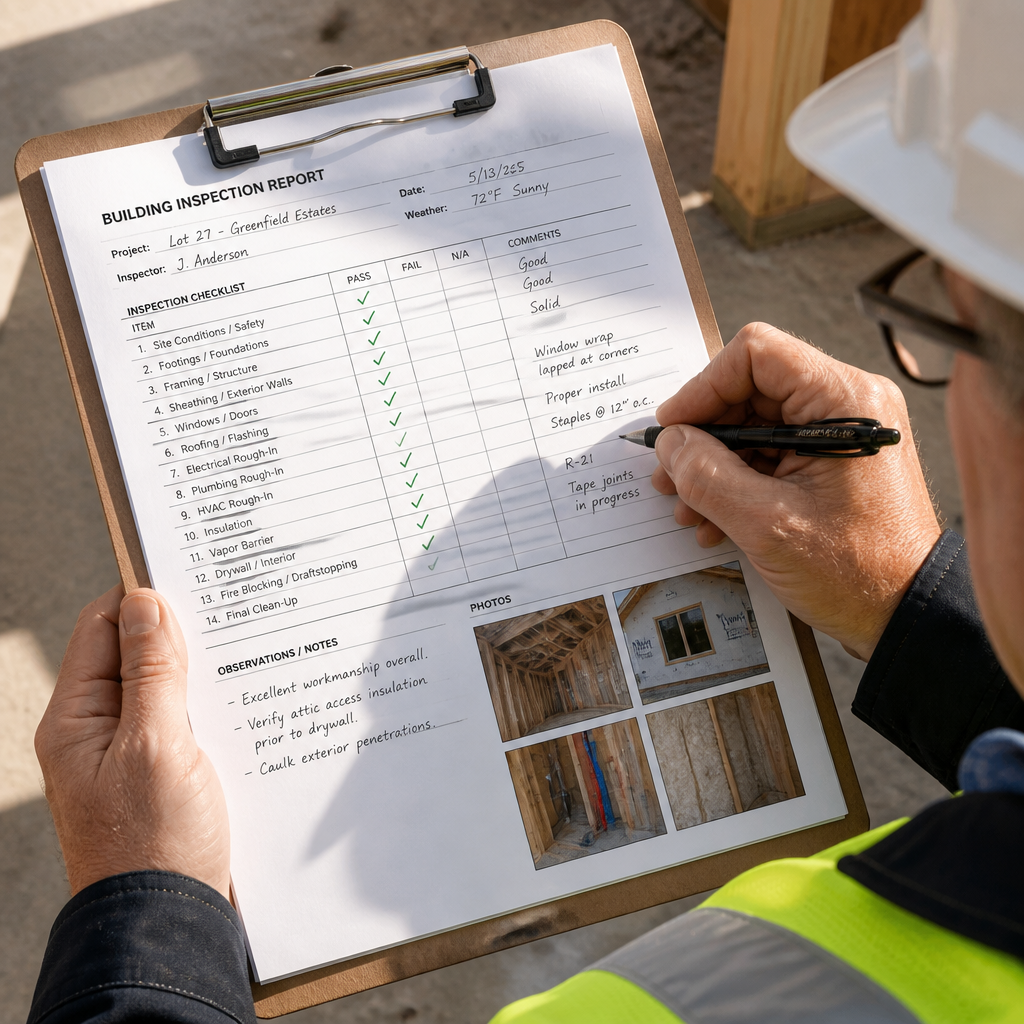
The inspection itself is only half the job. The report is the document you will use to negotiate defect rectification with your builder, and its quality directly determines how productive that negotiation will be. A poorly structured report shifts the burden onto you to prove what was found. A well-structured report does the work for you.
Why Photo Documentation Is the Minimum Standard
Every defect in a quality report should be accompanied by a referenced photograph. Not a generic photo of a room, but a close-up image clearly showing the specific issue, taken at the exact location within the build. This removes ambiguity. A builder cannot plausibly claim a defect was not present at inspection when there is a time-stamped photograph of it in the report.
Reports without photo evidence are routinely disputed by builders. The data consistently shows that defect rectification rates are higher when photographic evidence accompanies written descriptions. Inspectors who still rely on text-only lists are behind the standard the industry has moved to.
Trade-Level Defect Assignment Speeds Up Rectification
A report that simply lists defects creates confusion about who is responsible for fixing each one. A report that assigns each defect to a specific trade, whether that is the concretor, the carpenter, the waterproofer, or the painter, gives the builder a clear action plan. This is particularly important for large builds where multiple subcontractors are involved and the site supervisor needs to coordinate returns efficiently.
This level of specificity requires the inspector to understand construction methodology, not just what a finished surface should look like. It is a meaningful differentiator when you are comparing inspection services.
Same-Day Reporting Is a Functional Requirement
Builder handover timelines are not flexible. If your practical completion inspection is on a Thursday and the handover is scheduled for Friday, a report that arrives Monday is useless. The best new home inspectors in Brisbane and across South East Queensland understand this and build same-day reporting capability into their standard service, not as a premium add-on.
Pro tip: Before booking, ask the inspector to show you a sample report from a previous inspection. If they cannot or will not, book someone else. A confident, experienced inspector has nothing to hide in their report format.
Types of Inspection: Pre-Handover, Pre-Settlement, and Practical Completion
These terms are often used interchangeably but they describe inspections that occur at slightly different stages and carry different contractual implications. Understanding the difference helps you book the right inspection at the right time.
Practical Completion Inspection
This inspection occurs when the builder declares the construction is complete and the home is ready for handover. It is the primary opportunity to identify defects before you take ownership. Under Queensland building contracts, the builder is obligated to rectify any defects identified at this stage before you are required to settle. This is the inspection where getting it right matters most.
Pre-Settlement Inspection
This inspection happens after defects from the practical completion inspection have supposedly been rectified and just before final settlement. Its purpose is to verify that agreed rectifications have actually been completed and that no new defects have been introduced during repair work. Many homeowners skip this step and regret it. Builders occasionally repair one defect and inadvertently damage an adjacent area.
Pre-Handover Inspection for Off-the-Plan Apartments
For off-the-plan purchases, the pre-handover inspection occurs before you accept the keys to a newly completed apartment. This inspection needs to cover both your individual lot and any common property defects that affect your unit. High-rise builds introduce additional complexity, including fire door compliance, waterproofing of balconies and wet areas, and lift lobby finishes. An inspector without specific experience in multi-dwelling buildings will miss issues that are standard findings in apartment inspections.
Comparing Inspection Approaches for Queensland New Homes
Not all inspection services are structured the same way. The table below compares three different approaches you will encounter when searching for an inspector in South East Queensland.
| Inspection Approach | Strengths | Weaknesses |
|---|---|---|
| Generic checklist-based inspection (basic certificate providers) | Lower upfront cost, quick to book | Text-only reports, no trade responsibility assignment, no same-day delivery, difficult to use in builder negotiations |
| Specialist new home inspection with photo-enhanced reports (GoInspect model) | Photo-referenced defects, trade-level responsibility, same-day reporting, licensed inspectors, customised for high-rise and housing projects | Higher cost than basic providers, not suited for pre-purchase inspections of existing homes |
| Builder-engaged inspection (some volume builders offer in-house or affiliated inspectors) | Convenient, no separate booking required | Clear conflict of interest, inspector is paid by the party being assessed, reports tend to minimise defect counts, not independent |
“The purpose of a pre-handover inspection is not to tick a box. It is to create a documented, enforceable record of every defect that exists before you accept legal ownership of a property. The quality of that record determines your ability to hold the builder accountable.” Source: Queensland Building and Construction Commission guidance on defect management.
Red Flags That Tell You to Walk Away from an Inspector
Knowing what to look for is only part of the skill. Knowing which inspection services to avoid protects you just as much. In practice, the following signals reliably predict a poor inspection outcome.
No QBCC Licence on Record
If an inspector’s licence cannot be verified on the QBCC public register, do not proceed. There is no legitimate reason for a qualified inspector to be unregistered. Unlicensed inspections in Queensland offer you no consumer protection and carry no professional indemnity coverage.
Inability to Provide a Sample Report
A reputable inspection company can show you exactly what their reports look like. If they deflect this request or provide a one-page summary with no photos, that is what you will receive after your inspection. The report format should be transparent before you pay.
No Same-Day or Next-Day Reporting Commitment
Any inspector who cannot commit to delivering your report within 24 hours of the inspection is not structured to serve new home clients properly. Builder handover timelines do not accommodate a three-day wait for paperwork.
Inspectors Who Also Perform Repairs
This is an obvious but frequently overlooked conflict of interest. An inspector who offers to fix the defects they find has a financial incentive to find more defects or to describe minor issues as major ones. Keep inspection and rectification work entirely separate.
No Experience With Your Specific Build Type
An inspector who specialises in pre-purchase inspections of existing homes has a different skill set from one who specialises in new construction. High-rise apartment inspections require additional knowledge again. Ask directly whether the inspector has completed inspections on the same type of build you are buying.
Cost and Value: What You Should Expect to Pay
Pricing for new home inspections in Queensland varies significantly based on the scope of the inspection, the report format, and the experience of the inspector. For a standard new home pre-handover inspection in the South East Queensland market, expect to pay from $550 including GST for a comprehensive photo-enhanced report with same-day delivery.
Prices below $300 should prompt immediate questions about what is actually being delivered. A low fee usually reflects a checklist-only process, no trade-level defect assignment, and a generic report template that will not hold up when you present it to a builder disputing findings.
How to Assess Value, Not Just Price
The correct way to evaluate inspection cost is to compare it against the cost of defects that go undetected. A single uncorrected waterproofing defect in a new home can cost $15,000 to $50,000 to rectify after you have taken possession and the area is tiled or lined. An inspection fee of $550 to $800 is trivial against that exposure.
Ask each inspector what their report includes, how defects are documented, whether trade responsibility is assigned, and when you will receive the report. The answers to those four questions tell you whether you are comparing equivalent services or whether the lower-priced option is simply delivering less.
Pro tip: For investors purchasing multiple new properties across Brisbane, Gold Coast, Logan, Ipswich, or Redland Bay, ask inspection providers about volume pricing. Inspectors who regularly work with developers and investors often structure pricing differently for repeat clients.
Frequently Asked Questions
Do I need a building inspector if the builder does their own quality checks?
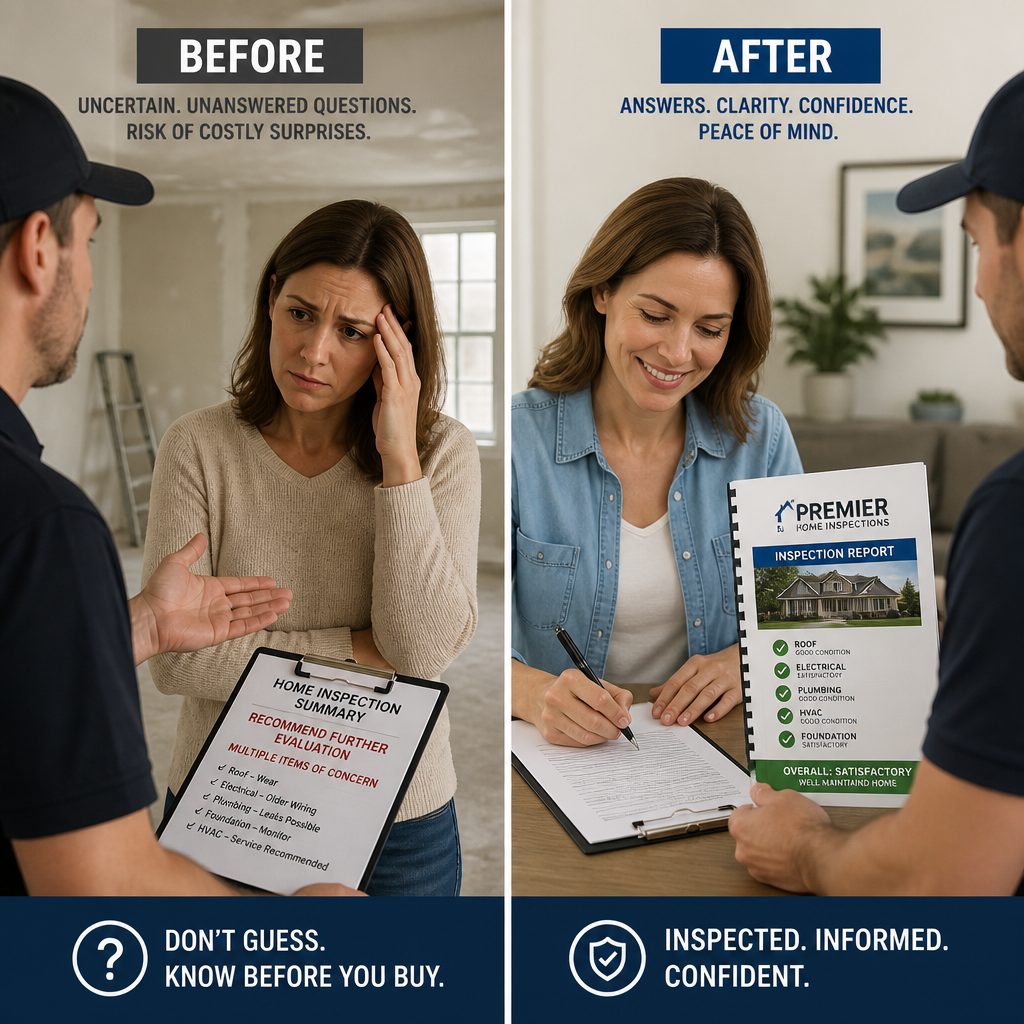
Yes, without exception. Builder quality checks are conducted by the builder’s own staff or subcontractors and are not independent. Their interests are in completing the handover on schedule, not in finding every defect that you will have to live with. An independent licensed inspector works exclusively for you and has no incentive to minimise findings.
What is the difference between a building inspector and a building certifier in Queensland?
A building certifier in Queensland is responsible for certifying that construction at each stage complies with approved plans and the building code. They work on behalf of the certification process, not the homeowner. A building inspector engaged by you conducts an independent assessment of the finished product from your perspective as the owner or purchaser. These are distinct roles and one does not replace the other.
How long does a pre-handover inspection take for a standard new home?
A thorough pre-handover inspection of a standard four-bedroom single-storey new home typically takes between two and three hours on site. Larger homes, two-storey builds, and high-rise apartments take longer. Be cautious of any inspector who completes a full new home inspection in under 90 minutes, as that timeline does not allow for the systematic checking of all elements a quality inspection requires.
Can I attend the inspection as the owner?
Yes, and in most cases you should. Being present allows the inspector to walk you through findings in real time, explain the severity of defects, and answer questions about your specific home. It also gives you a clearer understanding of the report you receive afterward. Reputable inspectors welcome owner attendance.
What happens if the builder refuses to fix defects identified in the inspection report?
Under Queensland building contracts, a builder is obligated to rectify defects identified at practical completion before settlement proceeds. If the builder refuses, you have recourse through the QBCC dispute resolution process and, in serious cases, through the Queensland Civil and Administrative Tribunal (QCAT). A high-quality, photo-documented inspection report from a licensed inspector is your primary evidence in any dispute process. A vague or unphoto-graphed report significantly weakens your position.
Is a building inspection report transferable if I sell the property shortly after purchase?
The inspection report documents the condition of the property at the time of inspection and belongs to the person who commissioned it. While you can share the report with a future buyer as background information, it does not carry the same legal weight for them as an independent inspection they commission themselves. If you are selling a newly completed home, the buyer’s solicitor will typically recommend they obtain their own independent inspection.
If you have recently gone through the handover process in Queensland, share what you wish you had known before choosing your building inspector. Your experience may help other buyers make a better decision.
References
- Queensland Building and Construction Commission official website, covering licensing, defect rights, and dispute resolution for Queensland homeowners
- Australian Building Codes Board, the national body responsible for the National Construction Code that governs new home construction standards in Queensland
- Forbes real estate and home ownership coverage, including buyer guidance on property inspections and construction quality
- Statista data and statistics on the Australian residential construction industry, defect rates, and housing completion trends
- Australian Government Department of Industry, Science and Resources, covering construction industry standards, consumer protections, and residential building regulations