
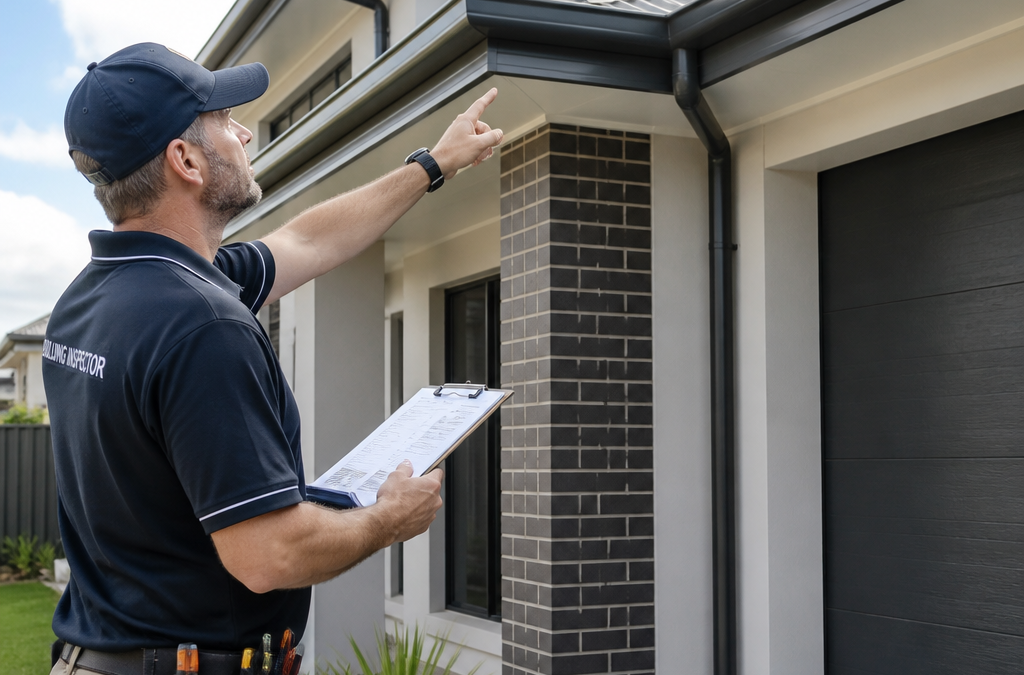
Most Brisbane homebuyers sign the handover paperwork without a clue about what is hiding behind the plasterboard, above the ceiling, or under the silicone beads. By the time they find out, the builder has moved on to the next project, the final payment has cleared, and rectification becomes a negotiation rather than a legal obligation. The new home inspection process Brisbane buyers need is not complicated, but the order of every step matters. This guide walks you through exactly how GoInspect moves a property from first site visit to verified defect close-out, and what happens at each stage if the builder pushes back.
Table of Contents
- Quick Takeaways
- Why the Sequence Matters More Than the Inspection Itself
- Step 1: Booking and Timing Your Inspection Correctly
- Step 2: The Site Inspection
- Step 3: The Photo-Enhanced Defect Report
- Step 4: Presenting Defects to Your Builder
- Step 5: Re-Inspection and Defect Close-Out
- Comparing Inspection Approaches: What Actually Protects You
- How GoInspect Works for Builders and Developers
- Frequently Asked Questions
- References
Quick Takeaways
| Key Insight | Explanation |
|---|---|
| Book before the formal handover notice arrives | Once the builder issues the final practical completion notice, your window to arrange an independent inspection compresses fast. Book as soon as the first notification lands, not the last one. |
| A photo-enhanced report is a legal document | Timestamped photos assigned to specific trades give your report weight in QBCC complaints and legal proceedings. A plain text checklist does not carry the same standing. |
| Same-day reporting is not a nice-to-have | If your settlement timeline is tight, a report that takes 48 to 72 hours to arrive is useless. GoInspect delivers the completed report on the same day as the site inspection. |
| Trade assignment speeds up rectification | Reports that identify which trade is responsible for each defect allow builders to direct remediation work immediately, rather than spending time diagnosing responsibility themselves. |
| A second inspection closes the loop | GoInspect conducts a follow-up re-inspection to verify that every item from the first report has been rectified. This protects you from accepting a builder’s word that work is done. |
| High-rise and housing estate inspections need custom programs | Developers and investors managing multiple lots or apartments need coordinated reporting across units, not a repeat of single-home checklists. |
| QBCC complaints require documented evidence | If a builder disputes defects or fails to rectify, a formal report from a licensed inspector is the first thing the QBCC needs to assess your complaint. |
Why the Sequence Matters More Than the Inspection Itself
The inspection visit is only one part of the process. What happens before it and after it determines whether identified defects actually get fixed. A common mistake is treating the inspection as an isolated event, booking an inspector on the day the builder calls, handing over the final cheque, and then following up informally. That sequence puts every advantage on the builder’s side.
The correct sequence runs in one direction: book early, inspect before sign-off, receive your report the same day, submit defects to the builder in writing using that report, and only accept handover once a re-inspection confirms the work is done. Every step in the GoInspect process is built around that sequence.
Queensland building contracts use the term practical completion inspection (PCI) for the final inspection conducted before you accept handover. The QBCC describes practical completion as the point at which the contractor has fulfilled their obligations under the contract, except for minor defects. Getting an independent inspector through the property before that point is signed off is how you ensure the defect list is yours, not the builder’s.

Step 1: Booking and Timing Your Inspection Correctly
The single most common timing mistake is waiting until the builder issues the formal final notice, then scrambling to find an available inspector. At that point, inspector availability is uncertain, the timeframe is compressed, and the builder has already mentally closed out the job.
The right move is to book your GoInspect inspection as soon as you receive the first practical completion notification from your builder. The QBCC advises that builders generally notify homeowners at least two to three weeks before practical completion, and at least five days’ written notice before the inspection itself. That window is your booking opportunity.
Pro tip: If you are an investor or developer managing multiple lots, notify GoInspect of the staged handover schedule for the entire development as early as possible. Coordinating inspections across multiple units in sequence reduces report turnaround gaps and allows defect patterns to be identified across the project before the later lots are handed over.
GoInspect covers Brisbane, Gold Coast, Logan, Ipswich, and Redland Bay. Pricing starts from $550 including GST, which covers the full site inspection and the same-day photo-enhanced report. There are no surprise add-ons for the report delivery.
Step 2: The Site Inspection
The site inspection is conducted by a fully licensed inspector who walks every accessible area of the property. This is not a walk-through with a notepad and a general sense of quality. The inspection is systematic, trade by trade, room by room, covering workmanship, completeness, code compliance, and contract specifications.
What the inspector checks
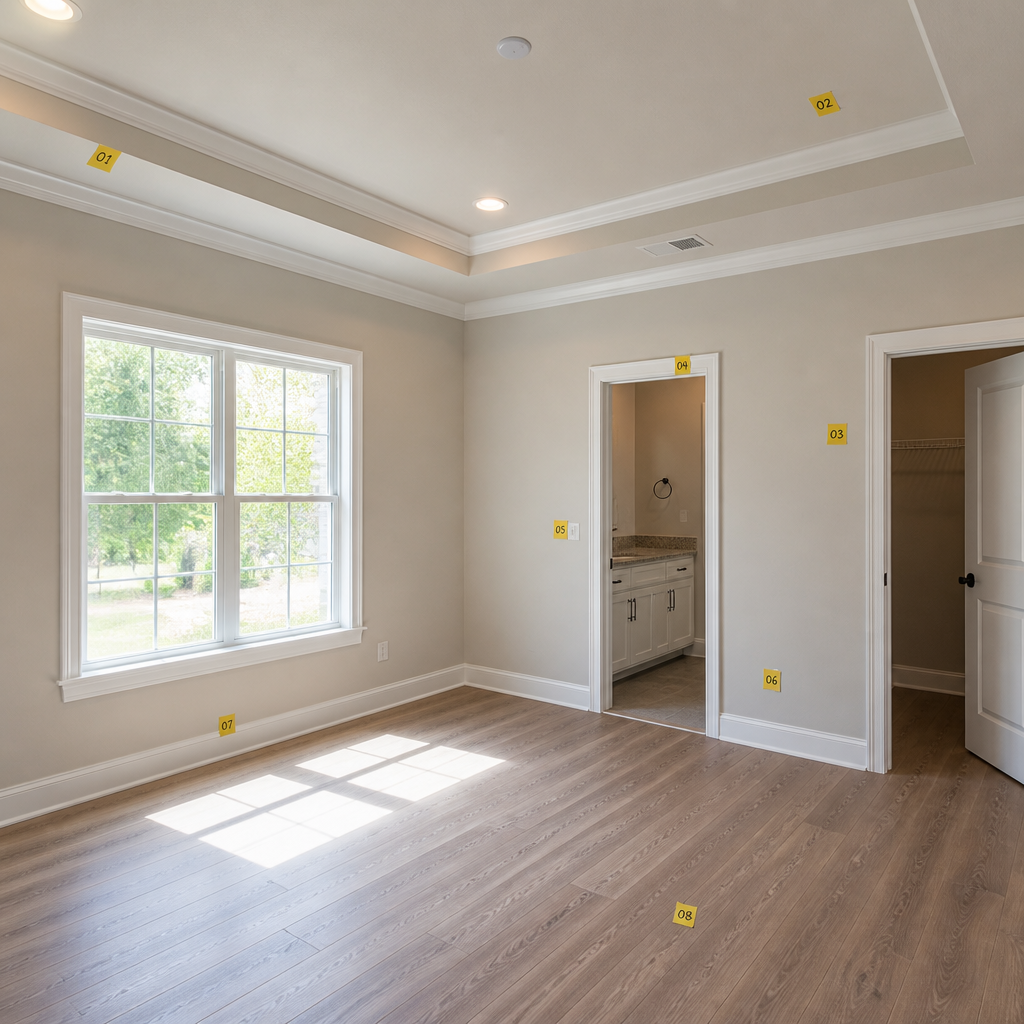
Common defects found during GoInspect pre-handover inspections include misaligned robe doors, poor waterproofing, inadequate drainage, cracking in walls or ceilings, incomplete paint work, poorly fitted fixtures, and faulty electrical installations. The inspector documents every issue, not just the obvious ones.
The purpose of this step is not to find cosmetic preferences. It is to identify construction defects, incomplete works, and code non-compliance that the builder is legally obligated to fix at no cost to you before settlement. There is a meaningful difference between a homeowner pointing at something they dislike and a licensed inspector documenting a defect against a recognised standard.
High-rise and multi-unit inspections
For high-rise developments and housing estates, the site inspection process is adapted rather than replicated. GoInspect provides customised inspection programs for developers and investors managing multiple lots or apartments, with individual unit reports that can be reviewed across the development to identify systemic issues rather than treating each unit as an isolated event.
A defect that goes undocumented before settlement is not a problem the builder is required to solve. It becomes a cost you are required to absorb.
Step 3: The Photo-Enhanced Defect Report
GoInspect delivers the completed report on the same day as the inspection. That same-day turnaround is not a marketing feature. It is a practical necessity when settlement timelines are running tight and the builder expects a response within days, not weeks.
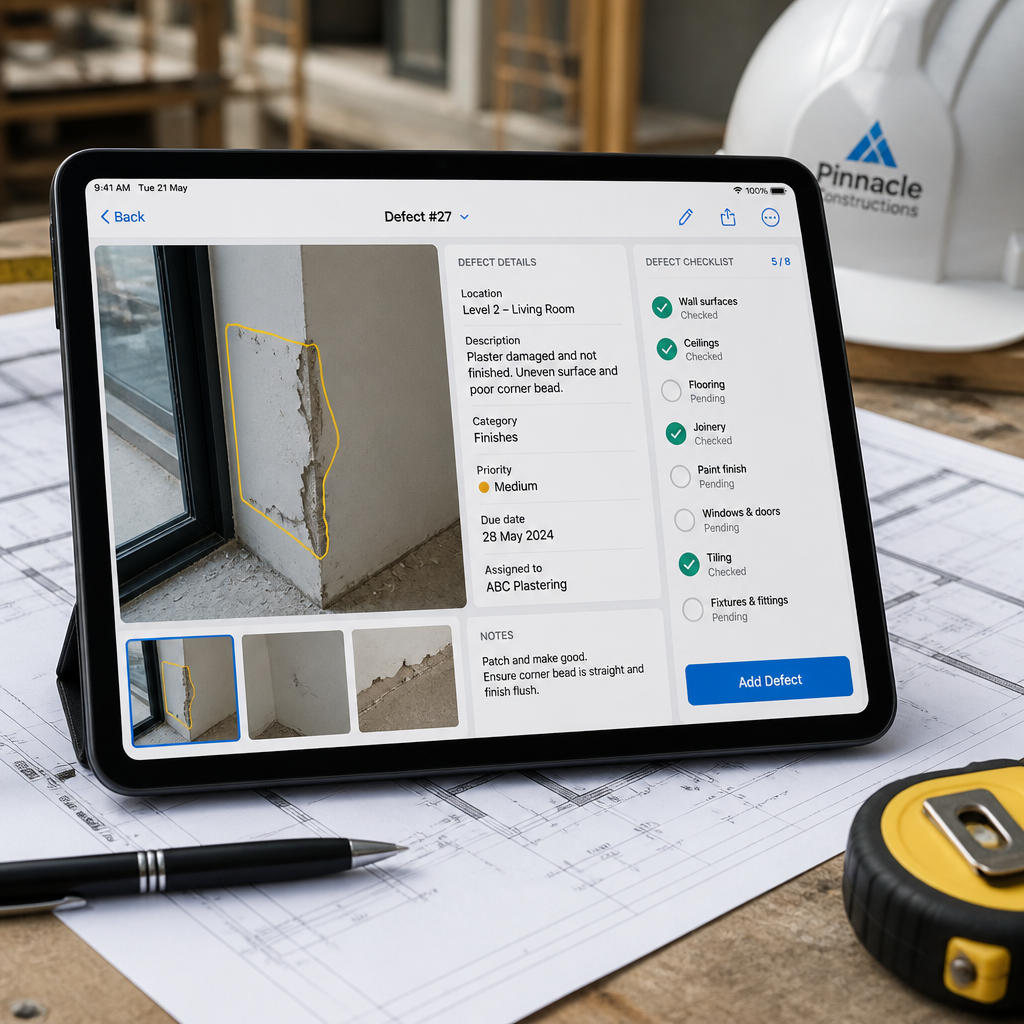
The report is photo-enhanced, meaning every documented defect is supported by timestamped images. Each defect is assigned to the relevant trade, so the builder and their subcontractors know immediately who is responsible for each item. This structure eliminates the back-and-forth that plagues plain text reports, where builders can delay by claiming they need to investigate who is responsible before they can act.
A written checklist with no photographs is cheap to produce and nearly useless in a dispute. A photo-enhanced defect report that documents every identified issue with timestamped images, assigns responsibility to a specific trade, and is delivered the same day as the inspection costs more to produce, but delivers far more value when it matters. This is exactly the difference between GoInspect’s approach and lower-cost alternatives that produce plain text outputs.
Pro tip: When you receive your GoInspect report, read the trade assignments before forwarding it to your builder. If your builder has a main contact for each trade, send them the relevant sections directly alongside the full report. Builders who receive targeted defect documentation by trade act faster than those who receive a consolidated list and have to redistribute it themselves.
Step 4: Presenting Defects to Your Builder
Once you have the report, submit it to your builder in writing. Email is sufficient, but keep a clear record. The report itself functions as your formal defect list, which is the document the builder is required to respond to under the terms of your building contract.
Most builders in Queensland will move promptly once they receive a professional, photo-documented report from a licensed inspector. The quality of the documentation removes the ambiguity that allows disputes to drag on. Builders can see exactly what is identified, where it is, and which trade is responsible.
When the builder disputes or ignores the defects
If the builder does not respond or disputes the defects, the next step is the Queensland Building and Construction Commission. The QBCC oversees building disputes in Queensland and can require builders to rectify defective work. A formal, photo-documented inspection report from a licensed inspector significantly strengthens a QBCC complaint, because the complaint is not one person’s word against another’s. It is a documented record from an independent professional.
Without an independent report, the homeowner is in a structurally weak position. The QBCC complaint process begins with a written dispute notification, and having professional documentation from the outset means the complaint has a factual basis rather than an anecdotal one.
Step 5: Re-Inspection and Defect Close-Out
GoInspect conducts a second inspection of the property once the builder advises that all defects from the first report have been rectified. The re-inspection checks every item from the original list and either confirms it as closed or keeps it open with documented evidence that the work has not been satisfactorily completed.
This step is the one most inspection services skip. A single inspection that documents defects but does not verify rectification leaves the homeowner in the position of assessing the builder’s own work, which eliminates the independence that made the first inspection valuable. GoInspect issues a second report after the re-inspection, providing a complete documented record of what was identified, what was rectified, and what remains outstanding.
Open and closed defect tracking for larger projects
For builders and developers managing multiple lots or high-rise projects, GoInspect provides defect statistics reports that track open and closed items across inspections. An open defect is any issue that has been identified, documented, and not yet verified as rectified. The distinction matters because a builder marking a defect closed based on a subcontractor’s word, without an independent inspection to confirm it, is not a closed defect in any meaningful sense.
When defect statistics are broken down by trade across multiple lots, the data becomes actionable at the procurement level. A subcontractor who consistently generates the highest open defect count is visible in the statistics. This gives builders a rational, documented basis for managing subcontractor performance rather than relying on gut instinct.
Comparing Inspection Approaches: What Actually Protects You
Not all pre-handover inspections produce the same outcome. The format of the report, the credentials of the inspector, and the presence or absence of a follow-up re-inspection all affect how much protection you actually have. The table below compares the main approaches.
| Inspection Approach | What You Get | Key Limitation |
|---|---|---|
| GoInspect photo-enhanced report | Same-day photo-enhanced report with trade assignment, licensed inspector, re-inspection included, QBCC-ready documentation, customised programs for high-rise and multi-lot projects | Higher cost than plain text alternatives, but the cost of disputing defects without proper documentation is considerably higher |
| Plain text checklist inspection | Written list of items without photographic evidence, no trade assignment, sometimes delivered days after the inspection | Weak evidentiary value in disputes, difficult to act on without knowing which trade is responsible, no mechanism for verifying rectification |
| Builder-conducted walk-through only | Builder and buyer walk the property together, builder produces their own defect list | No independent oversight, builder controls what is documented, no legally independent record, post-settlement disputes become very difficult to resolve |
How GoInspect Works for Builders and Developers
GoInspect serves builders and developers, not just end buyers. For builders managing housing estates or high-rise developments, having an independent third-party inspector across the project serves a different function than a single pre-handover inspection for one buyer. It creates a quality control layer that the builder’s own site supervisors cannot replicate because they have a structural conflict of interest in assessing their own work.
On high-rise and large projects, GoInspect issues statistics reports that show builders which trades are not performing and which areas of the development need improvement. These reports are broken down by open and closed defects across the entire project, not just individual units. For developers, GoInspect also provides quality inspection certificates that developers can use to demonstrate to investors that each dwelling has been independently inspected and meets or exceeds industry standards. This creates confidence at the point of sale, which is a material consideration for off-the-plan buyers making decisions before they can physically inspect the finished property.
For investors and developers taking delivery of multiple lots within the same development, a coordinated inspection approach through GoInspect means individual unit reports can be reviewed against each other, patterns can be identified earlier, and remediation can be managed as a project rather than as a series of isolated complaints.
Frequently Asked Questions
What is the difference between a practical completion inspection and a pre-handover inspection?
They refer to the same event. In Queensland building contracts, the formal term is practical completion inspection (PCI). Pre-handover inspection is the term homeowners commonly use. Both describe the independent inspection of a new home conducted before you accept handover from the builder and before you make the final payment under your building contract.
When should I book my GoInspect inspection?
Book as soon as you receive the first practical completion notification from your builder, not when you receive the formal final notice. The QBCC advises that builders generally provide at least two to three weeks’ notice before practical completion. Booking early gives you inspector availability and time to act on the report before handover is due.
How quickly do I get my inspection report?
GoInspect delivers the completed photo-enhanced report on the same day as the inspection. This is important when settlement timelines are tight. Reports delivered 48 to 72 hours after the inspection are not useful if your handover is the following morning.
What happens if my builder refuses to fix the defects identified in the report?
Submit the report to your builder in writing first and document that submission. If the builder does not respond or disputes the defects, you can lodge a complaint with the Queensland Building and Construction Commission (QBCC). A formal, photo-documented inspection report from a licensed inspector provides the evidence base the QBCC needs to assess and progress your complaint.
Does GoInspect only inspect houses, or do they cover apartments and high-rise developments?
GoInspect provides customised inspection programs for high-rise developments and housing estates, covering individual unit reports as well as statistics reports across entire projects. For developers and investors managing multiple properties, coordinated inspection programs allow defect patterns to be identified across the development rather than treated as isolated incidents.
What areas does GoInspect service?
GoInspect covers Brisbane, Gold Coast, Logan, Ipswich, and Redland Bay. The service area spans the full South East Queensland growth corridor where new home construction and apartment development are most active.
What does the GoInspect re-inspection cover?
The re-inspection checks every item from the original defect report to confirm whether each one has been satisfactorily rectified. Items that have been properly fixed are marked closed with documented evidence. Items that remain unresolved or have been inadequately addressed stay open, with photographic documentation showing the ongoing non-compliance. You receive a second report after the re-inspection, giving you a complete record of the entire defect rectification process.
If you have been through the GoInspect process or are currently managing defect rectification on a new build in South East Queensland, share what worked and what surprised you in the process.
We would love your feedback and any insights you would share with others. What perspective would you add?
References
- GoInspect: what to expect from a pre-handover inspection in Brisbane, including timing, report format, and QBCC processes
- GoInspect: how open and closed defect tracking works for builders and developers across multi-lot projects
- Queensland Building and Construction Commission: official guidance on the practical completion inspection process and homeowner rights
- GoInspect: breakdown of what is included in a Brisbane new home inspection and why photo-enhanced reporting differs from plain text alternatives
- GoInspect: why a handover inspection is essential for Brisbane new home buyers and how the process protects you before settlement