
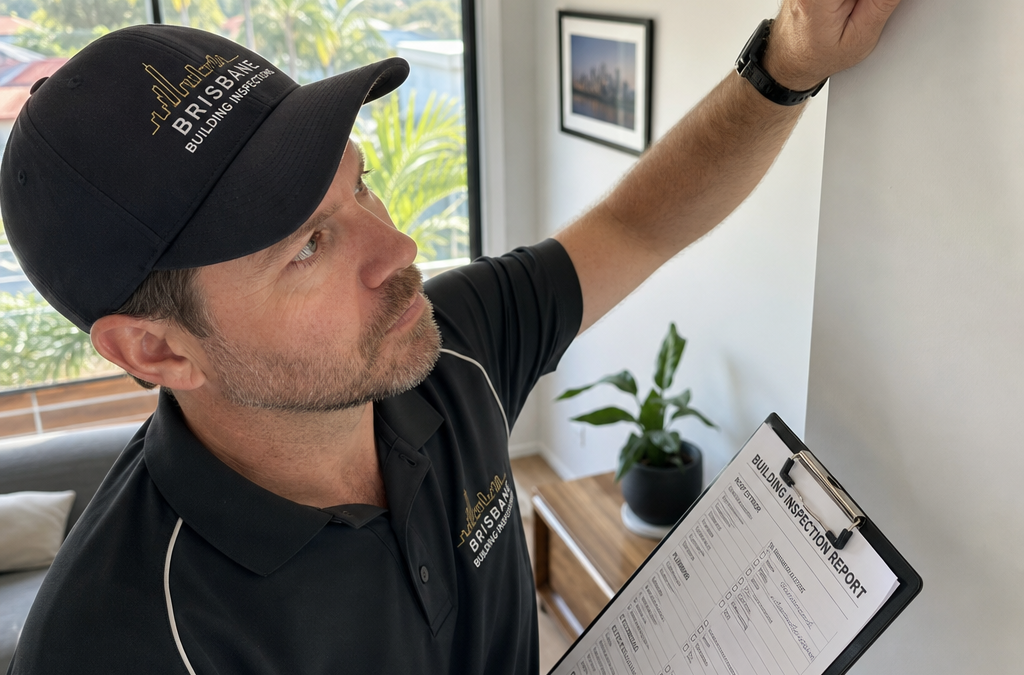
Most first-home buyers in Brisbane sign off on their new build without knowing what they’re actually signing away. A pre-handover inspection is not a formality. It’s the single best opportunity you have to force your builder to fix defects before you hand over the balance of your contract price. According to the Queensland Building and Construction Commission, thousands of defect complaints are lodged each year, and the majority involve issues that were present at handover. A proper first home buyer inspection Brisbane service catches these problems while your builder still has legal and financial skin in the game.
Table of Contents
- Quick Takeaways
- Why New Builds Still Need Inspections
- What a Handover Inspection Actually Covers
- When to Book Your Inspection
- How to Read a Defect Report
- Comparing Inspection Approaches
- Your Legal Rights at Handover in Queensland
- What Happens After the Inspection
- Frequently Asked Questions
- References
Quick Takeaways
| Key Insight | Explanation |
|---|---|
| Defects are common in new builds | New construction in Brisbane regularly produces 20 to 50 defects per home at practical completion. A professional inspector finds them all in writing before you settle. |
| Timing is everything | You must book your inspection before practical completion is formally declared. Once you accept the keys, your negotiating position weakens significantly. |
| Photo-enhanced reports matter | A written defect list without photos is nearly useless in a dispute. Reports that photograph each defect and name the responsible trade are far more effective for rectification. |
| Your inspector must be licensed | In Queensland, building inspectors must hold a QBCC license. An unlicensed report carries no legal weight and offers you no consumer protection. |
| Same-day reporting closes the gap | Builders set short windows between inspection and settlement. A service that delivers the report the same day gives you time to respond before the window closes. |
| Cost is a small fraction of risk | A professional handover inspection in Brisbane starts from $550 including GST. A single uncaught structural defect can cost tens of thousands to fix post-settlement. |
| High-rise properties need custom reports | Apartments and multi-storey developments have common property elements that standard reports miss. Customised reports covering these are essential for strata buyers. |
Why New Builds Still Need Inspections
A common mistake first-home buyers make is assuming that a brand-new home has no defects. The reasoning makes intuitive sense: it’s new, it has a builder’s warranty, the council has done a final inspection. In practice, none of those protections replace an independent pre-handover inspection conducted specifically for your interests.
Builder site supervisors are managing multiple projects simultaneously. Trades are often engaged on tight deadlines and paid on completion, not on quality. Council inspections are focused on structural and safety compliance, not on workmanship standards like paint finish, tiling grout, or door alignment. The builder’s warranty exists to rectify defects, but only if you can prove they existed before settlement.
The data consistently shows that new homes in Brisbane, Gold Coast, Logan, Ipswich, and Redland Bay regularly present with significant defect lists at practical completion. These range from minor cosmetic issues to genuine structural concerns including waterproofing failures, inadequate roof fixings, and subsurface drainage problems that would never appear on a council checklist.
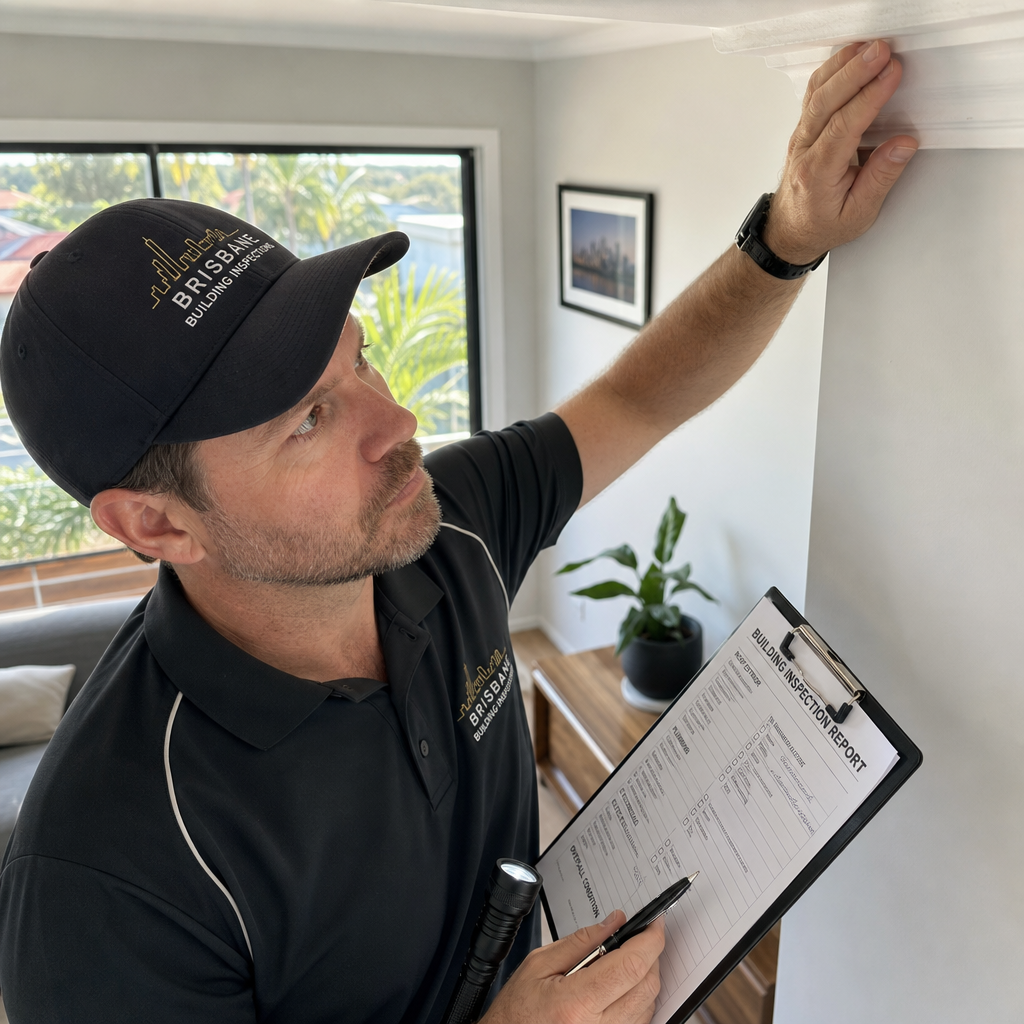

The financial case is straightforward. A new home inspection in Brisbane starts from $550 including GST with GoInspect. Post-settlement rectification of waterproofing defects alone can run to $15,000 or more. You are not paying for the inspection. You are paying for the ability to negotiate from a documented, legally defensible position.
Pro tip: Do not wait for your builder to tell you the home is ready for handover before booking your inspector. Contact your inspection service as soon as your builder gives you a practical completion date, so you can lock in timing that fits the settlement window.
What a Handover Inspection Actually Covers
A professional new home inspection Brisbane covers every accessible element of the completed structure. This is not a walk-through with a checklist ticked in pencil. A competent inspector works systematically through the property and documents every defect with photographs tied to a specific location and trade responsibility.
Interior Elements
Internally, inspectors assess wall and ceiling plasterboard for cracking, bulging, and inadequate jointing. Door and window operation, frame squareness, and hardware function are checked. Floor finishes including tiles, timber, and carpet are examined for lippage, gaps, bubbling, and staining. Wet areas receive particular attention because waterproofing failures inside bathrooms and laundries are among the most expensive defects to fix after settlement.
Electrical fittings, light fixtures, power points, and switchboard labelling are checked against the plans. Cabinetry alignment, drawer operation, and benchtop joins are documented. Any item that differs from your contract specifications is flagged as a variation or omission, which is a separate but equally important category of defect.
Exterior and Structural Elements
Externally, inspectors check roof cladding, fascia, guttering, and downpipe termination. Brickwork mortar joints, render finish, and expansion joint placement are assessed. Concrete slabs are checked for cracking. External drainage fall and landscaping compliance with the approved drainage plan are documented.
For properties in Brisbane and Southeast Queensland, termite management system installation is verified, as this is a non-negotiable requirement under the National Construction Code for the region’s climate zone.
Pro tip: Bring your contract plans and specifications to the inspection. Your inspector can only identify omissions and substitutions if they know what was contractually required. A home that looks finished may still be missing items you paid for.
When to Book Your Inspection
The correct moment for a handover inspection first home is after the builder has declared practical completion but before you formally accept the home and pay the final progress payment. In Queensland, the practical completion stage triggers your right to conduct this inspection under your building contract.
Most builders give buyers a relatively short window, often five to ten business days, between issuing the practical completion notice and the required settlement date. This is not generous, and it is intentional. You need an inspection service that can mobilise quickly and deliver same-day reporting so you have time to present the defect list back to the builder before that window closes.
If your builder is pressuring you to settle without an inspection, that pressure is a signal, not a comfort. A builder who is confident in the quality of their work does not object to an independent inspection. GoInspect’s same-day reporting model exists precisely to help Brisbane first-home buyers work within these tight builder-imposed timelines without being forced to choose between speed and thoroughness.
How to Read a Defect Report
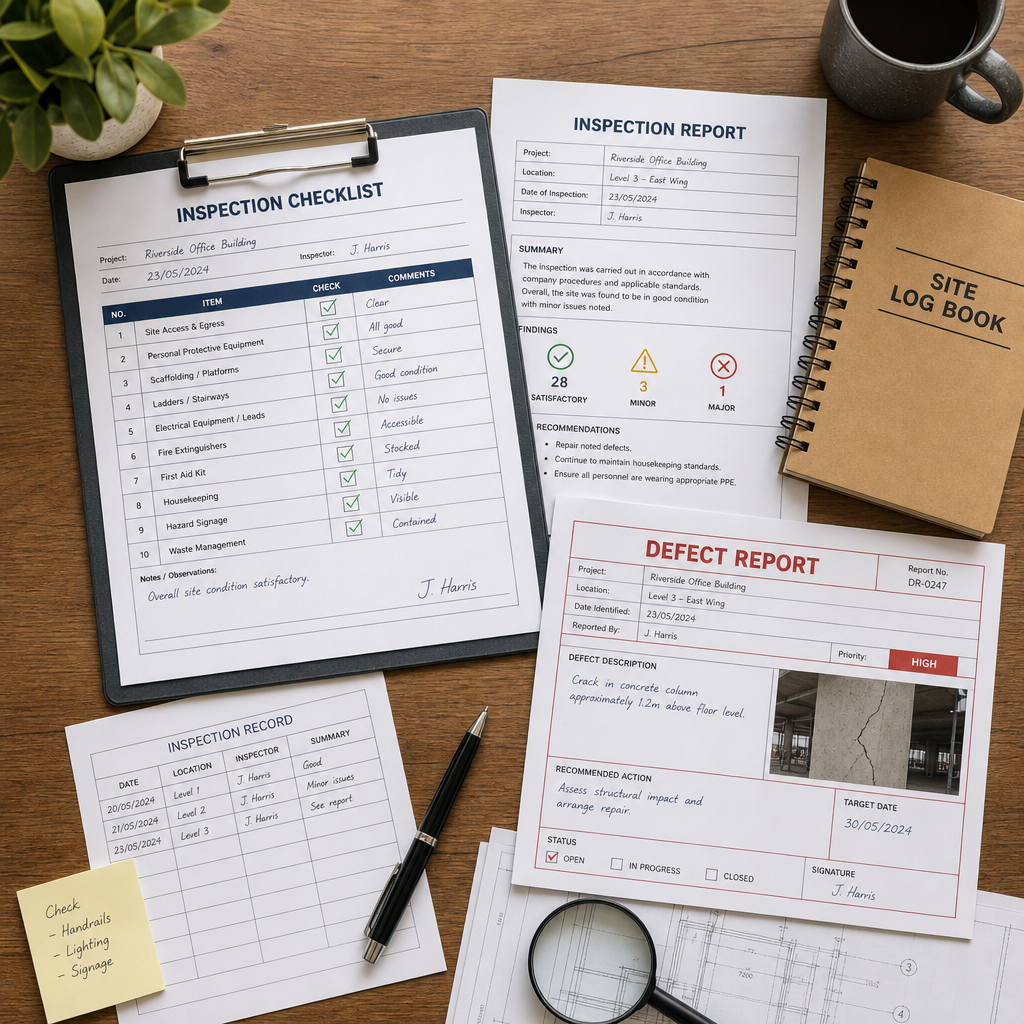
A good defect report is structured around three things: the location of the defect, the nature of the defect, and the trade responsible for rectifying it. If your report does not identify trade responsibility, it will be far harder to get your builder to act quickly because they will use ambiguity about who needs to fix what as a delay tactic.
GoInspect’s photo-enhanced reports assign each defect to a specific trade, whether that is the tiler, the plasterer, the electrician, or the waterproofer. This matters because builders coordinate multiple subcontractors and they will move fastest when the rectification list is unambiguous.
Priority Categories in a Defect Report
Defects are typically categorised by severity. Structural and safety defects take absolute priority and may need to be rectified before you accept the home at all. Major defects affect habitability or significant structural elements and carry a six-year statutory warranty in Queensland under the Queensland Building and Construction Commission Act. Minor defects are workmanship issues that fall below the standard a competent tradesperson would achieve.
Understanding these categories matters because your response to the builder will differ depending on which category applies. For structural or major defects, you have strong grounds to delay settlement. For minor defects, you may accept an undertaking to rectify within an agreed timeframe, though this should always be documented in writing.
Comparing Inspection Approaches
First-home buyers in Brisbane typically encounter three approaches when researching inspection services. Understanding the practical differences between them will help you make a decision based on what actually matters at handover, not just on price.
| Approach | What You Get | Risk for First-Home Buyers |
|---|---|---|
| DIY Walk-Through | Your own observations, no formal documentation, no licensed authority behind findings | High. Builders are not legally obligated to act on verbal complaints or informal lists. You lose leverage immediately. |
| Generic Building Inspector (no new-build specialisation) | A licensed report covering basic compliance. May miss new-build-specific issues like contract omissions or waterproofing standards for new construction. | Medium. The report has legal standing but may lack the specificity and trade attribution needed for efficient rectification. |
| Specialist New Home Inspector (e.g., GoInspect) | Photo-enhanced defect reports with trade attribution, same-day delivery, customised for house-and-land and high-rise developments, fully QBCC-licensed inspectors | Low. You get a report your builder cannot easily dismiss, delivered fast enough to use before the settlement window closes. |
The comparison above is not subtle. For a first-home buyer who has never been through this process, the specialist route is the only one that consistently produces results. A generic inspection may satisfy a lender requirement but will not necessarily give you the ammunition you need to force rectification before settlement.
“The most effective defect reports are those that remove all ambiguity from the builder’s perspective. When a report names the defect, photographs it in context, and identifies the trade responsible, the path to rectification becomes a process rather than a negotiation.” – Queensland Building and Construction Commission, guidance for homeowners on defect management.
Your Legal Rights at Handover in Queensland
Queensland homeowners have some of the strongest statutory protections for new residential construction in Australia. The Queensland Building and Construction Commission Act 1991 and the associated Home Warranty Insurance scheme provide layers of protection, but they only work effectively if you document defects properly at handover.
The statutory warranty periods in Queensland are six years for structural defects and one year for non-structural defects. These warranties are tied to the date of practical completion, which means the clock starts at handover. If you accept the home with undocumented defects, proving they pre-existed handover becomes significantly harder when you try to make a claim twelve months later.
What Practical Completion Actually Means
Practical completion does not mean the home is perfect. It means the home is sufficiently complete to be occupied for its intended purpose. Minor defects and incomplete items can still exist at practical completion. Your right to inspect and document these before accepting the home is explicitly preserved under standard Queensland building contracts, including the HIA and Master Builders contract forms that most Brisbane builders use.
If your builder refuses to allow an independent inspection before handover, that refusal is itself a significant red flag and may constitute a breach of the contract’s implied obligations. Contact the QBCC or a construction lawyer immediately if you encounter this situation.
Home Warranty Insurance in Queensland
Queensland’s home warranty insurance scheme, administered through the QBCC, covers residential construction work where the contract value exceeds $3,300. For first-home buyers, this insurance is a backstop, not a substitute for a proper inspection. Claims under the scheme are time-consuming and stressful. Preventing the problem at handover is always faster and cheaper than pursuing an insurance claim after settlement.
What Happens After the Inspection
Once you receive your defect report, you have several options depending on the severity and volume of defects found. For minor defects, you can proceed to settlement after receiving a written undertaking from your builder specifying exactly which items will be rectified and by what date. Get this in writing on builder letterhead and keep a copy.
For major or structural defects, you should not settle until those items are rectified and re-inspected. This is not an unreasonable request. It is your right under Queensland law, and any builder who tells you otherwise is either misinformed or applying pressure they are not entitled to apply.
GoInspect’s reports are structured specifically to make the post-inspection process as efficient as possible. Because each defect is photographed, located, and attributed to a trade, your builder can distribute the rectification list directly to the relevant subcontractors without ambiguity. This speeds up the process for everyone, including the builder, which means the argument that a thorough inspection creates delays simply does not hold up in practice.
Pro tip: After defects are rectified, book a follow-up inspection before you confirm rectification in writing. Do not accept verbal assurances from a site supervisor that all items have been fixed. A second inspection confirms the list is clear and protects you from signing off prematurely.
Frequently Asked Questions
How much does a new home inspection cost in Brisbane?
A professional new home handover inspection in Brisbane starts from $550 including GST with GoInspect. The exact price depends on the size and complexity of the property, including whether it is a house, townhouse, or high-rise apartment. This cost is a fixed, knowable expense compared to the open-ended cost of rectifying undiscovered defects after settlement.
Can I use my own checklist instead of hiring an inspector?
You can walk through the home yourself, but a DIY checklist does not carry legal weight. Builders are not obligated to act on informal defect lists made by untrained buyers. A licensed inspector’s report is the document that gives you standing to demand rectification before settlement and to make a QBCC warranty claim if needed.
What if my builder says an inspection will delay settlement?
This is one of the most common pressure tactics applied to first-home buyers. In practice, a professional inspection conducted by a specialist service and delivered via same-day reporting does not cause material settlement delays. GoInspect’s reporting model is specifically designed for Southeast Queensland’s tight builder timelines. If your builder is using delay as a reason to avoid inspection, treat that as a warning about what you might find.
Do I need an inspection if the council has already done a final inspection?
Yes, without question. A council final inspection checks compliance with the Building Code of Australia and the approved plans. It does not assess workmanship quality, cosmetic finishes, contract omissions, or the dozens of defects that fall below structural significance but are still your builder’s responsibility to fix. These are entirely different assessments with entirely different scopes.
What is the difference between a pre-handover inspection and a practical completion inspection?
They refer to the same event. Practical completion is the formal term used in Queensland building contracts for the stage at which the builder declares the work sufficiently complete for handover. A practical completion inspection and a pre-handover inspection are the same inspection conducted at the same point in the construction process. The terminology varies by company and region but the scope is identical.
Does GoInspect cover apartments and high-rise developments?
Yes. GoInspect provides customised reports for high-rise developments that cover both individual lot defects and common property elements relevant to strata buyers. Standard inspection reports designed for houses often miss common property issues that directly affect apartment owners. If you are buying an apartment in Brisbane or on the Gold Coast, confirm that your inspector has specific experience with strata and multi-storey construction.
How soon before settlement should I book my inspection?
Book as soon as your builder issues the practical completion notice. Do not wait. Most Brisbane builders give you five to ten business days between practical completion and the required settlement date. You need the inspection completed and the report in your hands with enough time to review the defects, present them to the builder, and either negotiate rectification or seek advice before the settlement deadline.
If you have recently been through a new build handover in Brisbane or Southeast Queensland, share what the inspection process looked like for you and whether the defect list surprised you.
References
- Queensland Building and Construction Commission: homeowner rights, warranty periods, and defect complaint processes for new residential construction
- Australian Competition and Consumer Commission: consumer rights in new home contracts and builder obligations at practical completion
- Forbes: property investment strategy and the financial cost of undiscovered construction defects in new residential builds
- Statista: construction defect rates and warranty claim statistics across Australian residential building sectors
- Australian Building Codes Board: National Construction Code standards applicable to new residential construction in Queensland