
Apartment bathroom inspections work best when every unit is checked in the same sequence, but every finding remains tied to its exact apartment, room and photograph. Before handover, agree the visible bathroom scope, confirm the units are ready and decide which reports the site team and trades will use.
For a multi-residential project, this creates a consistent quality assurance record without assuming every apartment has the same issue. A practical completion inspection (PCI) can record visible, safely accessible workmanship and incomplete items. Concealed waterproofing, specialist plumbing tests and building-services commissioning require their own scope and evidence.
Start with one repeatable bathroom inspection sequence
A repeatable order helps the inspector cover the agreed work efficiently across multiple apartments. It also makes the resulting apartment defect reports easier for supervisors and subcontractors to follow. The sequence can be adapted to the project, but it should usually address:
- the entry door, privacy latch and door clearances;
- vanity doors, drawers, mirrors and other fitted cabinetry;
- basin mixers, spouts, wastes, cover flanges and visible connections;
- the shower screen, door alignment and visible junctions;
- tiles, grout, silicone and transitions between finishes;
- visible damage, incomplete work and cleaning that affects inspection;
- ordinary operation of accessible fittings included in the agreed scope.
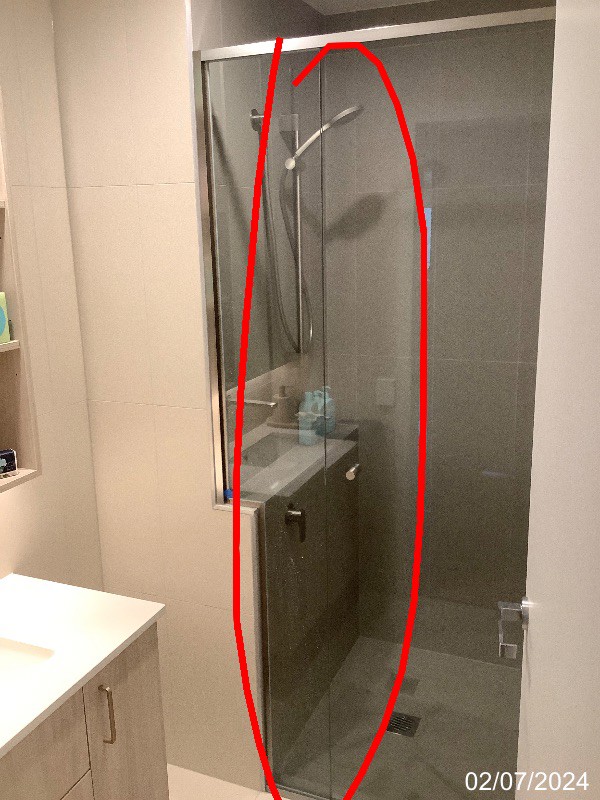
The checklist should support observation, not replace it. If a shower screen does not close flush in one apartment, record that unit and screen. Do not copy the finding into other dwellings without checking them.
Confirm readiness before the inspector arrives
A bathroom that is still being tiled, painted or fitted out cannot provide a complete handover record. Before each batch, confirm that the nominated apartments are safely accessible, substantially finished and clean enough to inspect. List any unavailable water supply, missing fixtures, protective coverings or ongoing trade work as limitations and arrange a later check where needed.
Use the project’s agreed unit numbering. If site, sales and legal identifiers differ, give the inspector a cross-reference so the same bathroom can be found by the supervisor, trade and future reviewer.
Record enough detail for the next person
Each finding should retain the apartment or dwelling, bathroom or ensuite, exact component, observed condition and supporting photograph. Add the relevant trade for coordination and keep the original item reference when work is reported complete. This lets a subcontractor locate its work without removing the finding from the apartment’s complete record.
What actual apartment bathroom reports can reveal
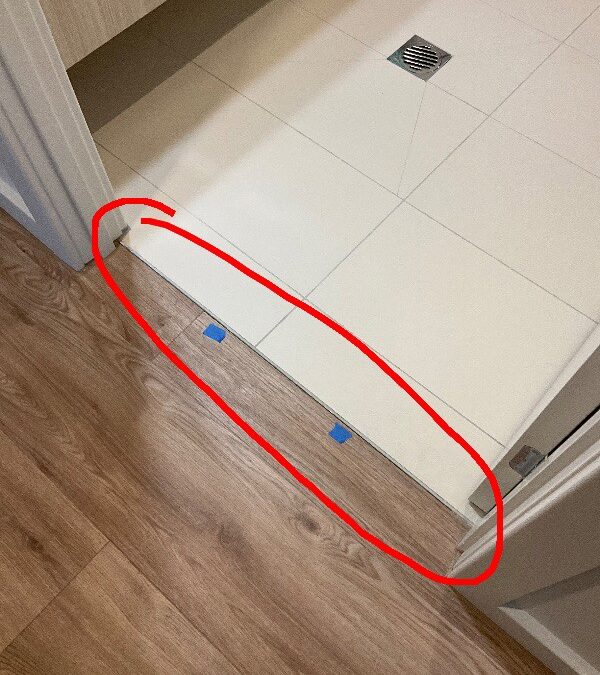
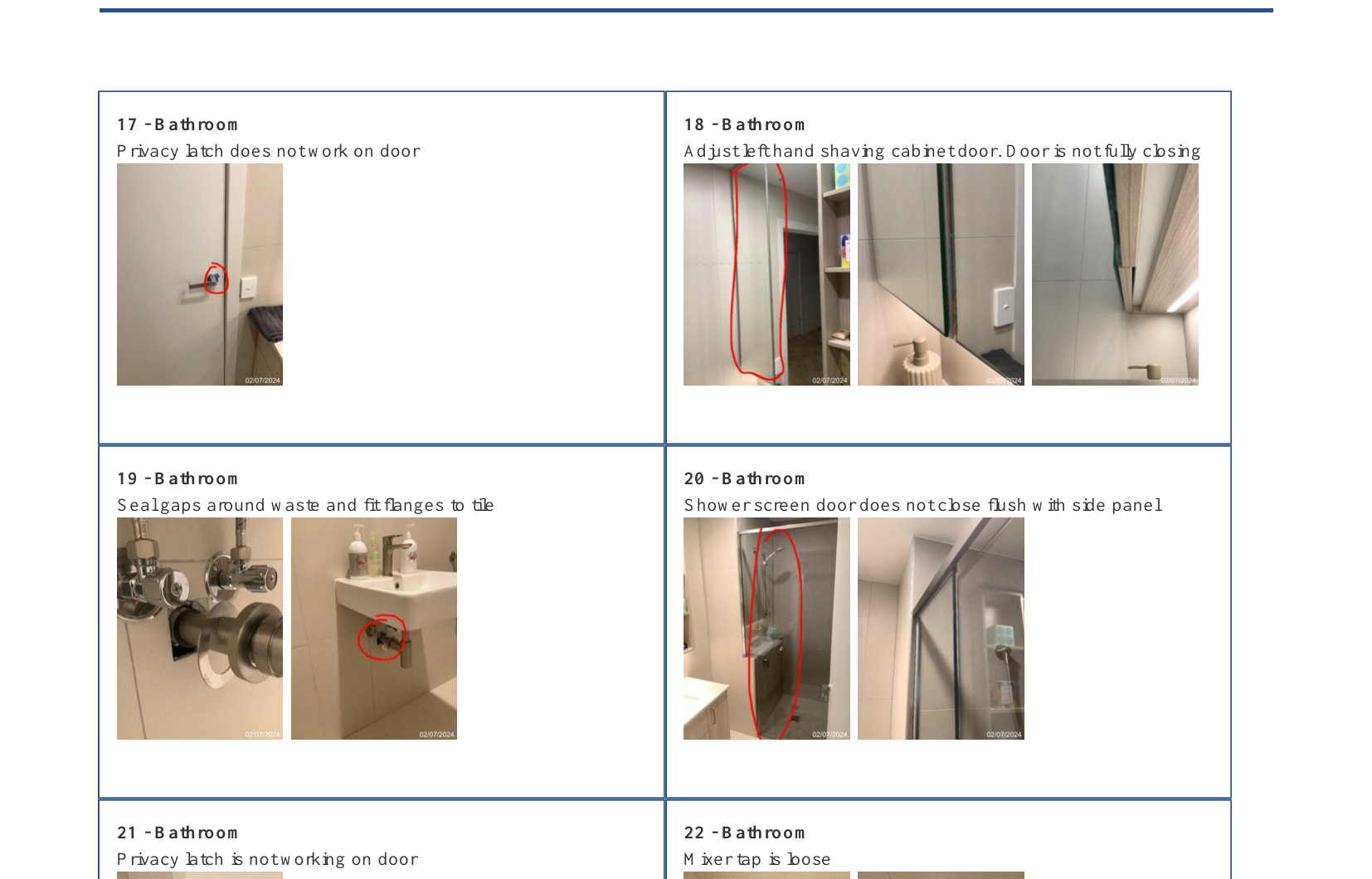
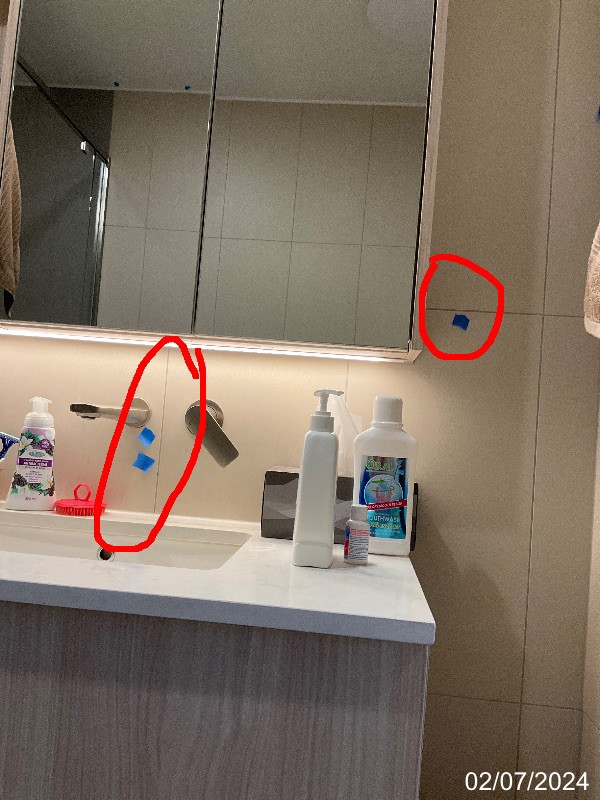
GoInspect reports from one multi-residential project recorded different bathroom findings in different apartments. The examples included an ineffective privacy latch, a shaving-cabinet door that did not close fully, unfinished openings around a basin waste, a shower-screen door that did not close flush, a loose basin mixer, grout pinholes and an unsealed transition at a bathroom doorway.
These are examples of recorded conditions, not a prevalence statistic. They show why a broad label such as “bathroom defects” is less useful than a precise location, short description and clear photograph.
Separate finish, operation and concealed-work questions
A useful apartment bathroom inspection distinguishes what can be seen or operated from what remains concealed. This prevents a neat finished surface from being presented as proof of hidden work, and it helps the project team send each concern to the right investigation.
Doors, screens and cabinetry
Open and close the bathroom door, privacy latch, shaving-cabinet doors and shower-screen door during ordinary operation. Record binding, incomplete closure, visible misalignment or damaged components separately. A photograph can show the location and alignment, while the description records what happened during operation.
The current QBCC Standards and Tolerances Guide includes guidance for shower recesses and components, but the applicable plans, specifications, product instructions and building requirements still matter for the particular installation.
Fixtures, wastes and visible connections
Use accessible fittings normally and record movement, unfinished openings, missing cover flanges or visible leakage. Describe the exact fitting rather than writing “plumbing issue”. A loose mixer, an incomplete waste penetration and a drainage concern are different items and may require different responses.
Do not dismantle fittings or infer the condition of concealed pipework. Where pressure, flow, leakage or commissioning needs specialist assessment, arrange that separately with an appropriately licensed contractor.
Tiles, grout, silicone and transitions
Check the visible finish at corners, penetrations, floor wastes, the shower enclosure and the bathroom doorway. Record missing or inconsistent grout, incomplete silicone, damaged tiles and gaps between adjoining finishes as separate findings.
Visible grout or silicone concerns do not establish the condition of waterproofing behind the tiles. GoInspect’s wet-area inspection guide explains that distinction. If the concern involves water entry, concealed work or a performance test, agree the investigation method before assuming a cause.
Turn the inspection into reports the project team can use
GoInspect uses InspectaMate for photographic defect reporting. The reporting arrangement should be agreed with the inspection scope so the same finding can support different project tasks without losing its location or evidence.
| Report type | Practical use |
|---|---|
| Apartment report | Keeps the complete bathroom and dwelling record together for the supervisor. |
| Trade-specific worklist | Groups relevant items across apartments while retaining each unit and room reference. |
| Level or project-area report | Helps a project team review an agreed batch of units or areas together. |
| Status or statistics view | Summarises recorded items by unit, level or trade for planning follow-up; it does not prove every repair has been checked. |
Trade allocation is a coordination tool. It helps route the work, but it does not by itself determine legal liability or prove who caused a condition.
Plan bathroom QA before the handover rush
The QBCC recommends detailed quality-control inspections before handover and at other times as needed. Its supervision and quality-control guidance also distinguishes project supervision from the certifier’s role.
For each inspection batch, give the inspector the unit identifiers, access arrangements, readiness status and agreed bathroom scope. Identify any specialist tests, certificates or commissioning records that sit outside the visual inspection. Decide whether the site team needs apartment reports, trade worklists or project summaries before reporting starts.
GoInspect provides builder and developer quality assurance inspections for agreed multi-residential scopes. To discuss apartment numbers, stages, report types and likely return visits, use the builder and developer project quote form.
Takeaway: inspect each bathroom consistently, record each condition precisely and choose reports that help supervisors and trades act on the findings without losing the apartment-level evidence.