
Repeated apartment defects are a reason to check comparable work elsewhere in the project. Record each finding at its actual location, compare the relevant details, then agree which other rooms or dwellings need checking. Two similar findings can identify a useful QA question; they do not establish that every apartment has the same defect.
For a developer or site supervisor, the decision is practical: should the response stop at the reported item, or should the inspection program include other installations with the same detail? GoInspect’s cabinet-maker trade reports provide examples of how photographed findings can inform that decision across a multi-residential project.
Start with the condition, then compare like with like
A report entry should describe what the inspector observed and where. Before grouping findings as a pattern, compare the building element, installation detail and stage of completion. A drawer awaiting fitting and a drawer that binds after installation may need different responses, even though both sit under cabinetry.
Useful questions for the project team include:
- Is the same component or detail involved?
- Are the installations at a comparable stage of completion?
- Do the relevant drawings, specifications and product instructions call for the same arrangement?
- Which other locations contain comparable work, and which have actually been checked?
Keep differences visible. Similar photographs alone do not establish a shared cause or decide which contractor is responsible.
Report example: the same wardrobe item in two bedrooms
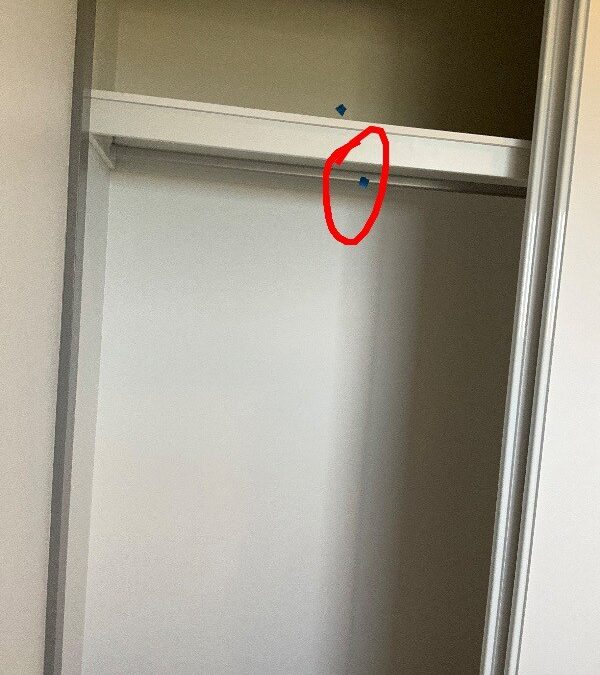
In one GoInspect cabinet-maker report, the inspector recorded missing hanging-rail centre supports in two bedrooms within the same dwelling. The photograph above shows one location; the photograph below shows the other. These are separate room findings, rather than evidence from two apartments.
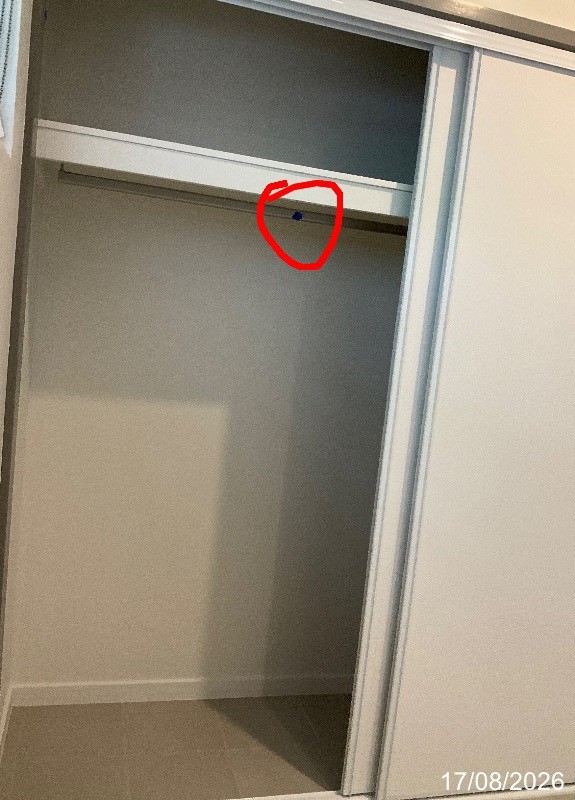
The useful next question is whether other wardrobes use the same specified support arrangement. The supervisor can identify comparable installations and arrange checks while the relevant work remains accessible. That is more precise than telling the trade to check every cupboard for an unspecified problem.
This finding does not establish a universal requirement for a centre bracket on every wardrobe rail. The appropriate support arrangement depends on the actual installation and its specifications. The report records incomplete work at the inspected locations; it does not establish a load capacity, predict failure or prove a project-wide design issue.
Report example: vanity drawer findings across dwellings
The same trade report records bottom vanity drawers requiring fitting into their tracks in different dwellings. One of those locations is shown below.
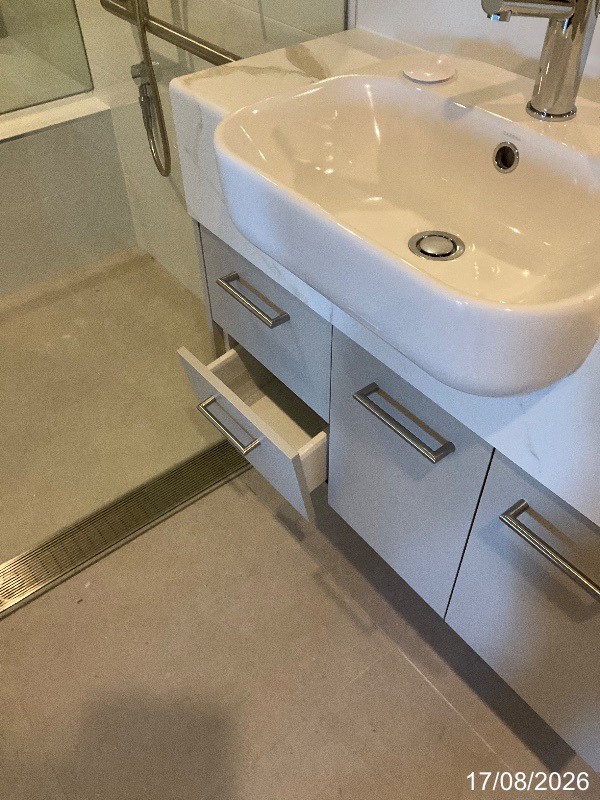
Here, comparing the relevant vanity installations gives the site team a defined follow-up task. Check whether drawers have been fitted, then review their operation within the agreed inspection scope. Preserve each dwelling’s separate result, including any location that could not be accessed or was still awaiting installation.
These entries establish repeated recorded conditions. They do not show how many comparable vanities were satisfactory, why the drawers were unfinished or whether subsequent work resolved them. A defect report alone cannot supply a project-wide defect rate.
Turn the findings into a targeted QA check
A useful instruction identifies the condition, the comparable work and the required record. For example: review the specified wardrobe support detail, identify the wardrobes using it, and record the condition at each agreed location. That is a proposed checking approach, not a claim that this follow-up was completed on the project shown.
- Keep the original findings. Retain their descriptions, photographs and exact locations.
- Define the comparison group. List the relevant rooms, dwelling types or installations. Explain why they are comparable.
- Agree the additional scope. Decide the locations, access, readiness and timing with the inspector and project team.
- Record the result at each location. Distinguish a finding from work checked without that finding, incomplete work and work not checked.
- Review what the additional checks show. Further findings may justify extending the checks or obtaining advice about the installation detail.
There is no universal number of apartments to inspect after one finding. The nature of the issue, comparable installations, available records and consequences should inform that decision. Checking selected locations does not verify the uninspected remainder.
Use the report types together in InspectaMate
Keep the dwelling and room location attached to each item in InspectaMate. Review the relevant location reports alongside the trade worklist: the location tells the team where to go, while the trade report brings related findings together for planning. Agree the required dwelling, level, trade or project-area reports when commissioning the inspections.
The anonymised cabinet-maker sample below shows how photographs and short descriptions sit alongside locations. It comes from the same report used for the examples in this article.
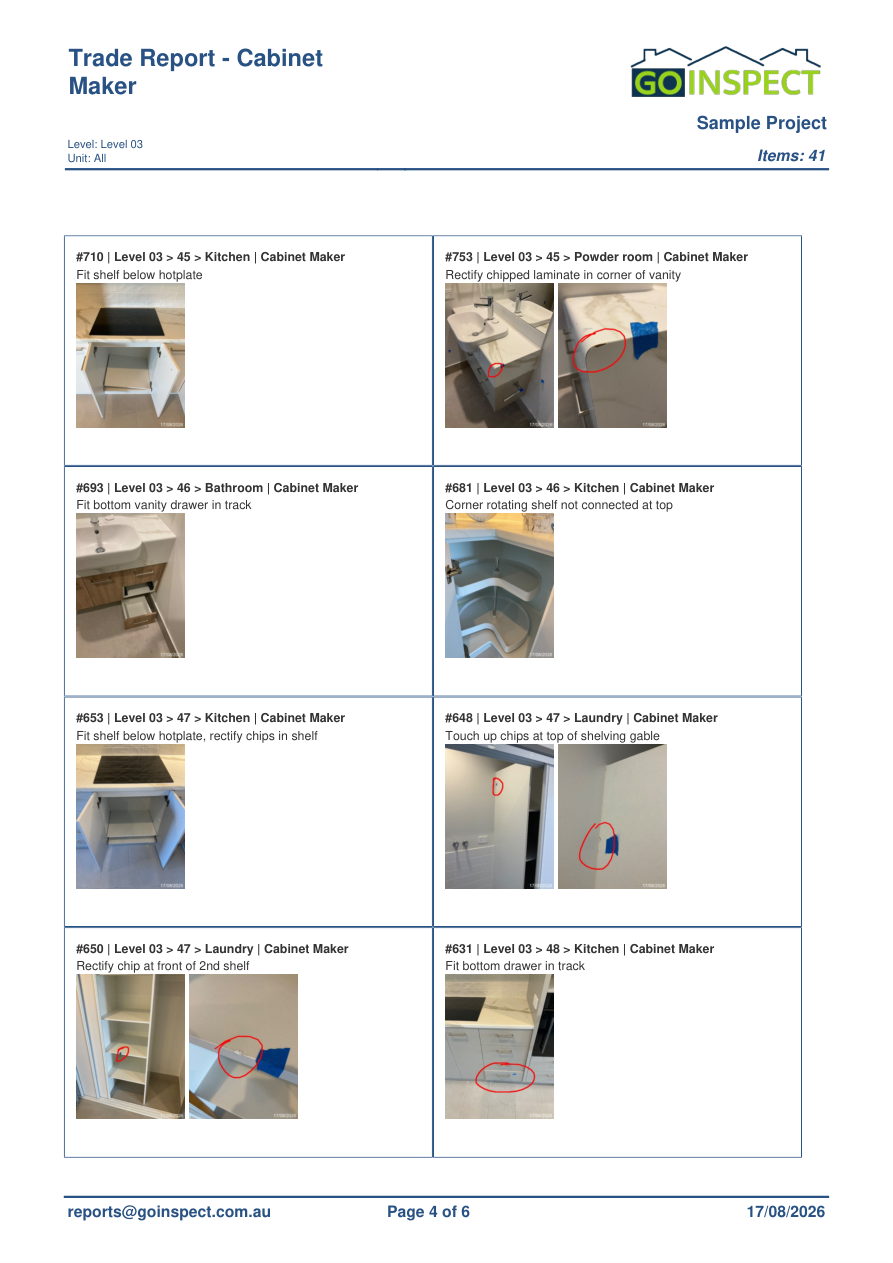
Our InspectaMate reporting workflow explains the reporting process. A trade worklist helps coordinate the response; the supervisor still needs to assess the pattern, confirm responsibilities and decide whether to extend the checking scope.
Separate additional checks from checking repairs
Additional QA checks look for the condition in other agreed locations. A re-inspection checks reported rectification at identified locations. Keep those tasks distinct so that a repaired drawer does not accidentally stand as evidence that every comparable drawer was checked.
Retain the original finding when recording follow-up. Note what was available for inspection and what remains outstanding. The defect rectification tracking guide covers that follow-up record in more detail.
Build the response into the inspection program
For high-rise and multi-residential new build inspections, agree how emerging findings will be discussed before the next group of dwellings reaches handover. A practical completion inspection (PCI) can inform that discussion, but the project team needs to allow for access, outstanding work and any further checks.
QBCC’s supervision and quality-control guidance recommends detailed inspections of structural and non-structural work before handover and at other times as needed. Independent inspections support the builder’s quality-control process; they do not replace supervision, certification or specialist assessments.
Takeaway: use a repeated finding to ask a specific question about comparable work, then document what was actually checked. Discuss the locations, timing and report requirements through GoInspect’s builder and developer QA inspection service, or request a project inspection quote.