
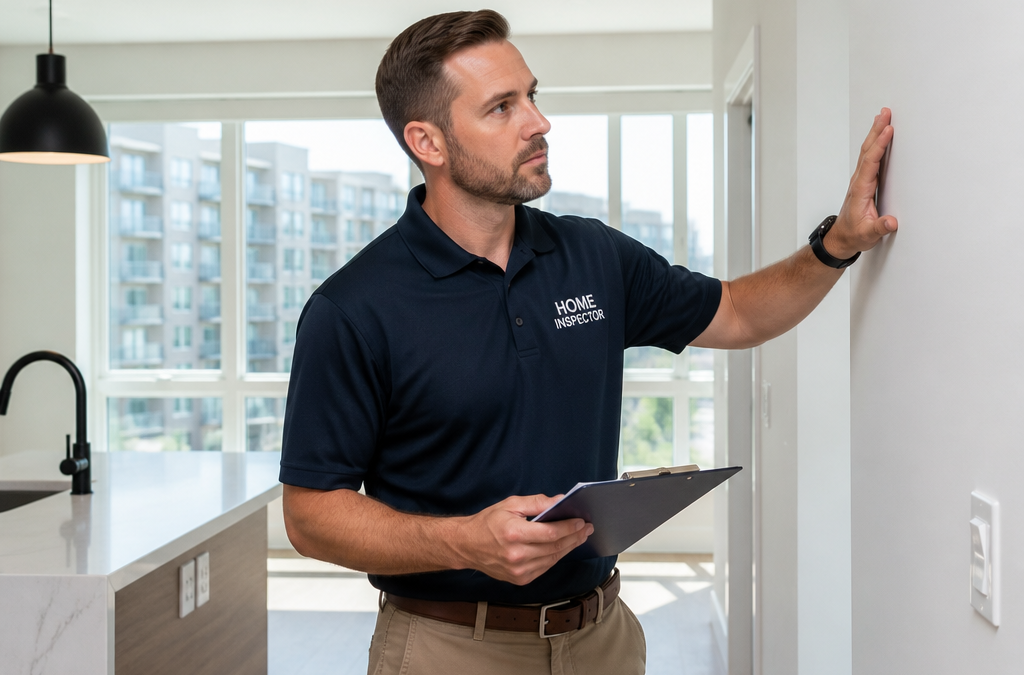
Buying an off-the-plan apartment in Queensland feels like a leap of faith. You hand over a deposit based on renders and floor plans, then wait months or years for a building to be completed. What most buyers don’t realize is that by the time settlement arrives, the apartment they receive can look significantly different from what was promised, and defects in new builds are far more common than the industry likes to admit. An off the plan inspection Queensland is the one tool that stands between you and settling on a defective property you’re legally obligated to accept.
Table of Contents
- Quick Takeaways
- Why Off-the-Plan Buyers Are Uniquely Vulnerable
- What a Pre-Settlement Inspection Actually Covers
- The Legal Window You Cannot Afford to Miss
- Common Defects Found in New Brisbane Apartments
- Comparison: Inspection Approaches for Off-the-Plan Apartments
- What Makes a Pre-Settlement Report Actionable
- Frequently Asked Questions
- References
Quick Takeaways
| Key Insight | Explanation |
|---|---|
| Settlement is your last point of real leverage | Once you settle on an off-the-plan apartment, the legal pressure on the developer to fix defects drops significantly. Pre-settlement is the moment to act. |
| Defects in new builds are routine, not exceptional | Queensland Building and Construction Commission data consistently shows that new residential buildings generate substantial defect complaints. Expect issues, not perfection. |
| Photo-enhanced reports carry real weight | A written list of defects is easy to dismiss. Reports with timestamped photos and trade-specific assignments force developers to respond with a clear rectification plan. |
| High-rise apartments need specialist inspection protocols | Common areas, fire systems, basement waterproofing, and lift lobbies fall outside a standard house inspection checklist. High-rise inspections require a different scope entirely. |
| The inspection window is short and non-negotiable | In Queensland, the practical completion inspection period is typically fixed by contract. Missing it means settling without formal defect documentation. |
| Trade responsibility assignment speeds up repairs | Reports that identify which trade is responsible for each defect (tiler, painter, plumber) eliminate the builder’s ability to pass blame and delay rectification. |
| Same-day reporting matters when time is compressed | With settlement dates fixed and sometimes immovable, receiving your defect report the same day as the inspection gives you maximum time to negotiate with the developer. |
Why Off-the-Plan Buyers Are Uniquely Vulnerable
When you buy an established property, you can see exactly what you’re getting before you sign. With off-the-plan purchases, you are contractually committing to something that does not yet exist in its final form. The developer controls the build quality, the timeline, and the information you receive throughout the process.
This creates a structural information imbalance. The builder knows exactly what corners were cut during construction. The buyer knows almost nothing until the day they’re invited to inspect before settlement. By that point, the developer wants one thing: settlement to proceed on schedule. Their financial interest is directly opposed to yours.
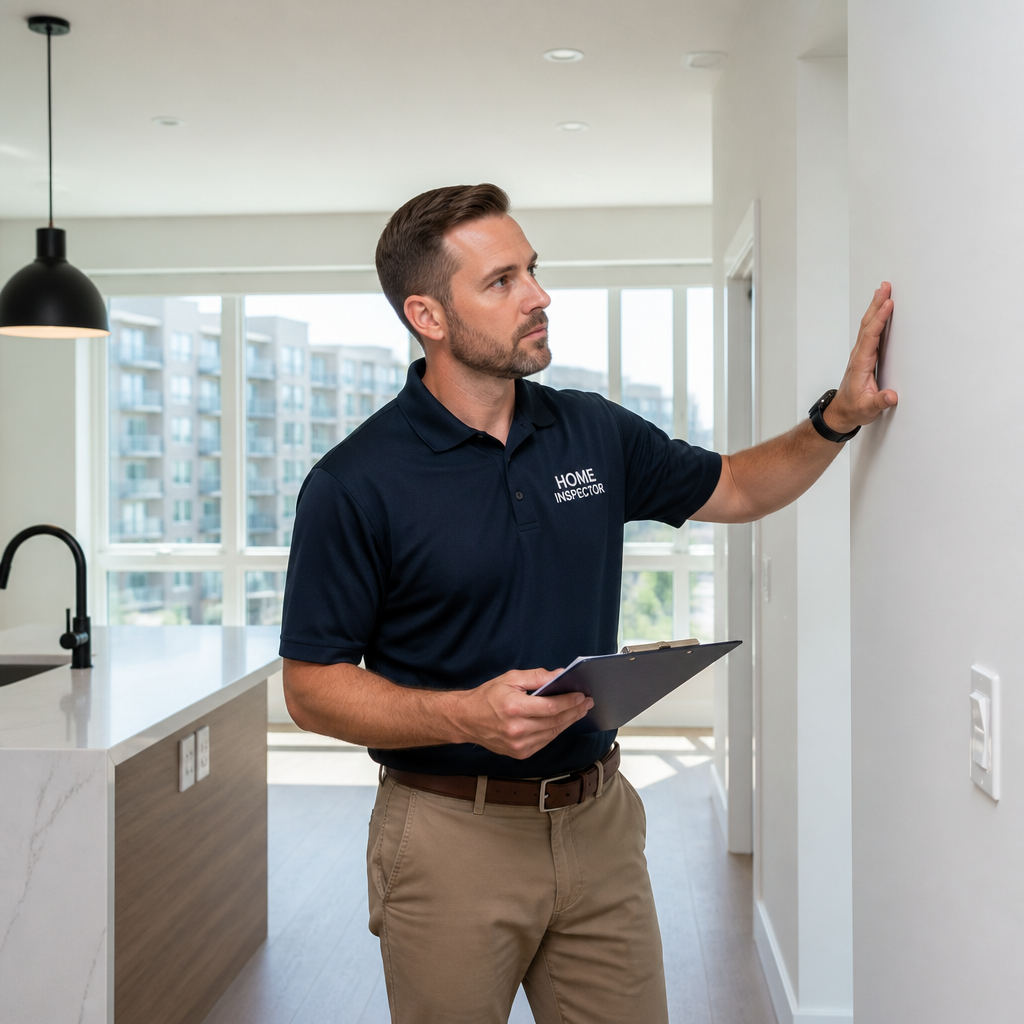
In Queensland, a pre-settlement inspection apartment is specifically designed to close that information gap. It gives you documented, professional evidence of any defects before money changes hands. Without it, you are negotiating blind.
The Render vs. Reality Problem
Off-the-plan marketing materials show perfect finishes, premium fixtures, and flawless tiling. The actual delivered apartment frequently tells a different story. In practice, substitutions happen. Developers are permitted to make material substitutions of similar quality, and the definition of “similar” is often disputed. An independent inspection identifies these substitutions immediately.
A common mistake among buyers is assuming that because the building passed its building certification, the individual apartment is defect-free. Building certification covers structural and safety compliance at a broad level. It does not mean your bathroom grout is correctly applied, your doors align properly, or your waterproofing membrane is intact.
What a Pre-Settlement Inspection Actually Covers
A professional new apartment inspection Brisbane covers far more than a quick walk-through to confirm the kitchen is installed. A thorough practical completion inspection examines every accessible surface, fitting, fixture, and system within the dwelling, plus relevant common areas where applicable.
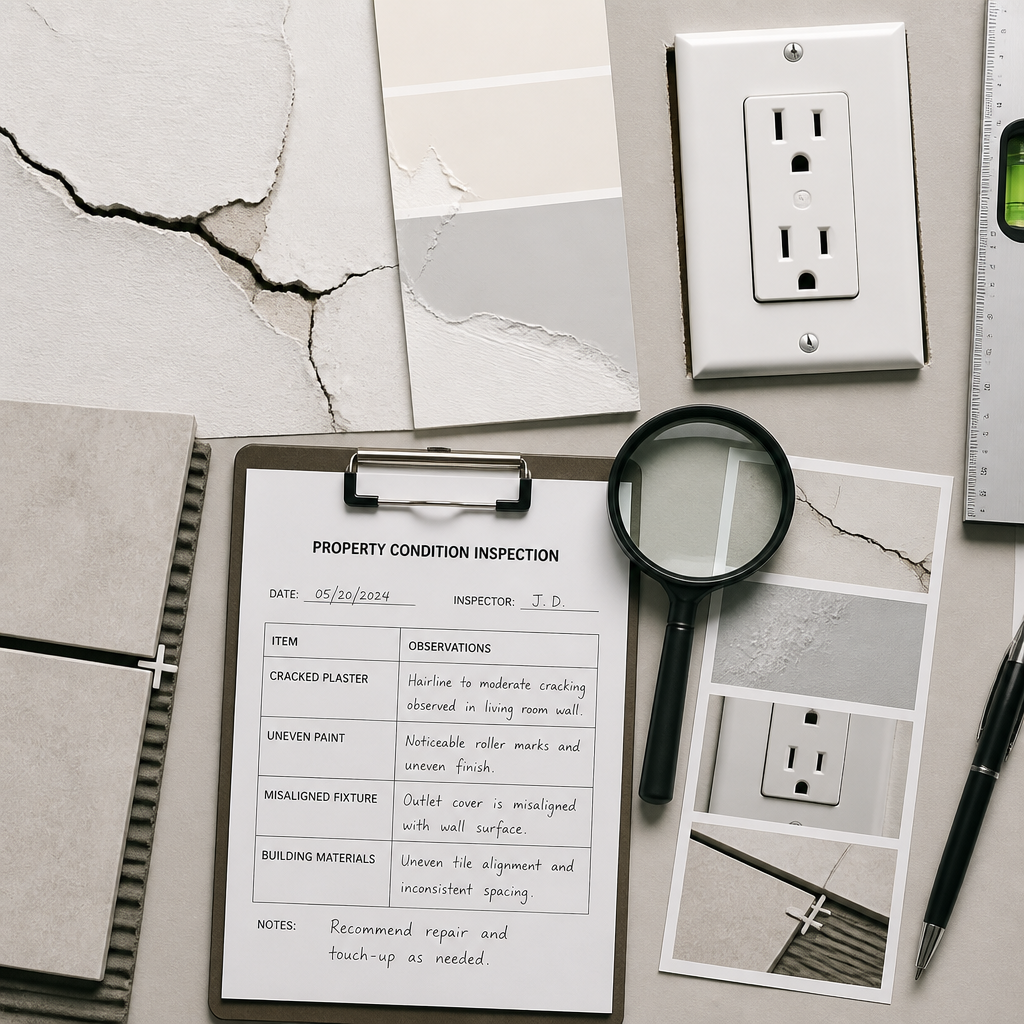
The scope includes structural elements like walls, ceilings, and floors for cracking, movement, or unevenness. It covers all wet areas, which are the highest-risk zones in any new apartment build, checking for waterproofing compliance, tile adhesion, silicone application, and drainage fall. Doors and windows are tested for correct operation, sealing, and hardware function. Electrical outlets, lighting, and switchboards are visually inspected. Joinery, cabinetry, and bench tops are checked for damage, alignment, and finish quality.
High-Rise Specific Checks
High-rise apartment inspections require additional scope that standard house inspection checklists simply do not address. Balcony balustrade heights and fixing methods must comply with the National Construction Code. Fire door hardware, including self-closing mechanisms and intumescent seals, must be present and functional. Common corridor finishes, lobby areas, and basement waterproofing are relevant to buyers because defects in these areas affect every owner in the building.
GoInspect’s customized reports for high-rise developments account for this additional scope explicitly. Each defect is documented with photos, GPS-tagged location descriptions, and trade responsibility assignments so rectification can be actioned without ambiguity.
“Waterproofing failures in new apartments are among the most expensive defects to rectify post-settlement because the damage compounds over time. Finding them before settlement is the only sensible approach.” – Queensland Building and Construction Commission guidance on residential building defects.
The Legal Window You Cannot Afford to Miss
Under Queensland property law and the standard REIQ off-the-plan contract, buyers are entitled to a practical completion inspection. This is the formal opportunity to walk through the completed apartment with your inspector before you sign off and proceed to settlement. It is not unlimited in time, and it is not repeatable once waived.
The developer sets the inspection date based on their completion schedule. You typically receive limited notice, which is why having a pre-arranged relationship with an inspection company like GoInspect matters. Same-day inspection availability and same-day report delivery mean the defect documentation is in your hands while you still have contractual standing to require rectification.
What Happens If You Skip It
Buyers who settle without a formal inspection report are not without recourse, but their position weakens considerably. The Queensland Home Warranty Scheme provides some protection for structural defects and certain categories of non-structural defects, but claiming under warranty requires proof of the defect and its cause. An inspection report completed before settlement provides that proof. Claims made months after settlement, without pre-settlement documentation, are harder to substantiate and easier for builders to contest.
The QBCC statutory warranty period for non-structural defects in Queensland is one year from practical completion. Structural defects carry a six-year warranty period. These timeframes sound generous until you realize that identifying and documenting a defect before settlement gives you a far stronger starting position than discovering it six months after you’ve moved in.
Pro tip: Request the inspection date from your developer or solicitor as early as possible and book your inspector before you receive confirmation. GoInspect services Brisbane, Gold Coast, Logan, Ipswich, and Redland Bay, so same-day availability is realistic across the southeast Queensland corridor.
Common Defects Found in New Brisbane Apartments
Based on practical completion inspections conducted across southeast Queensland, certain defect categories appear repeatedly regardless of builder size or project price point. Knowing what to expect helps you understand why professional inspection is worth the investment.
Waterproofing failures in wet areas, particularly around shower recesses and balcony junctions, are consistently among the most common findings. Paint defects including holidays, runs, and inconsistent sheens are near-universal in new apartments because painting is often the last trade on site working under time pressure. Door and window alignment issues arise from frame movement during construction or rushing during installation.

Electrical and Plumbing Defects
Electrical defects range from missing safety switches to incorrectly installed outlets and light fittings that do not function. Plumbing defects include slow drainage, incorrect hot and cold labeling, and tap hardware that leaks or operates incorrectly. These are not rare findings. In practice, they appear in the majority of new apartment inspections at some level of severity.
Tiling and Flooring Problems
Hollow or de-bonded tiles are a significant defect category in Brisbane apartments because of the temperature variation the region experiences. Tiles installed without adequate adhesive coverage or expansion joints will hollow and eventually crack. This is an expensive and disruptive repair post-settlement. Identifying it pre-settlement shifts the rectification cost to the developer where it belongs.
Floating floor installations are also frequently defective, with gaps at junctions, incorrect expansion gaps, and squeaking under foot traffic. These defects are straightforward to identify and photograph during an inspection but difficult to prove after settlement without that documentation.
Comparison: Inspection Approaches for Off-the-Plan Apartments
Not all inspection options deliver the same outcome. Here is a direct comparison of three approaches buyers commonly consider when arranging a pre-settlement inspection for an off-the-plan apartment in Queensland.
| Approach | What You Get | Key Limitation |
|---|---|---|
| Builder’s own walkthrough (no independent inspector) | Developer-guided tour with verbal acknowledgment of obvious defects | No independent documentation, no trade assignment, developer controls the narrative and the defect list |
| Generic building inspection company (house-focused) | Standard written report covering structural and surface defects | Often lacks high-rise specific protocols, common area coverage, and same-day report delivery. Defects are listed but rarely assigned to specific trades. |
| GoInspect pre-settlement inspection | Photo-enhanced report with trade-specific defect assignment, customized for high-rise or housing projects, same-day delivery from $550 including GST | Requires advance booking. Operates across Brisbane, Gold Coast, Logan, Ipswich, and Redland Bay only. |
The difference between a generic report and a trade-assigned, photo-documented report becomes most obvious when you present defects to a developer. A report that says “paint defect noted in bedroom” gives the developer room to argue, delay, and dispute. A report with a timestamped photo, room location, and assignment to the painting subcontractor gives them nowhere to hide.
Pro tip: When evaluating inspection companies for your off-the-plan apartment in Queensland, ask specifically whether their reports assign defects to individual trades and whether they have experience with high-rise common areas. These two factors separate inspection reports that get results from reports that get filed and ignored.
What Makes a Pre-Settlement Report Actionable
An inspection report that sits in your solicitor’s inbox without triggering any developer response is a failed report. The purpose of a pre-settlement inspection is not documentation for its own sake. It is a tool to force rectification before you hand over settlement funds or, where rectification cannot occur before settlement, to create a formal defect register that governs the builder’s post-settlement obligations.
Actionable reports share three characteristics. First, they include clear photographic evidence that cannot be disputed or misinterpreted. Second, they assign each defect to the responsible trade so the builder cannot claim confusion about who needs to fix what. Third, they are delivered quickly enough that your solicitor can incorporate them into settlement negotiations before the date is locked in.
Using the Report in Settlement Negotiations
Your solicitor can use a pre-settlement defect report in several ways. They can request a formal defect rectification schedule from the developer as a condition of proceeding to settlement. In cases where defects are severe, they may advise delaying settlement until critical items are addressed. Where settlement must proceed by a contractual date, the report forms the basis of a retention amount or escrow arrangement that is released only when defects are rectified.
None of these outcomes are available without a documented inspection report. A verbal complaint from a buyer carries no legal weight. A professionally prepared, photo-enhanced report from a licensed inspector carries considerable weight, particularly if the developer’s reputation in future sales is at stake.
Post-Settlement Defect Management
Even after settlement, the defect report continues to serve you. Under the QBCC statutory warranty, you can lodge a complaint for defects identified after moving in. A pre-settlement inspection report that documents the defect before settlement strengthens your warranty claim by establishing that the defect existed at completion, not as a result of your occupancy.
GoInspect’s same-day reporting means that even in compressed settlement timelines, buyers have a professional document in hand the same day they inspect. For investors managing multiple properties across Brisbane and the Gold Coast, this speed is not a convenience. It is a practical necessity.
Have you recently gone through a pre-settlement inspection on an off-the-plan apartment in Queensland? Share what you found in the comments, we read every response and your experience may help another buyer know exactly what to look for.
Frequently Asked Questions
What is an off the plan inspection in Queensland and when does it happen?
An off the plan inspection in Queensland, also called a practical completion inspection or pre-settlement inspection, takes place after the developer notifies you that construction is complete and before you proceed to settle on the property. It is your opportunity to have a licensed inspector examine the finished apartment independently and document any defects before you are legally obligated to complete the purchase.
Can I conduct the pre-settlement inspection myself instead of hiring a professional?
You are legally permitted to attend the inspection yourself, but it is not advisable. An untrained eye will miss defects that are obvious to an experienced inspector, particularly waterproofing failures, hollow tiles, and out-of-plumb walls. More importantly, a self-conducted walkthrough produces no legally credible documentation. Without a licensed inspector’s report, your defect claims have no formal standing in negotiations with the developer or in QBCC warranty complaints.
How much does a pre-settlement inspection for a new apartment in Brisbane cost?
GoInspect’s pre-settlement inspections start from $550 including GST, which is the cost of one defect rectification call-out that a developer might otherwise avoid. When weighed against the purchase price of an apartment in Brisbane, the Gold Coast, or Logan, this is not a discretionary cost. It is protection for what is almost certainly the largest financial transaction of your life.
What happens if the developer refuses to fix defects identified in the pre-settlement report?
If a developer refuses to address defects documented in a pre-settlement inspection report, your solicitor can use the report to negotiate a settlement retention, delay settlement pending rectification, or lodge a formal complaint with the QBCC. The key word is documented. Without a professional report, you have no formal basis for any of these actions. With a photo-enhanced, trade-assigned report from a licensed inspector, you have a concrete record that is difficult to dispute.
Does a pre-settlement inspection cover common areas in a high-rise apartment building?
Standard house-focused inspections typically do not include common areas. GoInspect’s customized high-rise inspection protocols specifically address common areas including corridors, lobbies, basement levels, fire doors, and balcony balustrades relevant to the individual apartment. These areas matter because defects in common property affect your strata levies and your quality of life as an owner, not just the finishes inside your front door.
How quickly will I receive my pre-settlement inspection report?
GoInspect delivers inspection reports on the same day as the inspection. Given that settlement timelines in Queensland are often fixed with minimal flexibility, same-day report delivery is essential for giving your solicitor enough time to incorporate the findings into settlement discussions with the developer’s legal team.
References
- Queensland Building and Construction Commission official guidance on new home warranties and defect complaints in Queensland
- Queensland Government legislation portal covering the Queensland Building and Construction Commission Act and residential building contracts
- Australian property market data and buyer guides covering off-the-plan apartment purchases and settlement obligations
- Independent Australian consumer research on building defects in new homes and buyer rights during pre-settlement inspections
- Forbes coverage of real estate due diligence practices and the financial consequences of skipping pre-purchase property inspections