

Most new homeowners in Brisbane assume that once the builder says defects are fixed, the job is done. That assumption costs people thousands of dollars every year. A re-inspection after builder rectification is not optional paperwork – it is the only way to verify that the work promised actually happened, happened correctly, and happened to the standard your contract demands. Whether you are approaching practical completion on a house in Logan or preparing to settle on a high-rise apartment on the Gold Coast, skipping a follow-up check before settlement is one of the most expensive mistakes a buyer can make.
Table of Contents
- Quick Takeaways
- Why Builders Do Not Always Fix Everything the First Time
- What a Re-Inspection Actually Checks
- The Risk of Settling Without a Defect Rectification Check
- How a Pre-Settlement Inspection Fits Into the Timeline
- Comparison of Re-Inspection Approaches
- What GoInspect Checks During a Re-Inspection in Brisbane
- Frequently Asked Questions
- References
Quick Takeaways
| Key Insight | Explanation |
|---|---|
| Builder sign-off does not mean defects are fixed | Builders have a financial incentive to close out defect lists quickly. An independent re-inspection verifies the actual state of the property, not the builder’s self-assessment. |
| New defects can appear between initial inspection and settlement | Trades working on rectifications often disturb adjacent finishes. A follow-up inspection catches secondary damage that was not present during the original inspection. |
| Photo-documented reports are your legal record | Defects identified but not rectified before settlement become your liability. Timestamped, photo-enhanced reports protect your rights under Queensland building contracts. |
| Partial fixes are still defects | A crack filled cosmetically but not structurally repaired fails re-inspection. Inspectors trained in trade accountability can distinguish genuine rectification from surface-level work. |
| Same-day reporting accelerates resolution before settlement deadlines | Settlement timelines are tight. A re-inspection service that delivers reports the same day gives you actionable leverage before financial penalties kick in. |
| Re-inspections apply to high-rise and house-and-land equally | Common defect categories in apartments differ from detached homes. A specialist inspector uses checklists tailored to the build type, not a one-size-fits-all form. |
| Starting price for a professional re-inspection in Brisbane is $550 including GST | Compared to the cost of post-settlement defect litigation, a re-inspection is the lowest-cost risk mitigation tool available to any buyer or investor. |
Why Builders Do Not Always Fix Everything the First Time
In practice, the defect rectification process is rarely clean. A builder managing multiple project completions across Brisbane, Ipswich, and the Gold Coast at the same time is coordinating dozens of subcontractors. When a defect list comes back from an initial pre-handover inspection, the project manager sends items back to the responsible trade, and that trade returns to site, often without a supervisor present.
The result is inconsistent quality control. A tiler sent back to replace a cracked tile may fix the specific tile on the defect list while leaving the hollow tile beside it untouched. A painter touching up scuff marks may re-paint a wall section using a slightly different sheen, creating a visible mismatch that is itself a new defect. These are not hypothetical scenarios. They are patterns that licensed building inspectors see repeatedly on new home sites across Southeast Queensland.
According to the Queensland Building and Construction Commission (QBCC), defect disputes are among the most common complaints received from new home buyers. The agency reported thousands of complaints related to incomplete or substandard rectification work in recent years, underscoring that the problem is systemic, not exceptional.
The core issue is accountability. Without an independent check after the builder declares rectification complete, the buyer has no objective record of what was actually done. A re-inspection after builder rectification closes that accountability gap with documented evidence, not the builder’s verbal assurance.
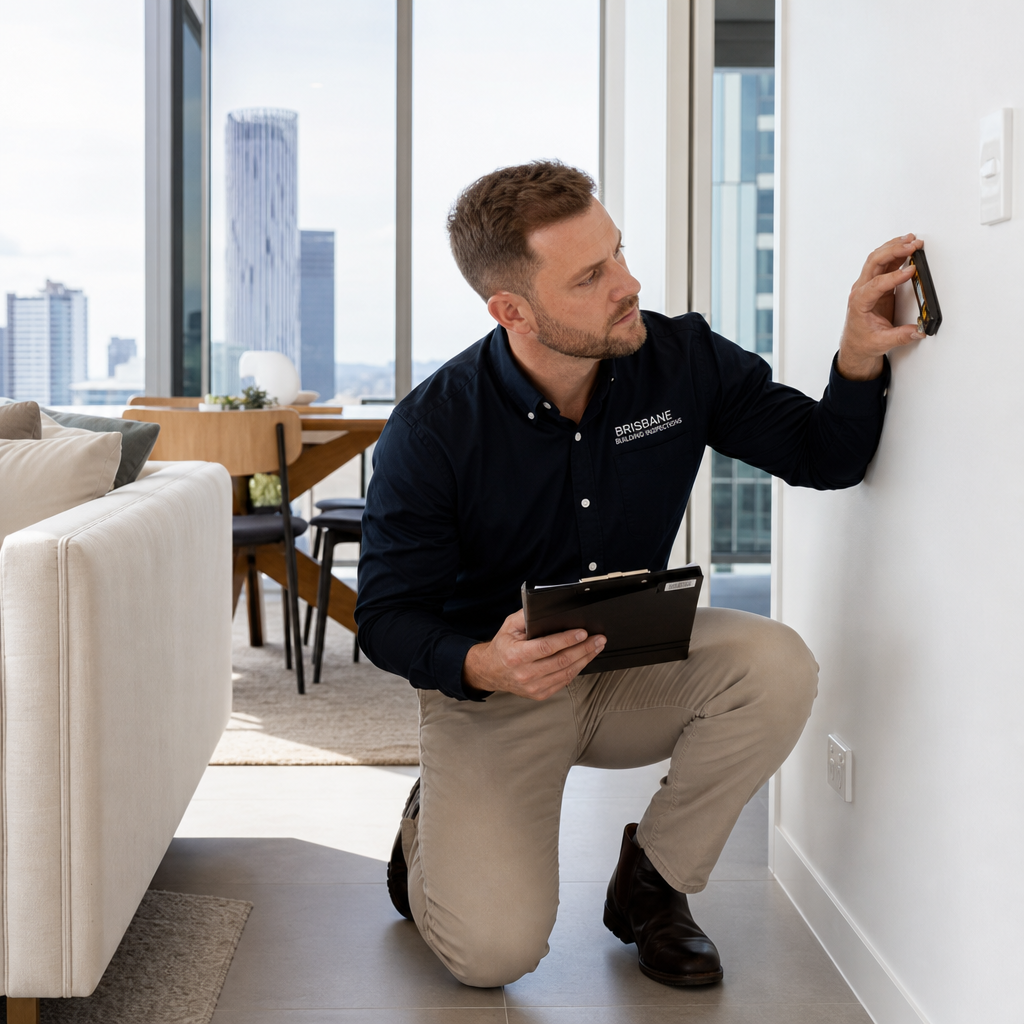
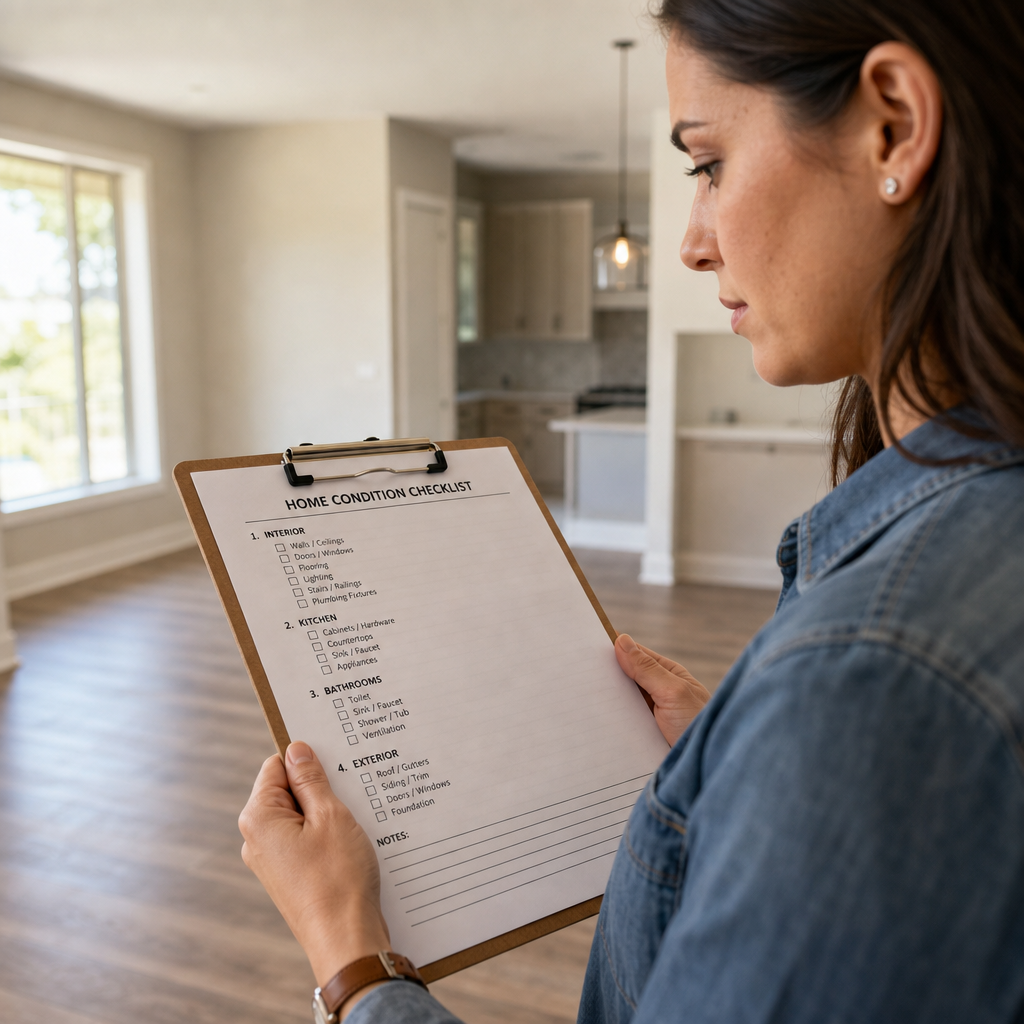
What a Re-Inspection Actually Checks
A re-inspection is not a repeat of the initial inspection. It is a targeted review of every item listed on the original defect report, combined with a check for new issues that arose during the rectification process. The scope is specific and the outcome is binary: each defect is either satisfactorily rectified or it is not.
Verifying Original Defects Against the Report
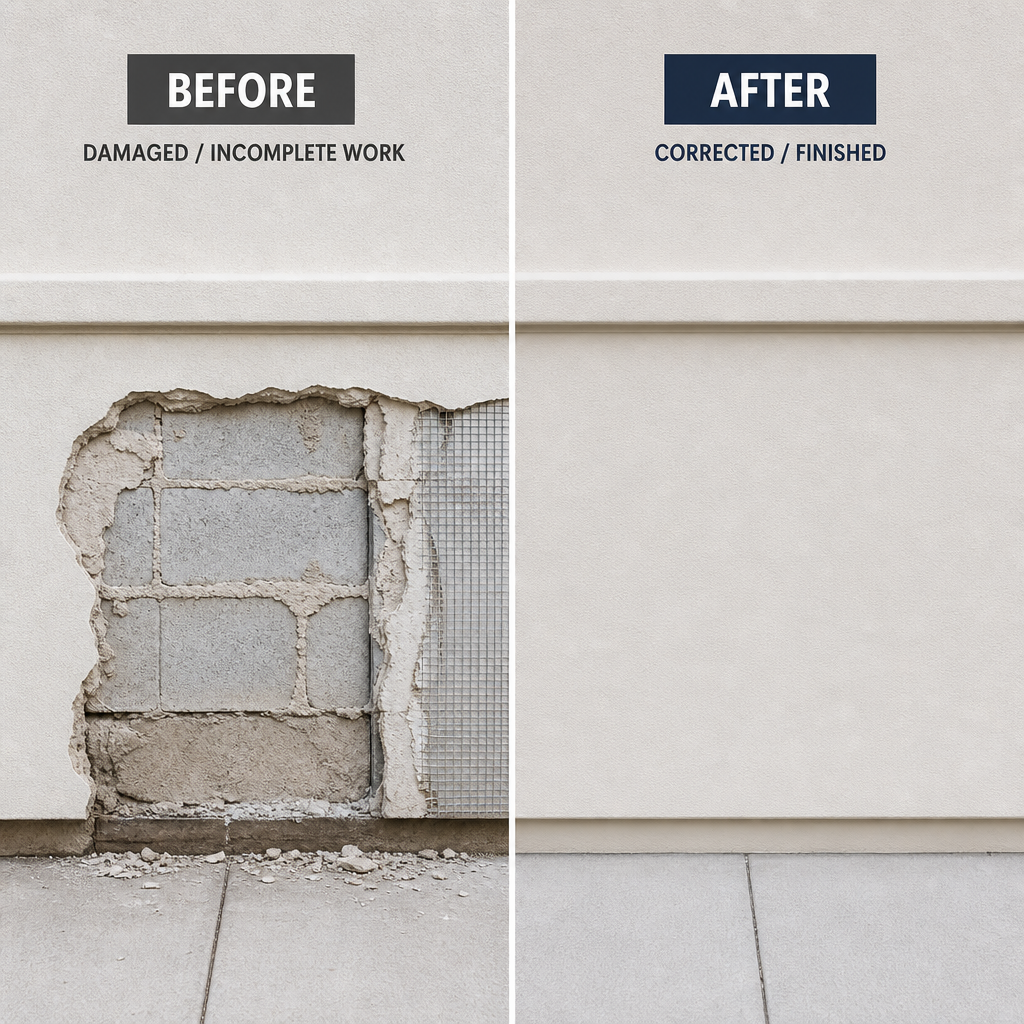
The inspector works directly from the original defect report, checking each item one by one. Photo comparison is essential here. Before-and-after images allow the inspector to confirm that the defect location matches, the repair method is appropriate, and the finish meets the standard required under the building contract.
A common mistake is assuming that a defect is fixed because the area has been cleaned or painted over. Surface cosmetic work is not structural rectification. A trained inspector will probe, tap, and measure to confirm that the underlying issue has been addressed, not concealed.
Identifying New Damage Created During Rectification
This is the aspect most buyers overlook. When a trade returns to site to fix a defect, they bring tools, materials, and often other workers. Scuffs, dents, adhesive residue, and damaged finishes are common byproducts of rectification activity. Without a follow-up inspection, these new defects become the buyer’s problem after settlement.
GoInspect’s licensed inspectors are trained specifically to separate pre-existing defects from rectification-induced damage, and to document both clearly in a photo-enhanced report that assigns responsibility to the relevant trade.
Checking Compliance with Queensland Building Standards
Some rectification work touches structural or waterproofing elements that must meet the National Construction Code (NCC) and relevant Australian Standards. An inspector with trade knowledge and licensing can identify whether the repair method used was compliant, not just visually acceptable.
Pro tip: Ask your inspector to specifically note any rectification work involving waterproofing membranes, structural connections, or electrical terminations. These items have mandatory compliance requirements that cannot be waived through a builder’s verbal assurance.
The Risk of Settling Without a Defect Rectification Check
Once you settle, the financial dynamic shifts entirely. Any defect that was present at settlement but not formally documented before that date becomes significantly harder and more expensive to pursue. Queensland’s contractual and statutory warranty frameworks do provide post-settlement protections, but exercising those rights requires evidence, time, and often legal cost.
A defect rectification check before settlement preserves your strongest negotiating position. If defects remain unresolved, you have documented grounds to withhold settlement, negotiate a price reduction, or require the builder to place funds in escrow until work is completed. After settlement, those options largely disappear.
“The building defect resolution process is most effective when independent evidence is gathered before title transfers. Post-settlement defect claims are significantly more resource-intensive for all parties.” – Queensland Building and Construction Commission, Defect Resolution Guidance
Investors buying in Brisbane, Logan, or Redland Bay face an additional risk. A rental property with unresolved defects affects both tenant safety and the property’s ability to pass future inspections. Defects in waterproofing, drainage, or structural elements that appear minor at handover can become serious maintenance liabilities within two to three years.
The data consistently shows that buyers who skip re-inspections spend far more on post-settlement defect rectification than the cost of the inspection itself. A professional re-inspection in Brisbane starting at $550 including GST is not an added cost. It is a cost offset against far larger potential expenses.
How a Pre-Settlement Inspection Fits Into the Timeline
Understanding where a pre-settlement inspection sits in the construction and handover timeline is important for planning. Most buyers confuse the initial practical completion inspection with a pre-settlement re-inspection. These are two distinct steps serving different purposes.
Stage 1: Practical Completion Inspection
This inspection occurs when the builder notifies you that construction is complete and the property is ready for handover. The inspector walks the entire property and compiles a comprehensive defect report. This is not when you should be signing off. This is when you identify everything that needs to be fixed before you do.
Stage 2: Builder Rectification Period
After receiving the defect report, the builder has a contractually defined period to rectify all identified items. Under Queensland’s standard construction contract conditions, this period is typically defined in the contract itself, and the builder must notify you when rectification is complete.
Stage 3: Re-Inspection Before Settlement
This is the step most buyers skip. When the builder notifies you that rectification is complete, you book a re-inspection new home Brisbane service with an independent inspector. The inspector verifies every item from the original defect list, documents the current state of the property with photos, and delivers a same-day report. Only after satisfactory re-inspection results should settlement proceed.
Pro tip: Build a re-inspection clause into your pre-settlement timeline by coordinating with your solicitor. Your conveyancer should be aware that you intend to conduct a follow-up inspection after the builder’s rectification notification, so settlement is not rushed before the inspection can occur.
Comparison of Re-Inspection Approaches
Not all re-inspection services approach defect verification the same way. The differences between a self-conducted walk-through, a general building inspection, and a specialist pre-settlement re-inspection matter significantly when defects remain contested.
| Approach | What It Covers | Limitations for Defect Rectification Verification |
|---|---|---|
| Buyer self-walk-through | Visual check of obvious items listed on defect report | No licensed authority, no trade knowledge for compliance checks, no legally usable photo documentation, easily disputed by builder |
| General building inspector (not specialised in new homes) | Broad condition assessment of the property structure | May not reference original defect report, may not understand new construction trade standards, report format may not align with QBCC or contract requirements |
| GoInspect specialist pre-settlement re-inspection | Item-by-item verification against original defect report with photo comparison, trade-specific accountability notation, new defect identification, and same-day delivery | Requires scheduling in advance of settlement date, cost starting at $550 including GST |
The comparison above makes the case clearly. A self-conducted walk-through has no evidentiary weight in a dispute. A general inspection misses the specificity required for defect rectification verification. A specialist re-inspection service designed for new home construction is the only approach that delivers a report you can actually use if the builder disputes a remaining defect.
What GoInspect Checks During a Re-Inspection in Brisbane
GoInspect operates across Brisbane, Gold Coast, Logan, Ipswich, and Redland Bay with fully licensed inspectors who understand the specific construction standards, trade practices, and contractual frameworks relevant to Southeast Queensland new builds. The re-inspection process is built around the original defect report, not a generic checklist.
Item-by-Item Defect Verification
Every item from the initial practical completion inspection is reviewed at the same location, using the same photo reference points. The inspector notes whether each defect has been satisfactorily rectified, partially rectified, or not addressed at all. Partial rectification is documented as an outstanding defect, not a pass.
Trade-Specific Responsibility Notation
GoInspect’s reports assign outstanding defects to the responsible trade. This is not just useful for record-keeping. When a builder pushes back on a defect that they claim is fixed, a report that names the trade, describes the defect in technical terms, and provides photo evidence is the most effective tool for forcing re-engagement.
New Defect Identification
Any damage or defects that were not present during the original inspection but are visible at re-inspection are documented as new items. These are typically caused by rectification activity and are the builder’s responsibility to address before settlement.
Same-Day Report Delivery
Settlement timelines do not wait. GoInspect’s same-day reporting ensures that buyers and their solicitors have a complete, photo-documented defect rectification report within hours of the inspection, not days. This is critical when settlement dates are fixed and builder response time is limited.
For developers and builders managing multi-dwelling projects, GoInspect also provides customised re-inspection services that track defect rectification across multiple lots or apartments simultaneously, with consolidated reporting designed to streamline the handover process at scale.
Frequently Asked Questions
How many re-inspections can I request before settlement?
There is no fixed limit under most Queensland residential building contracts, but each re-inspection should be triggered by the builder’s written notification that rectification is complete. In practice, most buyers require one to two re-inspections. If defects are still outstanding after two rounds of rectification, this may indicate a more serious contractual dispute that requires QBCC involvement or legal advice.
Does a re-inspection cost the same as the original pre-handover inspection?
Re-inspection pricing depends on the number of outstanding defects and the property type. GoInspect’s re-inspections start from $550 including GST, which is the same base price as the initial practical completion inspection. For larger defect lists or high-rise developments, pricing is confirmed after reviewing the scope of work.
Can I use the re-inspection report to delay settlement if defects are still outstanding?
Yes, and this is one of the most important uses of a professional re-inspection report. A photo-documented report from a licensed inspector showing outstanding defects is legally meaningful evidence that supports a request to defer settlement. Your solicitor can use this report to formally notify the builder and protect your contractual rights. A self-conducted walk-through note cannot achieve the same result.
What happens if the builder refuses to accept re-inspection findings?
If the builder disputes the re-inspection findings, your first step is to lodge a complaint with the QBCC, which has authority to investigate defect disputes on new residential construction in Queensland. The photo-documented report from GoInspect provides the evidentiary foundation for that complaint. Without an independent report, your complaint is a verbal dispute with no supporting documentation.
Is a re-inspection necessary for a new apartment as well as a house?
Yes. High-rise and multi-dwelling developments have different defect categories than detached homes, particularly around waterproofing, fire separation, mechanical services, and common area finishes. GoInspect provides customised re-inspection reports specifically designed for apartment buildings and high-rise developments, not a standard house checklist applied to a different building type.
How far in advance should I book a re-inspection before my settlement date?
Book as soon as the builder notifies you in writing that rectification is complete. Do not wait until the week of settlement. A minimum of seven to ten business days before the settlement date gives you time to receive the report, review outstanding items with your solicitor, and give the builder reasonable time to respond if further work is required. Same-day report delivery from GoInspect means the inspection itself does not add to your timeline.
Have you gone through a re-inspection process before settlement? Share what you found – or what you wish you had checked – in the comments below.
References
- Queensland Building and Construction Commission: defect dispute resolution guidance and homeowner rights in Queensland
- Australian Building Codes Board: National Construction Code compliance requirements for residential buildings
- Forbes Real Estate: research and analysis on new home buyer costs, risks, and pre-settlement strategies
- Statista: construction industry defect rates and new home buyer complaint statistics
- Australian Competition and Consumer Commission: consumer rights in residential building contracts and dispute resolution