
Most buyers assume that because a high-rise apartment is brand new, it will be defect-free at handover. That assumption is expensive. A high rise inspection Brisbane consistently reveals construction defects across waterproofing, fire systems, internal finishes, and mechanical services, even in premium developments. GoInspect’s licensed inspectors have documented hundreds of defects across Brisbane CBD, South Bank, and outer suburban high-rise projects, and the pattern is clear: multi-trade construction environments create more defect opportunities, not fewer. If you are preparing for a new unit handover inspection or a practical completion inspection, understanding what defects actually appear, and why, is the starting point.
Table of Contents
- Quick Takeaways
- Why High-Rise Inspections Differ from House Inspections
- The Most Common Defects Found in Brisbane High-Rise Units
- Waterproofing Failures: The Defect That Keeps Costing You
- Fire and Safety System Issues in New Apartment Buildings
- Comparison of Inspection Approaches for High-Rise Units
- What a GoInspect High-Rise Report Actually Covers
- Frequently Asked Questions
- References
Quick Takeaways
| Key Insight | Explanation |
|---|---|
| Waterproofing is the highest-risk defect category | Balcony and bathroom waterproofing failures are the most frequently found and most costly defects in Brisbane high-rise units, often invisible at handover but destructive within 12 months. |
| Trade accountability requires photo-enhanced reports | In multi-trade environments, defects must be attributed to specific trades. A basic inspection checklist without photo documentation fails to support rectification claims. |
| Fire system defects appear more often than buyers expect | Smoke detector placement, sprinkler clearances, and fire door gaps are routinely non-compliant in new Brisbane high-rise builds, even after certificate of occupancy. |
| Same-day reporting is not a convenience, it is a deadline issue | Builders have defined defect rectification windows. Delayed reports mean defects may fall outside the formal notification period, reducing your legal leverage. |
| Apartment inspection Brisbane scope differs floor by floor | Lower floors face drainage and moisture ingress risks. Upper floors face waterproofing, facade, and HVAC issues. A single generic checklist does not account for these differences. |
| Defects in common areas can affect individual owners | Lobby, car park, and stairwell defects are body corporate responsibilities, but individual owners still benefit from having these documented at pre-settlement inspection. |
| Queensland building contracts set tight defect notification windows | Under the Queensland Building and Construction Commission framework, owners must identify and report defects within specific timeframes to preserve their statutory warranty rights. |
Why High-Rise Inspections Differ from House Inspections
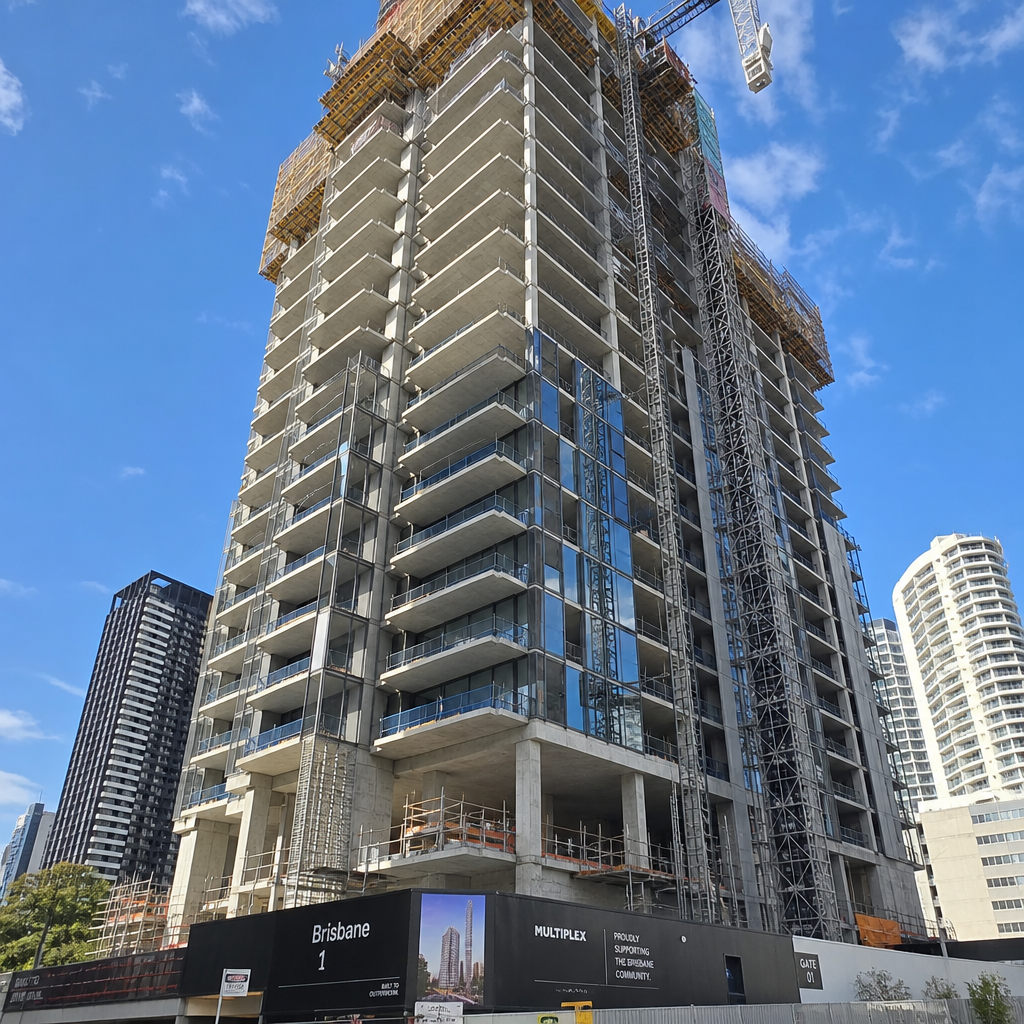
A standard residential house inspection follows a well-worn path: roof, subfloor, walls, plumbing, electrical. High-rise apartment inspections operate in a fundamentally different construction and regulatory environment. The building involves dozens of subcontractors, complex mechanical and fire services, shared building envelopes, and strata-level responsibilities that a house simply does not have.
In practice, the coordination failures between trades create the most defects. A waterproofing membrane installed by one contractor may be punctured by a plumber or tiler working after them, and neither trade flags the damage. The final finishes cover it. The defect does not surface until water appears on the ceiling of the unit below, sometimes 18 months after settlement.
GoInspect’s approach to apartment inspection Brisbane accounts for this layered complexity. Each defect is documented with photographs, assigned to the responsible trade, and reported on the same day of inspection. This is not just about thoroughness. It is about making the defect rectification process tractable for builders, developers, and owners who need to act fast within contract timeframes.
The Most Common Defects Found in Brisbane High-Rise Units
Based on GoInspect’s inspection reports across Brisbane, Gold Coast, and Logan high-rise developments, the following defect categories appear most frequently in new apartment handovers. These are not edge cases. They appear across budget and premium developments alike.
Internal Finishes and Workmanship
Cracked or chipped tiles, uneven grout lines, paint holidays, poorly fitted skirting boards, and damaged joinery are among the most visible defects. They are also the easiest to dispute without documentation, because developers often argue that minor cosmetic issues are within tolerance. A photo-enhanced report with close-up documentation removes that ambiguity.
Door alignment issues, sticking handles, and poorly seated window frames are also common. In high-rise construction, frames and fittings are often installed before the building has fully settled under load, and the tolerances tighten after occupancy. These issues need to be on record at the time of the new unit handover inspection, not discovered later.
Mechanical and Electrical Services
Air conditioning systems are a consistent problem area. Incorrect refrigerant charge, improperly pitched condensate drain lines, and poorly installed insulation on pipe runs are found regularly. These defects lead to water leaks inside the unit and reduced system efficiency from day one.
Electrical issues include incorrectly labelled switchboard circuits, missing RCD protection on required circuits, and recessed lighting installed without appropriate fire-rated downlight covers. These are not cosmetic. They are safety and compliance issues that a builder is legally required to rectify under Queensland building legislation.
Plumbing and Drainage
Slow-draining showers, incorrectly set tapware, and inadequate hot water delivery to upper floors are routine findings. More seriously, waste pipe falls that do not meet the minimum gradient required by the National Construction Code create long-term drainage problems that are difficult and expensive to fix post-settlement.
Pro tip: Run all taps and shower heads for at least 60 seconds during your inspection. Slow drainage and pressure inconsistencies often only reveal themselves under sustained flow, not a brief turn-on test.
Waterproofing Failures: The Defect That Keeps Costing You
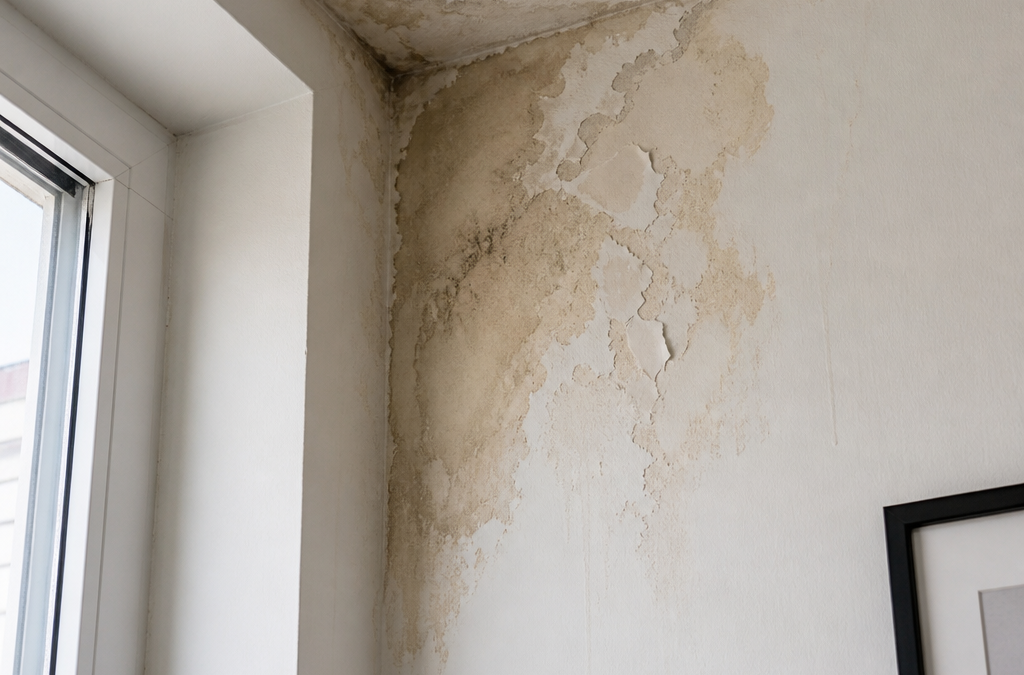
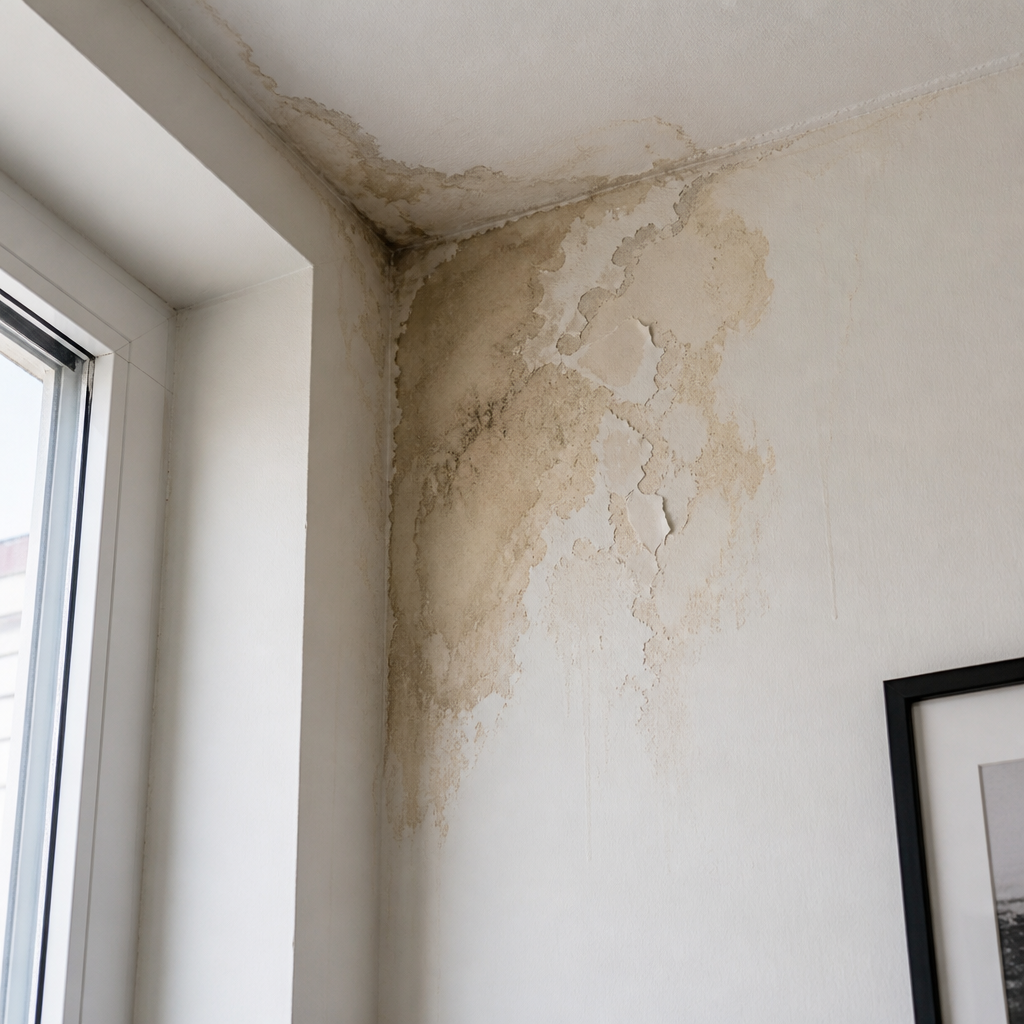
Waterproofing is the most consequential defect category in Brisbane high-rise construction. The Queensland climate, with its intense summer rainfall and high humidity, creates conditions where even minor membrane failures accelerate rapidly into structural and mould damage.
The most common waterproofing defects found in new unit handover inspections are balcony membrane terminations that have not been properly turned up and bonded at the junction with external walls, shower recesses where the membrane has been applied too thin or not carried high enough up the wall, and podium waterproofing over basement car parks that has been compromised during formwork or service installation.
“Waterproofing defects account for approximately 70 percent of serious building defect litigation in Australia. In most cases, the defect was present at handover but not visible to the untrained eye.” Source: Queensland Building and Construction Commission defect data summaries.
The critical point is that waterproofing defects are rarely visible at the time of handover. The membrane is covered by tiles, render, or decking. Only a licensed inspector who understands the construction sequence, knows where failures typically occur, and uses moisture meters and probe testing can identify at-risk areas before they become water damage claims.
GoInspect inspectors are fully licensed and trained specifically in identifying high-risk waterproofing installations. This is one of the core differentiators in GoInspect’s high-rise inspection methodology compared to generalist inspection services that treat waterproofing as a visual-only check.
Pro tip: Always ask your inspector whether they physically test waterproofing membrane height in wet areas, not just visually check the finish. A tile that looks well-seated can still be sitting on an under-height or improperly applied membrane.
Fire and Safety System Issues in New Apartment Buildings
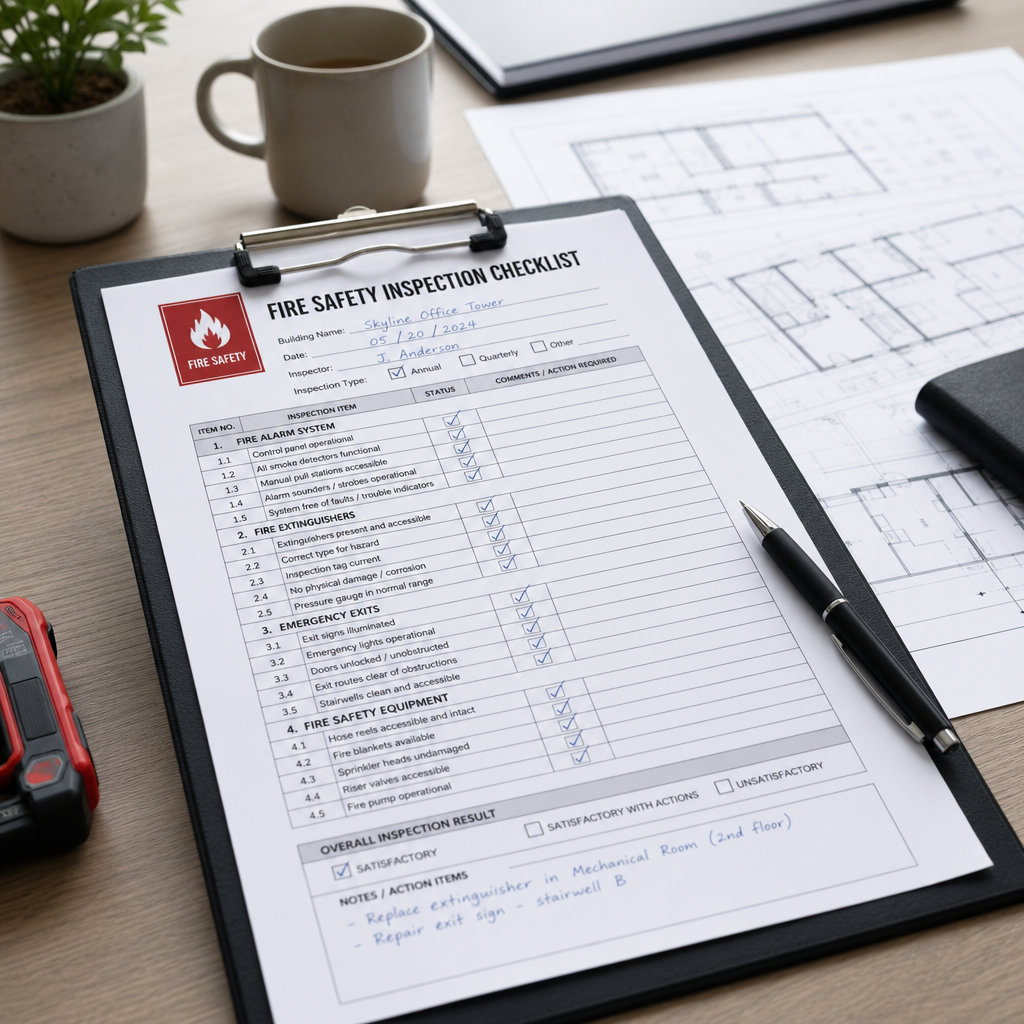
This category surprises most buyers, who assume that a certificate of occupancy means all fire and safety systems are fully compliant. In practice, certificates are issued based on documentation and staged inspections, and field-level defects regularly slip through.
Smoke Detector Placement and Coverage Gaps
Smoke detectors installed in positions that do not meet the coverage requirements of Australian Standard AS 3786 are found in a significant proportion of new Brisbane apartment units. Detectors placed too close to air conditioning vents, too far from bedroom doors, or in areas with insufficient ceiling clearance all represent compliance failures. These are not builder errors that get picked up by the certifier. They are installation-level defects that only appear during a systematic unit-by-unit inspection.
Fire Door Defects
Fire doors with incorrect gap tolerances, damaged intumescent seals, or self-closing mechanisms that do not fully latch are among the most frequently documented safety defects in GoInspect’s Brisbane high-rise reports. Under the National Construction Code, fire doors must meet strict performance requirements. A door that swings and stops short of latching is not compliant, regardless of how new the building is.
These defects matter beyond compliance. They represent genuine life-safety risk, and they are the builder’s responsibility to rectify at no cost to the owner under statutory warranty provisions.
Comparison of Inspection Approaches for High-Rise Units
Not all inspection services approach high-rise and apartment inspections with the same methodology. The table below compares three distinct approaches buyers encounter in the Brisbane market.
| Inspection Approach | What It Typically Delivers | Limitation for High-Rise Units |
|---|---|---|
| Generic residential inspection checklist (non-specialist) | Basic pass/fail observations across standard categories, usually a templated PDF report | Does not assign defects to specific trades, lacks photo documentation depth, not built for multi-trade construction accountability |
| Builder-supplied defect list at handover | Developer’s own record of known defects, sometimes provided as a token gesture before settlement | Builder has a financial interest in minimising the defect list, no independent verification, covers nothing that the builder does not want documented |
| GoInspect licensed pre-handover inspection with photo-enhanced report | Systematic, trade-attributed defect documentation with same-day reporting, customised for high-rise and multi-unit developments | Requires booking in advance of settlement date to align with builder’s access window, from $550 including GST |
What a GoInspect High-Rise Report Actually Covers
GoInspect provides customised inspection reports for high-rise developments across Brisbane, Gold Coast, Logan, Ipswich, and Redland Bay. The standard for a high-rise unit inspection includes: internal finishes across all rooms, wet area waterproofing assessment, plumbing and drainage function testing, electrical and mechanical services, fire and safety system compliance checks, balcony and external elements, window and door operation, and body corporate area documentation where access is provided.
Every defect is photographed, described in plain language, and attributed to the responsible trade. This matters because rectification in a high-rise environment requires a developer or body corporate to engage the correct subcontractor, not just issue a generic work order. A report that says “tile cracked in bathroom” tells a builder very little. A report that says “wall tile row 4, wet area tiler, 150mm crack at grout joint, consistent with substrate movement before adhesive cure” tells them exactly what happened and who is responsible.
Same-day reporting is standard at GoInspect. This is not a marketing feature. It is a functional requirement for buyers whose settlement dates are immovable and whose defect notification window may be as short as 48 hours from the inspection date.
Pro tip: When booking a GoInspect pre-handover inspection, confirm the exact date your builder has granted access to the unit for independent inspection. Builders are required to provide reasonable access, but if you do not coordinate in advance, you risk losing your window before settlement occurs.
Frequently Asked Questions
What is included in a high rise inspection Brisbane that is different from a standard house inspection?
A high-rise inspection in Brisbane includes all the elements of a residential inspection plus specific checks for fire and safety system compliance, balcony and facade waterproofing, shared building services, mechanical ventilation, and body corporate area defects. The multi-trade construction environment means defects also need to be attributed to specific subcontractors, which requires a more detailed documentation process than a standard house report.
How common are defects in brand new Brisbane apartments?
Defects in brand new Brisbane apartments are extremely common. GoInspect’s inspection data shows that virtually every new high-rise unit contains at least minor defects at handover, and a significant proportion contain serious defects in waterproofing, mechanical services, or fire safety. The Queensland Building and Construction Commission regularly publishes data showing that multi-unit residential construction generates a high volume of defect complaints across the state.
When should I book a new unit handover inspection?
You should book a new unit handover inspection as early as possible once your builder confirms a practical completion date. Aim to have the inspection completed at least five business days before your settlement date so that defect notices can be formally issued to the builder within the required contractual timeframe. Leaving the inspection to the day before settlement creates unnecessary legal and logistical risk.
Can waterproofing defects be identified before tiles are laid?
Yes, and this is the ideal time to identify them. A pre-tile waterproofing inspection, sometimes called a wet area pre-lining inspection, checks membrane application, height, and coverage before tiles are installed. Once tiles are down, waterproofing can only be assessed through moisture meter testing, probe testing, and indirect indicators. GoInspect can conduct staged inspections during construction for investors and developers who want to catch defects at the point of installation rather than at handover.
Does a certificate of occupancy mean my apartment has no defects?
No. A certificate of occupancy confirms that the building meets the minimum requirements for occupation as assessed by a certifier at a specific point in time. It does not mean every unit is defect-free. Certifiers conduct staged inspections of building systems, not unit-by-unit defect audits. Independent inspections regularly find non-compliant installations even in buildings that have received their occupancy certificates.
How does GoInspect handle defects in common areas like lobbies and car parks?
GoInspect documents common area defects where access is provided as part of a high-rise inspection. These defects become part of the body corporate’s defect register and can be used to engage the developer or builder for rectification under the statutory warranty provisions applicable to common property in Queensland. Individual unit owners benefit from having common area defects documented independently because body corporate committees sometimes lack the technical knowledge to identify or formally record these issues at handover.
If you have recently completed a pre-handover or apartment inspection in Brisbane, share what defects you found in the comments. Your experience helps other buyers know what to look for before they sign off at settlement.
We would love your feedback and any insights you would share with others. What perspective would you add?
References
- Queensland Building and Construction Commission: statutory warranty and defect complaint information for Queensland homeowners
- Australian Building Codes Board: National Construction Code requirements for residential and high-rise buildings
- Standards Australia: Australian Standards for smoke detection, waterproofing, and fire door performance in new residential construction
- Forbes: coverage of real estate due diligence, property investment risk, and new construction defect trends
- Statista: construction industry defect rates, apartment development statistics, and building complaint data in Australia