
Drainage defects in new homes deserve attention before handover: unfinished connections, obstructed drains and water collecting against the building should be recorded and assessed. Start with the visible condition, its location and what happens when it rains. The right repair depends on the drainage design and the cause, which a puddle or photograph alone may not establish.
A practical completion inspection (PCI), also called a handover inspection, can help document visible defects and incomplete external work within the agreed scope. This checklist explains what to look for safely, what information to give your builder and when a drainage specialist may be needed.
Surface water drainage and stormwater drainage: what is the difference?
Surface water drainage concerns the way water moves across the ground, paths and driveways. Stormwater drainage includes the gutters, downpipes, pits and pipes intended to collect and convey rainwater. They need to work together: a clear grate will not resolve every problem if the surrounding surface directs water elsewhere.
QBCC’s guidance on driveways and paths identifies falls away from the home towards approved drainage or lawful discharge points as an important consideration. Finished levels must also respect the building’s moisture and termite barriers. Assess the installed work against the applicable design and requirements rather than applying one slope or clearance to every property.
New-home drainage checklist: nine concerns to record
Walk through safely accessible external areas with your builder. These are useful observations to raise, rather than a test that proves the whole drainage system complies.
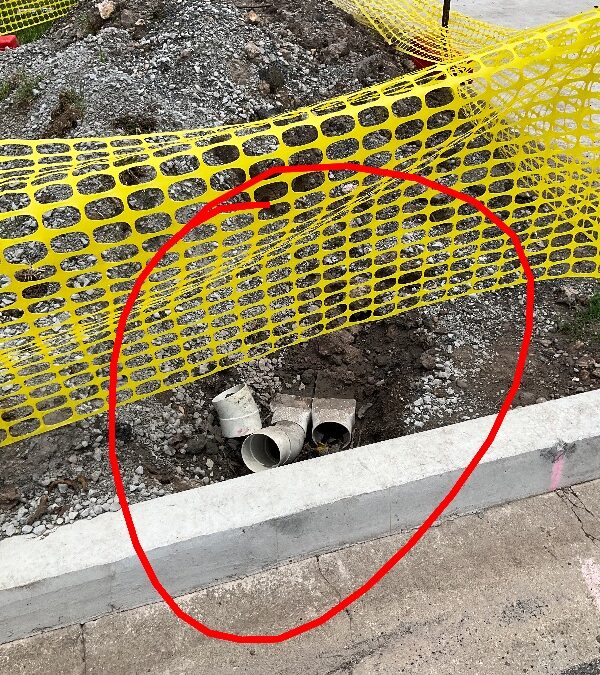
- Unfinished drainage work. Record exposed pipe ends, incomplete connections, missing fittings or drainage works still awaiting completion. Ask what remains to be done and how it connects with the finished landscaping.
- Water pooling near the house. Photograph the position relative to walls, slab edges and doorways. Note whether it is a small isolated low point or water repeatedly collecting against the building.
- Runoff towards a garage or external door. Record water approaching or crossing the threshold, including its route across the driveway or paving. Request an assessment of the levels, collection points and intended drainage arrangement.
- Covered or obstructed grates and pits. Look for visible soil, concrete residue, mulch or building debris restricting the opening. Do not lift heavy covers or reach into pits to investigate.
- Damaged or incomplete visible downpipe connections. Note disconnected sections, damaged fittings or water escaping at a connection during rain. Ask the builder to confirm the intended connection and discharge arrangement.
- Drainage inlets that water appears to bypass. A grate can be present while nearby runoff flows past it. A wider photograph showing the surface and inlet is more useful than a close-up of the grate alone.
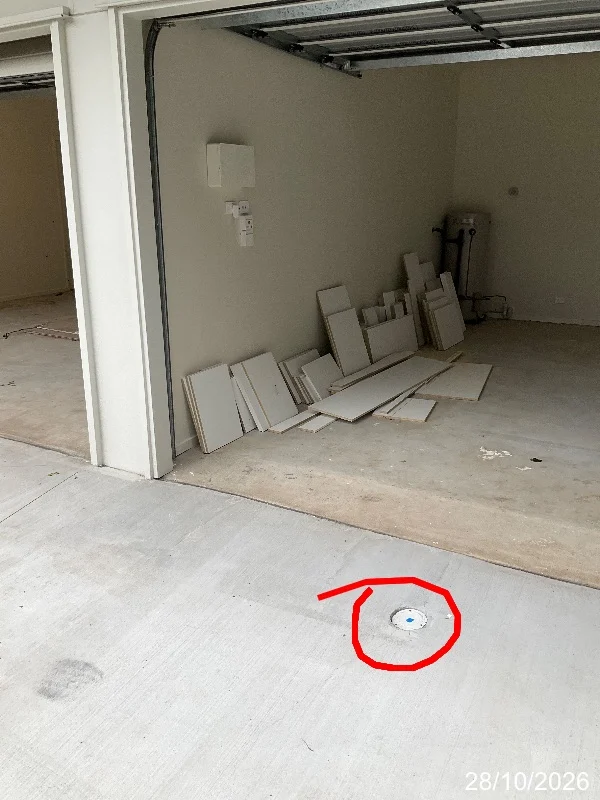
- Unfinished covers and access points. Record missing, loose or uneven covers and pipe caps within paths or driveways. Ask for their purpose and the required finished detail to be confirmed.
- Landscaping that changes the water path. Note garden edging, soil, turf or paving that appears to trap water or direct it back towards the home. Compare the final arrangement with the agreed drainage and landscape work.
- Persistent overflow or unexplained wet areas. Record when it happens, where the water emerges and whether it occurs during rain or dry weather. The source may require a plumber’s investigation; do not assume every wet patch is stormwater.
For indoor leaks, loose fixtures and other plumbing installation concerns, see our new-home plumbing defects guide. Water remaining on a shower floor is covered separately in our guide to water pooling in a new shower.
Two findings from a GoInspect inspection
Drainage work still incomplete at the street
In one inspection, GoInspect recorded that drainage work at the street needed completion, with adequate fall to street level. The photograph above shows the exposed pipe openings beside the kerb and the unfinished area behind temporary safety mesh.
The useful next step is a defined completion item: ask the builder to explain the final arrangement, coordinate the drainage and landscaping, and confirm when the work will be ready for review. The finding does not establish the capacity or condition of the buried pipework.
A pipe cap not finished flush with the driveway
The same inspection recorded a pipe cap outside a garage as not mounted flush with the concrete. This is a separate finishing item to raise with the builder. Ask for the fitting’s function and the appropriate finished installation to be checked, rather than assuming the cap identifies a stormwater pipe or a blockage.
What to record when water pools after rain
Give each concern a clear location, such as the path beside the laundry or the driveway outside the garage. Take a wide photograph showing the building and nearby drainage, then a closer view of the affected area. Record the date, whether rain is continuing and when you next check the area.
A short video from a safe position can show the direction of flowing water. Keep the original files and your written notification to the builder. Avoid entering floodwater, excavating, opening pipework or running a hose towards the building to recreate the problem.
Useful questions include: Where is this water intended to go? Is the drainage and landscaping complete? Does the installed work match the applicable plans? What further assessment is needed to establish the cause? A specialist may need to assess levels, pipework or the drainage design before recommending a repair.
Can a PCI confirm that underground drainage works?
A standard new-home inspection focuses on visible and safely accessible work within the agreed scope. It does not establish concealed pipe falls, buried connections or stormwater capacity. CCTV inspection, specialist flow testing, excavation and engineering assessment require separate arrangements where needed.
Dry weather also limits what can be observed about runoff. An inspection can still identify incomplete work and visible concerns; it cannot guarantee how the property will perform in every storm. Tell GoInspect about known water problems when booking so the concern and the inspection scope can be discussed.
Agree on the next step before closing the item
Send the builder a clear written list and ask for a response addressing each location, proposed action and completion date. Keep the original finding alongside the response. Where the cause or adequacy of a repair remains uncertain, discuss what follow-up assessment or testing is appropriate.
QBCC’s handover guidance explains the defects document and the importance of recording outstanding matters. An inspection report does not determine payment obligations, responsibility for repair costs or occupancy approval. Obtain advice about your particular contract if those decisions are in dispute.
Takeaway: record the visible drainage concern, establish the intended water path and agree on the investigation or completion work needed. For an independent record before practical completion, explore GoInspect’s handover inspection service or request a quote for your property.