
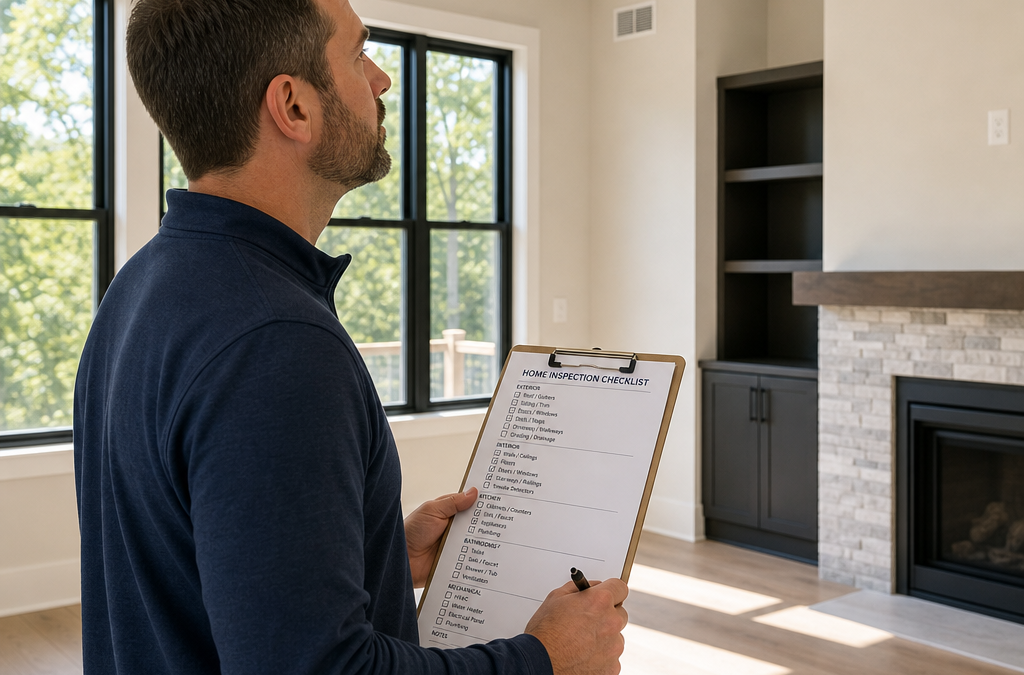
Most new home buyers spend months choosing finishes and fixtures, then walk into their handover day completely unprepared for what actually matters. The result is a rushed walkthrough, a pile of unsigned defects, and a builder who has moved on to the next project before the paint is dry. Research from Queensland’s building and construction sector consistently shows that defects missed at practical completion are significantly harder and more expensive to rectify post-settlement. Your new home handover day is the single most important opportunity you will have to protect your investment, and this guide walks you through exactly how to prepare for it.
Table of Contents
- What Is New Home Handover Day?
- Quick Takeaways
- Know Your Rights Before You Arrive
- Practical Completion Inspection Checklist
- Handover Inspection Brisbane: What to Expect by Region
- DIY vs Professional Inspection: A Direct Comparison
- How to Handle Defects Found on the Day
- After Handover: Your Next Steps
- Frequently Asked Questions
- References
What Is New Home Handover Day?
New home handover day, also called practical completion day or pre-settlement inspection day, is the point at which your builder formally declares construction complete and transfers possession of the property to you. It is not just a formality. It is a legally meaningful moment under the Queensland Building and Construction Commission (QBCC) framework, and what you document here directly affects what your builder is obligated to fix.
In practice, handover day involves a walkthrough of the property with a site supervisor, a review of the defect list, signing of handover documents, and collection of keys, warranties, and manuals. If you sign off without identifying defects, many builders will treat those issues as post-handover maintenance, not their contractual responsibility.
Quick Takeaways
| Key Insight | Explanation |
|---|---|
| Book a licensed inspector before handover day | A professional practical completion inspection should be booked 5 to 7 days before your scheduled handover, not on the day itself. This gives time to raise a defect list with your builder before you sign. |
| Do not sign the handover certificate if defects are unresolved | Signing accepts the build as complete. Any defects identified after signing are treated under statutory warranty, which is a longer and harder process than pre-settlement rectification. |
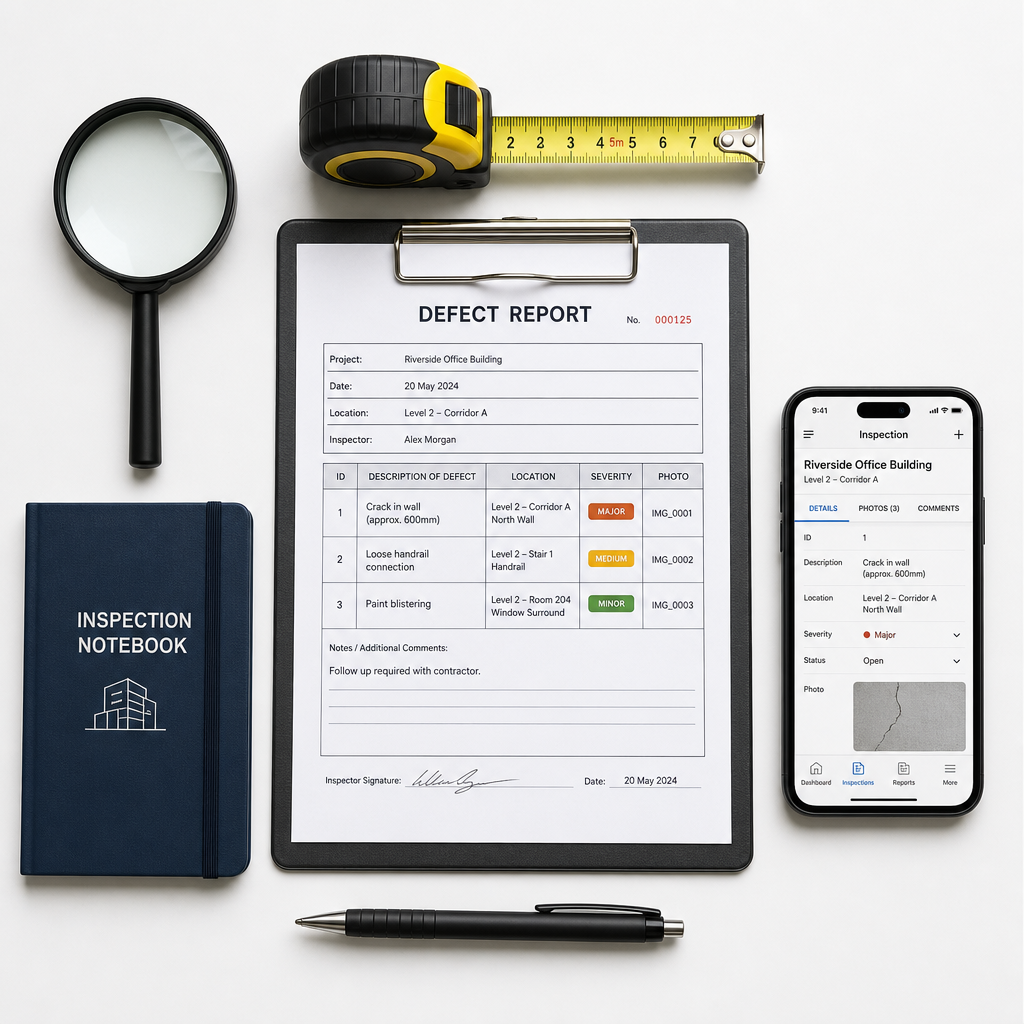
| Photo documentation is non-negotiable | Every defect must be photographed with date stamps. Reports without photos are easily disputed. GoInspect’s photo-enhanced reports assign each defect to a specific trade, making builder accountability clear. |
| A practical completion inspection checklist covers more than cosmetics | Structural items, waterproofing, drainage, electrical, and mechanical systems all need inspection. Cosmetic issues like paint and scratches are the least of your concerns compared to a failed bathroom membrane. |
| Brisbane and South-East Queensland builds have specific climate-related defect patterns | High humidity in Brisbane, Logan, and Redland Bay makes moisture-related defects, inadequate weep holes, and subfloor ventilation issues more common than in other Australian climates. |
| Same-day reporting changes your negotiating position | When your inspector delivers a completed report on handover day itself, you have documented evidence to present to your builder immediately rather than days later when the site supervisor has moved on. |
| High-rise and estate builds require different inspection approaches | Common property, fire systems, lift access, and shared drainage in apartment developments require a specialist inspector familiar with multi-unit structures, not just standalone home checklists. |
Know Your Rights Before You Arrive
Under the Queensland Building and Construction Commission Act 1991, you have statutory warranty protections that apply to new residential construction. These warranties cover structural defects for up to 6 years and 6 months, and non-structural defects for 1 year from practical completion. But those protections are strongest when you have documented evidence of defects at the time of handover, not months later.
A common mistake buyers make is assuming the builder will fix everything after settlement if they just ask nicely. This rarely works in practice. Once you have settled and moved in, the burden of proof shifts. You are now claiming a defect existed before handover, not proving something visible on the day.
What Your Contract Should Already Include
Review your building contract at least two weeks before handover. Specifically, confirm the practical completion definition in your contract, the defect liability period, and whether your contract entitles you to an inspection prior to signing. Most standard QBCC contracts do allow this. If your builder is pushing back on giving you inspection access before handover, that is a red flag worth raising with your solicitor.
Also confirm that all special conditions, inclusions, and variations you approved during construction are actually present. Finishes upgrades, tap fittings, and flooring selections are surprisingly common sources of dispute at handover when builders substitute without notifying the owner.
“The practical completion inspection is your last contractual checkpoint. Everything you fail to identify here becomes exponentially harder to enforce after settlement.” – QBCC Consumer Guidance, Queensland Building and Construction Commission
Practical Completion Inspection Checklist
A thorough practical completion inspection checklist is not a single document you print off the internet and tick through yourself. It is a structured process covering trades, systems, and finishes in a specific sequence. The following breakdown is based on what licensed inspectors in South-East Queensland actually work through on site.

Exterior and Structure
Check the roof covering for cracked or displaced tiles, inadequate flashings, and ridge capping integrity. Inspect fascia boards, gutters, and downpipes for alignment and secure attachment. Look at the brickwork or cladding for cracking, efflorescence, or gaps at junctions. Confirm weep holes are present above windows and lintels, and that site drainage directs water away from the building.
Structural cracking in brickwork is more common than buyers expect. A crack wider than 2mm in mortar joints at this stage warrants immediate documentation and a structural engineer’s opinion before you sign anything.
Interior Finishes and Wet Areas
Walls and ceilings should be checked for paint defects, cracking, and gaps at cornices. Tiles need to be tapped for hollowness, checked for lippage, and inspected at grout lines. Wet areas, including bathrooms and laundries, require particular attention because waterproofing failures are both common and catastrophic.
In practice, a visual check of tiles is not enough. A licensed inspector will check fall-to-waste in shower recesses, confirm waterproofing membrane heights, and look for silicon that has been applied over paint rather than directly to the substrate. These are builder shortcuts that lead to water damage within 12 to 18 months.
Mechanical, Electrical, and Plumbing
Every power point, light switch, and hard-wired appliance needs to be tested. Air conditioning units should be run. Exhaust fans in bathrooms should be confirmed as connected and operational. Hot water systems, water pressure at every outlet, and toilet flush mechanisms are all part of a complete check.
Confirm that the switchboard is labelled correctly and that safety switches are installed on all circuits as required by current Queensland electrical standards.
Pro tip: Bring a phone charger and a small lamp to plug into every power point during your inspection. Builders occasionally leave circuits disconnected, and a quick physical test catches this faster than any visual check.
Doors, Windows, and Hardware
Every door and window must open, close, lock, and seal correctly. Check for racking in door frames, gaps at the head of windows, and hardware that has been installed incorrectly. Sliding doors in Queensland homes are particularly prone to track alignment problems that become worse over time if not corrected before handover.
Handover Inspection Brisbane: What to Expect by Region
A handover inspection Brisbane is not identical to one completed in Ipswich, Redland Bay, or the Gold Coast. South-East Queensland’s sub-tropical climate, soil types, and construction volumes all influence the defect patterns inspectors encounter regularly across these regions.
Brisbane and Logan: Volume Builds and Tight Timelines
Brisbane and Logan are among the highest-volume new home construction corridors in Queensland. The data consistently shows that high construction volume correlates with higher defect rates, particularly in trades that are stretched across multiple sites simultaneously. Tiling, waterproofing, and painting are the three trades most commonly responsible for defects in these corridors.
Buyers in these areas are also more likely to be dealing with project home builders operating at scale, which means site supervisors may have 20 or more active sites. Do not expect your supervisor to have detailed knowledge of every finish decision made on your specific build without bringing your contract documentation with you.
Gold Coast: High-Rise and Prestige Builds
Gold Coast handover inspections frequently involve apartment developments and dual-occupancy builds where common property, fire systems, and balcony waterproofing are critical areas. A specialist inspector familiar with the National Construction Code provisions for Class 2 buildings is essential here. A checklist designed for a standalone house in Springwood will miss critical items in a high-rise at Broadbeach.
Redland Bay and Ipswich: Soil Movement and Drainage
Reactive clay soils in parts of Redland Bay and Ipswich make footing performance and drainage a priority. Inspectors in these areas look carefully at subfloor drainage, site fill compaction, and any early signs of differential movement in the slab. Catching these indicators at practical completion, rather than 12 months after settlement, is the difference between a covered warranty claim and a disputed one.

DIY vs Professional Inspection: A Direct Comparison
Some buyers still attempt to conduct their own practical completion inspection to save money. In practice, this is a false economy. Here is a direct comparison of what each approach actually delivers.
| Inspection Approach | What It Covers | Limitations and Risks |
|---|---|---|
| DIY Self-Inspection | Visible cosmetic defects, missing inclusions, obvious finishes issues | Misses waterproofing failures, structural indicators, electrical faults, and code compliance items. No legally defensible documentation. Builder will not treat a handwritten list as formal notice. |
| Generic Inspection Service (non-specialist) | General property condition report suitable for established homes | Not trained for new construction defect identification. Does not assign defects by trade. Reports are not formatted to support builder rectification workflows. Often slower to deliver reports. |
| GoInspect Licensed New Home Inspection | Full practical completion checklist, photo-enhanced defect reports, trade-specific defect assignment, same-day reporting for Brisbane, Gold Coast, Logan, Ipswich, and Redland Bay | Requires booking in advance. Not a structural engineering report. For complex structural concerns, a separate engineering assessment may be needed alongside the inspection. |
The critical differentiator is documentation quality. A report that assigns each defect to a specific trade, includes time-stamped photos, and is delivered on the day of inspection gives you a defensible evidence base. This is what separates a builder’s willingness to act from their ability to deny.
Pro tip: Ask your inspection provider whether their report format is structured to support the builder’s defect rectification workflow. A report that makes it easy for the site supervisor to assign items to trades gets resolved faster than a general list of complaints.
How to Handle Defects Found on the Day
Finding defects on handover day is normal. A first-time buyer often panics when an inspector identifies 40 or 50 items. The number of defects is less important than their nature and how they are documented and communicated. Most new homes in South-East Queensland have some level of defect at practical completion.
Categorise Defects Before You Negotiate
Not all defects carry the same weight. Separate them into three groups: safety-critical items that must be rectified before you occupy the property, structural or weatherproofing items that must be rectified before settlement, and cosmetic or minor items that can be agreed for rectification within a specified period post-settlement.
Do not allow your builder to bundle safety-critical or structural items into the cosmetic category. A cracked bathroom tile is cosmetic. A missing waterproofing membrane is not. Your inspection report should make this distinction clearly.
Do Not Sign the Handover Certificate Under Pressure
Builders and site supervisors are under commercial pressure to hit practical completion milestones. Some will pressure buyers to sign the handover certificate on the day and promise to fix everything afterwards. This is the most common way buyers lose their pre-settlement leverage.
If significant defects are identified, you are entitled to delay signing until those defects are either rectified or formally listed in a written defect schedule that both parties sign. Your solicitor or a QBCC case officer can advise on the correct process under your specific contract.
Use Written Communication from This Point Forward
After handover day, all communication with your builder about defects should be in writing, whether by email or formal letter. Verbal agreements at the site walkthrough are not enforceable. If a supervisor tells you something will be fixed, confirm it in an email immediately after the conversation.
After Handover: Your Next Steps
Once you have completed handover and collected your keys, the process does not stop. Your defect liability period has started, and keeping clear records from this point gives you the strongest possible position if further issues emerge.
Register Your Warranties Immediately
Appliance warranties, structural warranties, and QBCC home warranty insurance all require action within specific timeframes. Register appliance warranties on the day you move in. Confirm that your QBCC home warranty insurance certificate has been issued and matches your property address. These certificates are issued to the builder, not directly to you, so request a copy at handover.
Conduct a 90-Day Review
Many construction defects, particularly those related to settlement, shrinkage cracking, and seasonal movement, are not visible immediately. Schedule a personal walkthrough of the property at 90 days post-settlement and document anything new. If cosmetic defects were agreed in a post-settlement schedule, follow up on them in writing before the agreed rectification period expires.
In practice, buyers who schedule this review almost always find additional items worth raising under their defect liability period. Buyers who do not schedule it often miss the window entirely.
Frequently Asked Questions
What is the difference between practical completion and final handover?
Practical completion is the stage at which the builder declares construction is essentially complete and fit for occupation, even if minor defects remain. Final handover typically refers to the physical transfer of keys and documents. In Queensland residential builds, these two events usually occur on the same day, but practical completion is the contractual trigger for your defect liability period and final payment.
Can I delay settlement if defects are found at handover?
Yes, in most cases. Under a standard QBCC residential building contract, you can refuse to reach practical completion if the build does not meet contract specifications. However, there is a formal process for this, and you should not simply refuse to settle without first obtaining legal advice. A formal defect schedule supported by a licensed inspector’s report is the strongest basis for delaying or negotiating settlement terms.
How long does a practical completion inspection take?
For a standard four-bedroom house, a thorough practical completion inspection takes approximately two to three hours. High-rise apartments and larger homes take longer. Rushing this process is one of the costliest mistakes a buyer can make. Book a professional inspector and allow the full time needed, even if your builder’s site supervisor seems impatient to complete the walkthrough.
How much does a new home handover inspection cost in Brisbane and South-East Queensland?
GoInspect’s new home handover inspections start from $550 including GST across Brisbane, Gold Coast, Logan, Ipswich, and Redland Bay. When you consider that a single missed waterproofing defect can cost $10,000 or more to rectify post-settlement, a professional inspection is a straightforward financial decision, not an optional extra.
What should I bring to my handover day?
Bring a copy of your building contract and all approved variations, a copy of your selections and finishes schedule, your own phone or camera for additional photos, a phone charger to test power points, and any correspondence with your builder regarding outstanding items. If you have hired a professional inspector, they will handle the technical documentation, but your contract documents are your responsibility to bring.
Is a pre-handover inspection different from a standard building inspection?
Yes, significantly. A standard building inspection is designed for established properties and focuses on condition and maintenance issues. A pre-handover or practical completion inspection is focused on construction defects, code compliance, and contract conformance in a new build. The checklist, reporting format, and expertise required are different. Always use an inspector who specialises in new home inspections, not one who primarily works on established homes.
What happens if my builder refuses to fix defects after handover?
If your builder refuses to rectify legitimate defects after handover, you have several options. You can lodge a complaint with the QBCC, who have dispute resolution powers under the Queensland Building and Construction Commission Act. You can also seek rectification through QCAT for disputes under $25,000, or through the courts for larger claims. In all cases, a professional inspection report with photo documentation is your primary evidence base.
Have you recently gone through a new home handover in Brisbane or South-East Queensland? Share what you wish you had known beforehand, your experience might help another buyer avoid the same issues.
References
- Queensland Building and Construction Commission: consumer rights, statutory warranties, and dispute resolution guidance for new home buyers
- Australian Competition and Consumer Commission: consumer guarantee protections and builder obligations under Australian consumer law
- Australian Building Codes Board: National Construction Code standards governing new residential building compliance in Australia
- CHOICE Australia: independent guidance on home buyer rights, building contracts, and defect dispute processes
- Forbes: financial and property investment guidance relevant to new home purchase decisions and cost of construction defects