
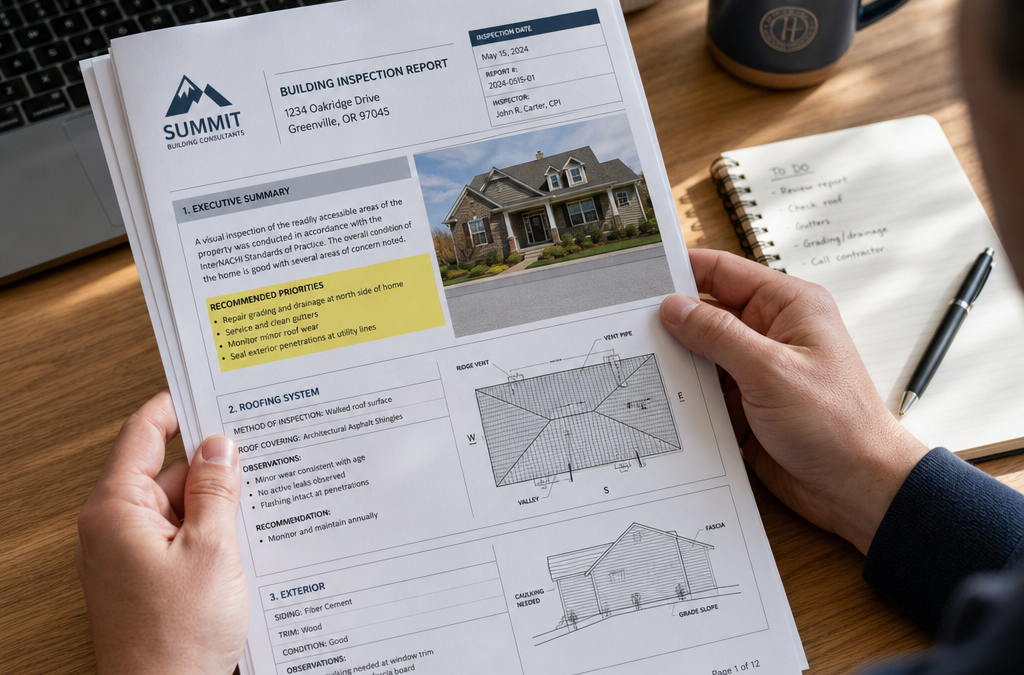
Most homeowners receive their building defect report and feel immediately overwhelmed. The document runs to dozens of pages, the trade terminology is unfamiliar, and the urgency to act before handover is real. A common mistake is skimming the report, flagging a handful of obvious items, and assuming the builder will handle the rest. That approach leaves defects on the table, literally. Understanding exactly how to read an inspection report, and what the defect rectification process requires of you, is the difference between moving into a finished home and spending months chasing your builder for repairs.
Table of Contents
- Quick Takeaways
- What a Building Defect Report Contains
- How to Read Each Section of Your Inspection Report
- Understanding Defect Severity Classifications
- The Defect Rectification Process Step by Step
- Comparing Report Formats and What They Mean for You
- Common Defects Found in Brisbane and Southeast Queensland New Builds
- Working With Your Builder After the Report
- Frequently Asked Questions
- References
Quick Takeaways
| Key Insight | Explanation |
|---|---|
| Read the summary page first, not last | The executive summary gives you defect counts by trade and severity, which is your negotiation starting point with the builder. |
| Photo-enhanced reports are not optional extras | Reports without photos are routinely disputed by builders. Photographic evidence links each defect to a specific trade and location, making rectification accountable. |
| Severity classifications change your timeline | Critical defects must be resolved before you accept handover. Minor defects may be scheduled for the defects liability period, but they still need to be recorded formally. |
| Every defect needs a trade assigned | A good report names the responsible trade, such as tiler, plasterer, or electrician. Without this, builders can delay by claiming inter-trade disputes. |
| Same-day reports matter for settlement deadlines | If your report arrives three days after the inspection, you may miss your contractual window to raise defects before handover. |
| Document builder responses in writing | Verbal agreements to fix defects are unenforceable. Every response from your builder must be confirmed via email or formal written notice. |
| The defects liability period is not a safety net | Queensland’s typical 12-month liability period does not cover defects that were visible and unrecorded at handover. Pre-handover documentation is essential. |
What a Building Defect Report Contains
A professional building defect report is a structured document produced after a licensed inspector walks the property and records every departure from the agreed plans, specifications, and applicable Australian Standards. It is not a wish list. It is a formal record that carries weight in dispute resolution and, if necessary, in QCAT proceedings.
In practice, a well-prepared report from a company such as GoInspect contains an executive summary, a defect register broken down by trade, photographic evidence for each item, references to the relevant standard or specification breached, and a recommended action for each defect. Reports for high-rise developments may also include common area inspections and defect logs tied to specific lot numbers within the building.
The length of the report is not an indicator of quality. A 60-page report with vague descriptions and no photographs is worth less than a 30-page report where every defect includes a GPS-tagged photo, a trade assignment, and a clear remediation note.

How to Read Each Section of Your Inspection Report
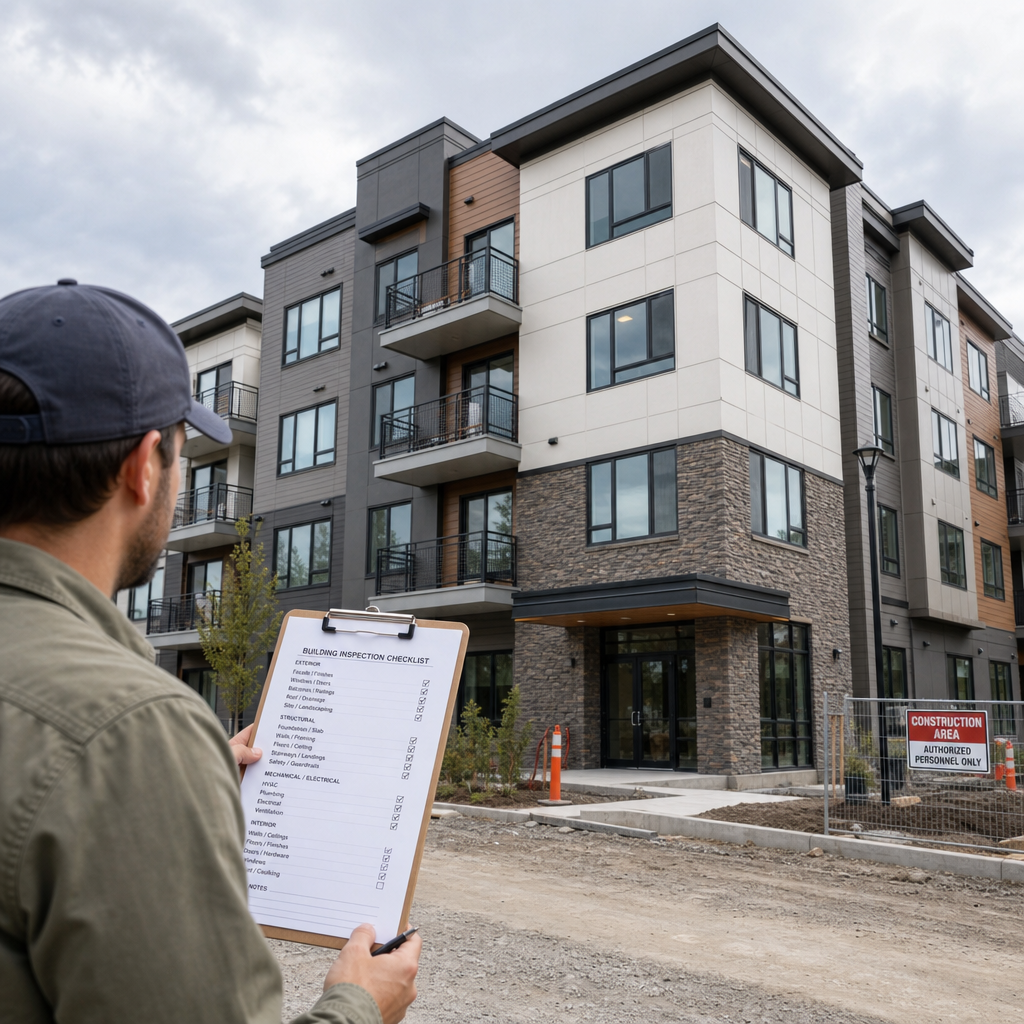
Knowing how to read an inspection report properly means working through it in a deliberate order, not page by page from the front cover. Start with the executive summary, which gives you the total defect count, the number of critical items, and a breakdown by trade. This is the section your builder will look at first, so you need to understand it before any conversation begins.
The Executive Summary
The executive summary tells you the scope of the problem at a glance. If it shows 14 defects across 6 trades with 2 classified as critical, you know immediately that handover should not proceed until those 2 critical items are resolved. The remaining 12 items form your defect rectification schedule.
Pay attention to any items flagged as requiring specialist assessment. These are defects the inspector has identified but cannot fully evaluate without an engineer or another licensed professional. They must be escalated immediately, not deferred.
The Defect Register
The defect register is the body of the report. Each entry should include the defect location (room, elevation, or lot number), a description of the issue, the responsible trade, the applicable standard or specification, a photograph, and a recommended action. If any of these elements are missing from an entry, that entry is weaker in a dispute.
When reading each entry, ask yourself three questions. Is the location specific enough for a tradesperson to find it without guidance? Is the recommended action clear, meaning repair, replace, or further investigation? And is there a photograph that a builder cannot reasonably dispute? If the answer to any of these is no, contact your inspector for clarification before you approach the builder.
Appendices and Referenced Standards
Most professional reports reference Australian Standards such as AS 3740 for waterproofing, AS 2589 for gypsum linings, and the QBCC standards for finishes. These references are not decorative. They are the legal basis for requiring the builder to rectify the defect. A defect described only as “paint looks uneven” is disputable. A defect described as “surface finish does not comply with AS 2311 acceptable tolerance for roller-applied coatings” is not.
Understanding Defect Severity Classifications
Most professional reports in Queensland use a three-tier severity classification. Understanding what each level means for your handover timeline is non-negotiable if you want to protect your legal position.
Critical defects are those that affect structural integrity, weatherproofing, essential services, or safety. Examples include missing or incorrectly installed waterproofing membranes, structural cracks, non-compliant electrical installations, and roof sheet defects that allow water ingress. You do not accept handover with unresolved critical defects.
Major defects are significant departures from plans or specifications that materially affect the livability or functionality of the home. Cracked render across an entire elevation, missing insulation, or incorrectly hung doors and windows typically fall here. These should be rectified before settlement where possible, or formally documented for resolution within a defined post-handover period.
Minor defects, sometimes called cosmetic defects, are departures from the acceptable standard of finish that do not affect structure or function. Paint holidays, minor tile lippage within tolerance, or surface scratches on fixtures are typical examples. These are recorded and scheduled for rectification during the defects liability period, but they must still be formally listed.
Pro tip: Never verbally agree to accept a critical defect “on trust” that the builder will fix it after handover. If it is not resolved and documented before settlement, you lose significant legal leverage and the builder’s obligation to rectify it becomes much harder to enforce.
The Defect Rectification Process Step by Step
The defect rectification process begins the moment your inspector delivers the report, not when your builder acknowledges it. The sequence matters, and rushing or skipping steps is where homeowners consistently lose ground.
Step 1: Deliver the Report Formally
Send the completed building defect report to your builder via email with a read receipt, and follow up with a letter if your contract specifies written notice requirements. Note the date and time of delivery. This timestamp starts the clock on any contractual response window your builder is required to meet.
Step 2: Request a Written Rectification Schedule
Ask the builder to provide a written schedule that lists each defect, the trade responsible, and the proposed completion date. Builders who respond with vague commitments like “we will sort it out” are not providing a rectification schedule. Push for specifics. If a defect is disputed, ask the builder to provide their grounds for dispute in writing.
Step 3: Verify Rectifications Before Accepting Handover
Do not accept handover based on a builder’s verbal assurance that defects have been fixed. Commission a follow-up inspection, or at minimum walk the property with the original report in hand and verify each item yourself. GoInspect’s same-day reporting means that a follow-up inspection can be completed and documented well within your settlement window, even in fast-moving property transactions in Brisbane, Logan, or the Gold Coast.
Step 4: Escalate Unresolved Items Through the Correct Channel
If critical or major defects remain unresolved and the builder is unresponsive, you have two primary channels in Queensland. The Queensland Building and Construction Commission (QBCC) handles complaints about licensed builders, and QCAT handles contract disputes. Both processes require documentation, and a professionally prepared building defect report significantly strengthens your position in either forum.
Comparing Report Formats and What They Mean for You
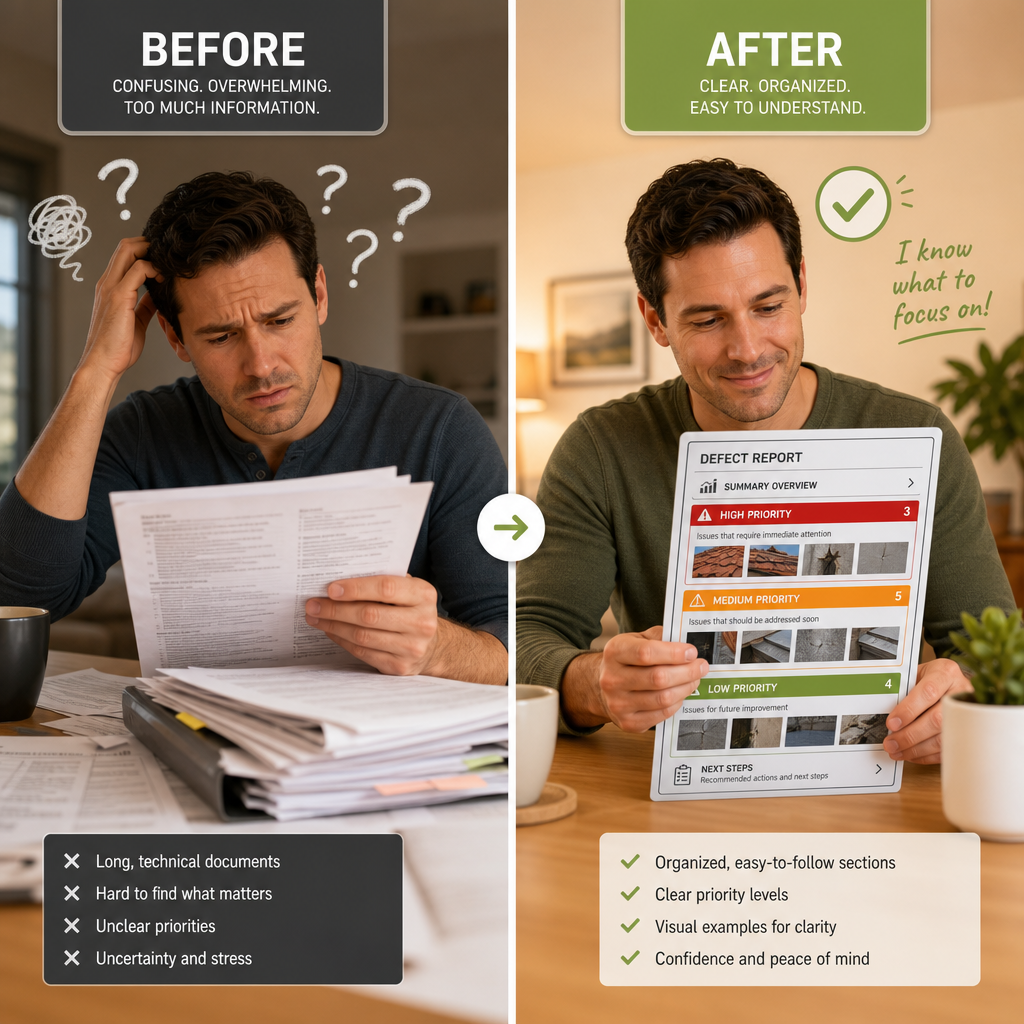
Not all inspection reports are produced the same way, and the format of your report directly affects how usable it is during the defect rectification process. The table below compares three common approaches to building defect reporting used in Southeast Queensland.
| Report Type | Key Features | Suitability for Defect Rectification |
|---|---|---|
| Generic checklist report | Pre-printed tick boxes, limited free-text fields, rarely includes photos, delivered as a PDF template | Low. Builders frequently dispute checklist items without photographic support. Difficult to assign trade responsibility. |
| Narrative report with photos | Written descriptions per defect, photographs embedded in context, references to relevant standards, trade assigned per item | High. Each defect is independently documented and supported. Suitable for QBCC complaints and QCAT proceedings. |
| Same-day photo-enhanced report (GoInspect model) | Photos linked to specific defect entries, trade responsibility assigned, delivered same day, customised for house or high-rise format | Very high. Meets handover deadlines, reduces dispute risk, provides a clear audit trail from inspection through to rectification. |
The data consistently shows that photo-enhanced reports with trade assignments reduce builder dispute rates and accelerate rectification timelines. When a builder can see a photo of the exact defect alongside the applicable Australian Standard, the grounds for disputing that defect narrow significantly.
“A defect report is only as useful as the evidence it contains. Without photographs and trade assignments, you are presenting an opinion. With them, you are presenting a case.” – Queensland Building and Construction Commission, Defect Complaints Guidance
Common Defects Found in Brisbane and Southeast Queensland New Builds
In practice, GoInspect inspectors working across Brisbane, Gold Coast, Logan, Ipswich, and Redland Bay find a consistent pattern of defect types in new residential construction. Understanding which defects appear most frequently helps you read your own report with better context and faster recognition.
Waterproofing failures in wet areas are the most frequently cited critical defect category. Queensland’s climate accelerates moisture damage when wet area membranes are incorrectly installed or missing at wall-to-floor junctions. These defects are invisible at handover but expensive to remediate once tiling is complete and the structure is loaded.
Roof and gutter defects, including incorrect fall on box gutters, missing or misaligned roof sheets, and inadequate fixings in cyclone-rated zones, are a consistent finding in both detached housing and multi-storey developments. On the Gold Coast in particular, where wind load requirements are more stringent, these defects carry structural and safety implications.
Render and plaster finish defects are the most commonly disputed category. Builders frequently argue that minor variations in surface finish fall within acceptable tolerance. A professional report that references AS 2589 and AS 3600 directly, and provides photographs taken under raking light, removes the subjective element from this argument.
Fixing and sealing defects around windows and external doors are a frequent finding in Logan and Ipswich new builds, particularly in volume housing developments where the window installation trade is under high schedule pressure. Inadequate sealant or missing flashings lead to water ingress over time and are difficult to claim under warranty if they were not documented at handover.
Pro tip: When you receive your report, search for any defect that references waterproofing, flashings, or roof fixings and treat those as your first priority items regardless of how the builder categorises them. These are the defects that generate the most expensive post-handover rectification costs.
Working With Your Builder After the Report
The relationship between a homeowner and a builder after a building defect report is delivered is not adversarial by default, but it requires clear communication and firm boundaries. Most builders in Queensland would prefer to resolve defects efficiently rather than face a QBCC complaint or QCAT proceeding. Your job is to make resolution straightforward without conceding on anything that is legitimately required.
Bring the report to any site meeting in printed form. Walk defect locations with the builder or their site supervisor. Take your own photographs during the walkthrough to document the current condition of each item. Agree on a rectification timeline and confirm it in writing before you leave the meeting.
If your builder pushes back on specific defects and claims they are within tolerance or compliant with the standard, ask them to provide their basis in writing. A builder who refuses to respond in writing to a disputed defect is not engaging in good faith, and that behaviour itself is a data point worth noting if you later need to escalate.
For investors managing multiple properties or developers overseeing high-rise completions, systematic defect tracking across lots requires a consistent reporting format. GoInspect’s customised reports for high-rise developments are structured to allow defect tracking by lot, by trade, and by severity, which makes the rectification process manageable even across large projects with dozens of units in completion simultaneously.
Frequently Asked Questions
What is the difference between a pre-handover inspection and a practical completion inspection?
A pre-handover inspection and a practical completion inspection are effectively the same process described by different terms. Both occur before you formally accept the property from the builder and sign handover documents. The inspection identifies defects that must be resolved as a condition of settlement. GoInspect uses both terms depending on the client’s contract language, but the scope of the inspection and the format of the building defect report are consistent across both.
How long do I have to raise defects after receiving my building defect report?
Your window to formally raise defects before handover is determined by your contract, not by a statutory default. Most residential building contracts in Queensland require you to provide written notice of defects within a specified number of business days after the practical completion inspection. Check your contract carefully. If the window is 5 business days, a same-day report from GoInspect gives you maximum time to review, consult, and deliver formal notice to your builder.
Can I use my building defect report as evidence in a QBCC complaint?
Yes, and this is one of the primary reasons professional report quality matters. The QBCC will assess defect complaints based on the evidence provided. A report that includes photographs, trade assignments, references to applicable Australian Standards, and specific location descriptions is substantially more useful than a checklist or a verbal account. Reports produced by fully licensed inspectors, as required for QBCC-registered practitioners, carry additional weight in formal proceedings.
What happens if the builder refuses to rectify defects listed in the report?
If a builder refuses to rectify defects formally listed in a pre-handover inspection report, you have two main options in Queensland. You can lodge a complaint with the QBCC, which has the power to direct licensed builders to rectify defective work. Alternatively, you can pursue a contract dispute through QCAT. Both pathways require documented evidence, which is exactly what a professional building defect report provides. Do not accept handover of a property with unresolved critical defects while expecting the builder to fix them voluntarily afterward.
Does the defects liability period cover everything not fixed at handover?
No, and this is a widely misunderstood point. Queensland’s standard defects liability period, typically 12 months, covers defects that emerge or become apparent after handover. It does not automatically cover defects that were visible and present at handover but not formally recorded. If a defect was observable during the pre-handover inspection and you did not record it in a signed defect notice, the builder may argue it was accepted as part of handover. This is why thorough pre-handover documentation is essential, not optional.
How much does a pre-handover inspection cost and is it worth it?
GoInspect’s pre-handover inspections start from $550 including GST for residential properties across Brisbane, Gold Coast, Logan, Ipswich, and Redland Bay. The cost of a single undetected waterproofing defect that requires rectification post-handover, including tile removal, re-waterproofing, and reinstatement, typically runs from $3,000 to $10,000 depending on the area affected. The inspection fee is not a significant cost relative to the potential rectification costs it enables you to avoid or assign to the responsible party before you settle.
What should I do if my report identifies a defect requiring specialist assessment?
Act on it immediately. When a licensed inspector recommends specialist assessment, it means the defect is outside the scope of a visual inspection to fully evaluate. Common examples include suspected structural movement, inadequate drainage engineering, or electrical compliance issues. Commission the specialist before handover if at all possible. Do not accept the property until the specialist has reported and any required rectification is completed. Including the specialist’s report alongside your building defect report strengthens your formal position significantly.
Have you received a building defect report recently? Share what part of the process you found most confusing and we will address it directly.
References
- Queensland Building and Construction Commission official guidance on defect complaints and builder obligations
- Queensland legislation portal covering the Queensland Building and Construction Commission Act and related residential building standards
- Forbes coverage of homeowner rights and construction quality disputes in residential property
- Australian Building Codes Board resources on construction standards, tolerances, and compliance requirements
- Statista data on residential construction defect rates and post-handover rectification costs in Australia