
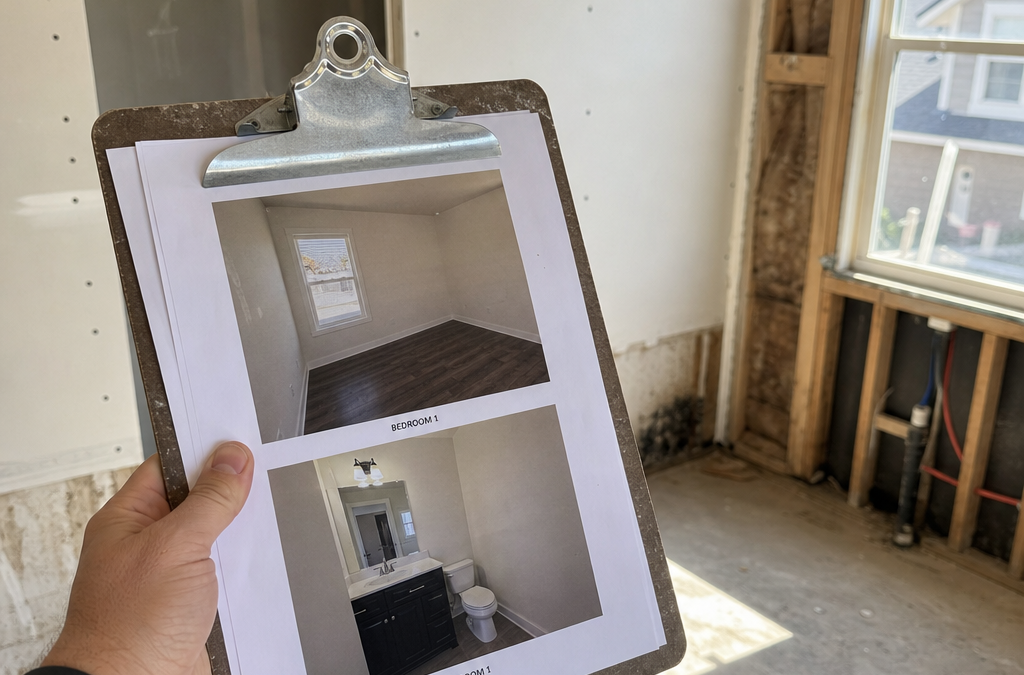
Most new home buyers assume that because a property is brand new, it will be perfect at handover. The reality is far messier. Queensland’s Office of Fair Trading receives thousands of building defect complaints each year, and the majority involve issues that were present at handover but never formally documented. A photo defect report changes that equation entirely. Instead of handing over a vague written list of concerns that a builder can dispute or dismiss, you walk in with timestamped visual evidence tied directly to specific trades and construction phases.
Table of Contents
- Quick Takeaways
- Why Written-Only Reports Fail Buyers
- What a Photo Defect Report Actually Contains
- How Photo Reports Accelerate Defect Rectification
- The Building Inspection Report Comparison
- What to Expect at a New Home Inspection in Brisbane
- Common Defects Caught Only With Photo Documentation
- Frequently Asked Questions
- References
Quick Takeaways
| Key Insight | Explanation |
|---|---|
| Photos eliminate dispute ambiguity | Timestamped images taken before handover cannot be retroactively contested by builders or their subcontractors. |
| Trade-specific assignments speed up repairs | A quality photo defect report identifies which subcontractor is responsible for each defect, cutting out weeks of back-and-forth coordination. |
| Same-day reporting is now the standard | GoInspect delivers reports the same day as the inspection, meaning buyers can raise issues before the formal handover is complete. |
| High-rise inspections require customised documentation | Apartment and townhouse developments involve multiple trades and common areas. A generic report template will miss trade boundaries that matter legally. |
| A new home inspection report in Brisbane protects your warranty rights | Queensland’s statutory home warranty scheme requires documented evidence of defects within defined timeframes. A photo report creates that record. |
| Defects found post-settlement are harder to claim | Once you settle and move in, proving a defect existed at handover becomes your burden. A pre-settlement inspection report removes that burden. |
| Cost of inspection vs. cost of missed defects | A pre-handover inspection starting from $550 including GST is a fraction of the cost of a single structural or waterproofing repair after occupancy. |
Why Written-Only Reports Fail Buyers
A written defect list without photos is, in practice, almost useless in a dispute. Builders routinely push back with claims that the issue was pre-existing, outside scope, or already rectified. Without visual evidence linked to a date and location, buyers have no leverage in those conversations.
The data consistently shows that documentation quality is the single biggest predictor of defect rectification success. According to the Queensland Building and Construction Commission (QBCC), disputes that include photographic evidence are resolved faster and with higher rates of builder compliance than those relying on text descriptions alone.
A common mistake is assuming the builder’s own completion checklist serves as adequate documentation. It does not. That checklist is completed by the builder’s representative, often without independent verification, and it protects the builder, not the buyer.
What a Photo Defect Report Actually Contains
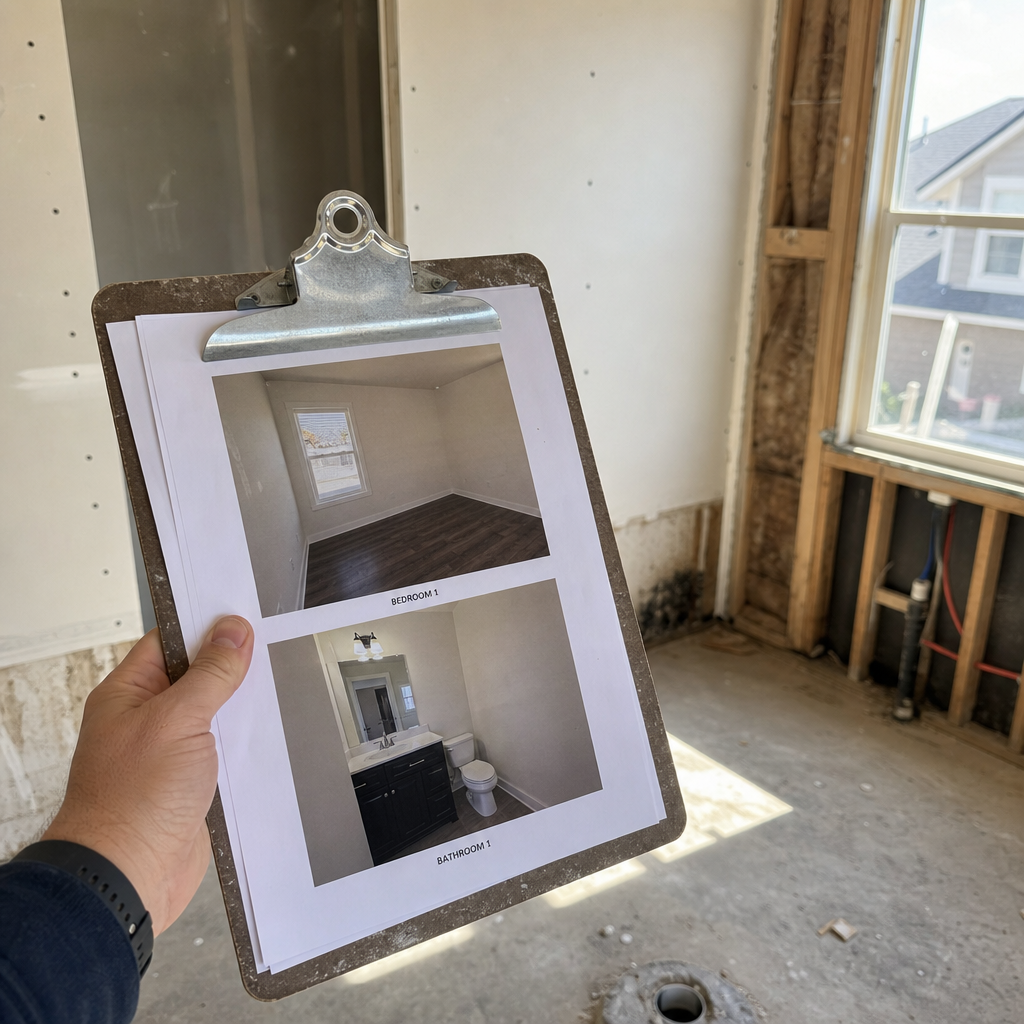
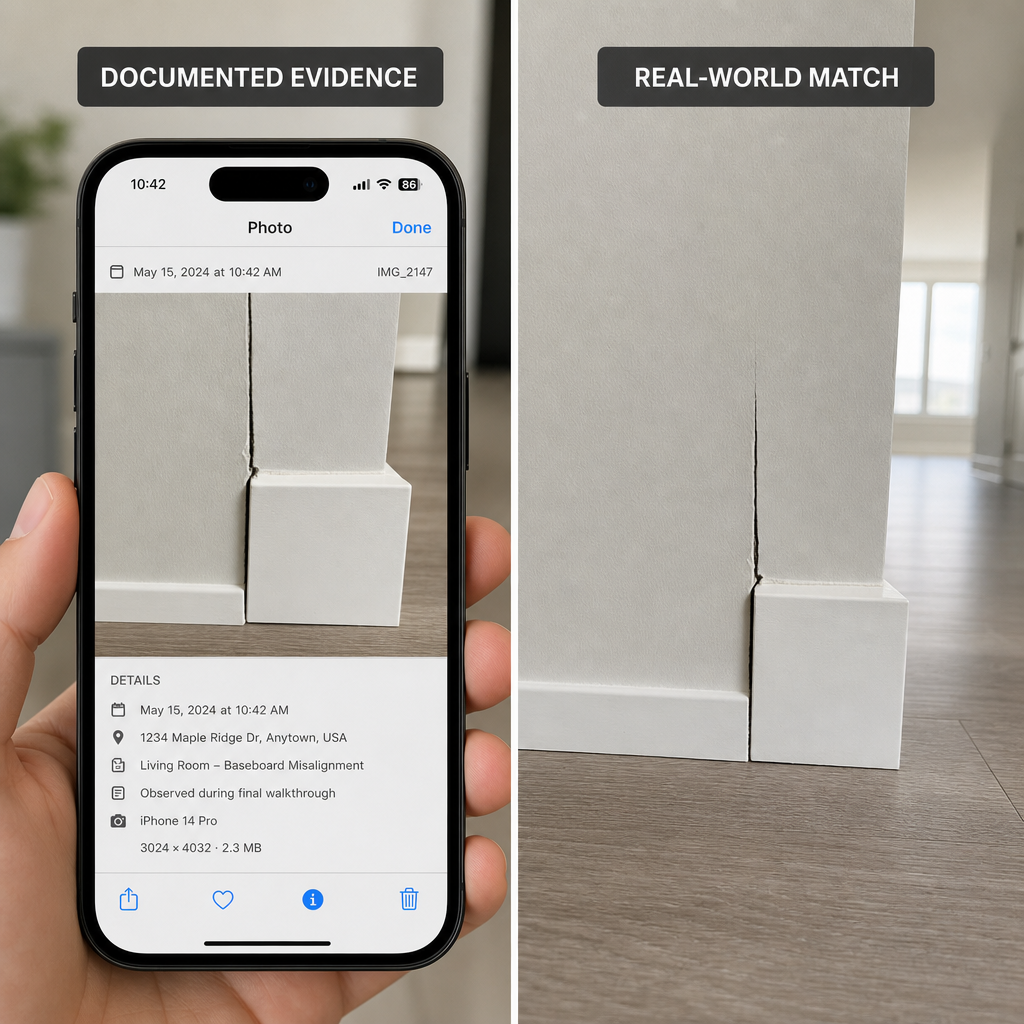
A proper photo defect report is not a gallery of random site photos. It is a structured document where every identified defect is paired with a high-resolution image, a precise location reference, a description of the non-conformance, and an assignment to the responsible trade or subcontractor.
Defect classification and trade attribution
GoInspect’s reports classify defects by severity and by the trade responsible. This means the builder receives a report that separates plumbing issues from carpentry faults from waterproofing failures. Each defect already has a responsible party identified, which removes the builder’s ability to delay by claiming they need to investigate who is at fault.
This trade-specific attribution is particularly valuable in high-rise developments where 15 or more separate subcontractors may have worked on the same level. Without clear attribution, rectification can stall for months.
We would love your feedback and any insights you would share with others. What perspective would you add?
Timestamped and location-referenced images
Every photo in a professional defect report carries metadata confirming when and where it was taken. This matters because builders sometimes claim defects were introduced by the buyer after handover. Timestamped images taken during a pre-handover inspection make that argument impossible to sustain.
Pro tip: Ask your inspector whether their report system embeds GPS metadata in images. Reports that include location data alongside timestamps provide a legally stronger record than images with timestamps alone.
Compliance references in the report body
A high-quality building inspection report does not just describe what looks wrong. It references the relevant Australian Standard, the National Construction Code, or the specific contract requirement that has been breached. This turns the report from an observation document into a formal non-conformance record.
How Photo Reports Accelerate Defect Rectification
The rectification process breaks down at two predictable points. The first is when the builder disputes whether a defect actually exists. The second is when the builder agrees a defect exists but cannot or will not coordinate the right subcontractor to fix it.
A detailed photo defect report eliminates the first problem entirely. Visual evidence removes the subjective debate about whether something is defective. A builder cannot reasonably argue that a cracked render, a mis-aligned door frame, or incomplete caulking is acceptable workmanship when a dated, high-resolution photograph is in front of them.
How trade attribution solves the coordination problem
When a report identifies that the waterproofing failure is attributable to the tiling subcontractor rather than the structural builder, the head contractor can direct their coordination call correctly the first time. In practice, this cuts rectification timelines by weeks on large residential projects.
Same-day reporting, which GoInspect provides, means buyers and their solicitors have the documented defect list in hand before the formal handover meeting. This creates a legal record that the issues were identified prior to settlement, not after.
“Defect documentation that is prepared before the keys change hands is worth ten times the value of a report produced after settlement. The moment you accept handover without a documented defect schedule, the evidentiary burden shifts entirely to you.” – Building industry legal practitioner, Queensland Law Society property law panel discussion.
Pro tip: If your builder is reluctant to delay settlement while defects are rectified, a pre-settlement inspection report with clear photo evidence gives your conveyancer grounds to negotiate a defect retention amount. This keeps the settlement on schedule while ensuring funds are held until repairs are completed.
The Building Inspection Report Comparison
Not all building inspection reports are structured the same way. The format and content of a report directly determines how useful it is when you need to pursue defect rectification. Below is a direct comparison of three common report formats used in new home inspections across Southeast Queensland.
| Report Type | Documentation Standard | Practical Value in Defect Disputes |
|---|---|---|
| Written defect list only | Text descriptions of observed issues, no images, no trade attribution | Low. Easily disputed by builders. No visual evidence to support claims. Often inadmissible in formal dispute processes. |
| Generic photo report | Photos included but not systematically linked to defect descriptions or trade responsibilities | Moderate. Photos help but without attribution and compliance references, the report is hard to action. Requires buyer to interpret and follow up independently. |
| Trade-attributed photo defect report (GoInspect standard) | Timestamped photos paired with defect descriptions, Australian Standard references, and responsible trade assignments. Same-day delivery. | High. Removes dispute ambiguity. Directs rectification to the correct subcontractor immediately. Serves as formal pre-handover defect schedule for legal and warranty purposes. |
The difference between the first and third format is not cosmetic. In a dispute before the QBCC, a trade-attributed photo defect report with compliance references functions as a formal defect schedule. A written list does not.
What to Expect at a New Home Inspection in Brisbane
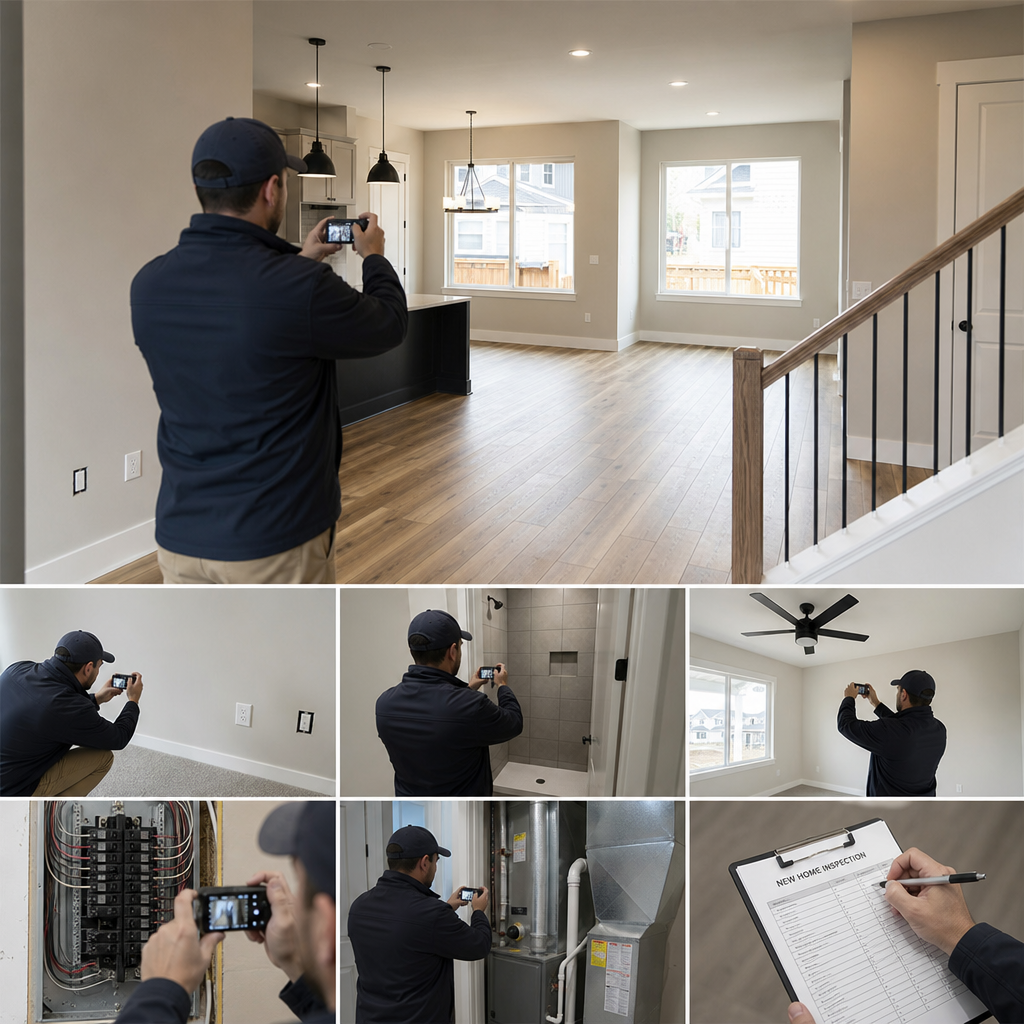
A new home inspection report in Brisbane covers more than cosmetic finishes. Fully licensed inspectors examine structural elements, waterproofing, drainage, electrical rough-ins, plumbing installations, roof framing, insulation installation, and the quality of all trade finishes against contractual and code requirements.
Pre-handover vs. pre-settlement inspections
These two terms are often used interchangeably but they refer to different stages. A pre-handover inspection occurs when the builder declares the property practically complete but before keys are handed over. A pre-settlement inspection typically applies to off-the-plan purchases where a separate settlement date follows practical completion. Both stages require independent documentation.
GoInspect conducts both types across Brisbane, Gold Coast, Logan, Ipswich, and Redland Bay. Their inspectors are fully licensed under Queensland building regulations, which matters because a defect report carries more legal weight when it is prepared by a licensed inspector.
What practical completion inspections cover
Practical completion inspections assess whether the work has been completed in accordance with the contract, the approved plans, the National Construction Code, and applicable Australian Standards. This is not a subjective assessment. Inspectors are checking against documented standards, and every departure from those standards constitutes a defect that the builder is obligated to rectify.
For investors and developers managing multiple units or lots, GoInspect’s customised reporting for high-rise developments and housing projects allows defects to be tracked by unit, level, and trade across the entire development rather than as isolated incidents.
Common Defects Caught Only With Photo Documentation
Some defects are obvious enough that any observer would notice them. Most are not. In practice, the defects that create the most expensive problems post-occupancy are those that are invisible to an untrained eye at handover but clearly visible in a systematic photographic inspection.
Waterproofing failures in wet areas
Incomplete or incorrectly installed waterproofing membranes in bathrooms, laundries, and balconies rarely look wrong to a buyer walking through a finished property. A licensed inspector photographs the membrane terminations, the seal at penetrations, and the fall of tile substrates. These photos document compliance. Without them, a waterproofing failure discovered 18 months later is nearly impossible to attribute to original construction rather than use-related wear.
Roof framing and insulation defects
Roof space issues are entirely invisible at handover unless someone goes up there with a camera. Missing roof straps, incorrect insulation installation, inadequate ventilation clearances, and truss damage from trades accessing the roof space are all documented defects that appear in a thorough photo inspection but would never appear in a ground-level walkthrough.
External cladding and render issues
Hairline cracks in render, incomplete caulking at window junctions, and incorrect flashing installations look minor in person but indicate non-compliance with water ingress requirements under the National Construction Code. A close-up, timestamped photograph paired with the relevant NCC clause is the only way to force rectification of these issues before they become water damage claims.
The common thread across all of these defect types is that text descriptions are insufficient. The builder’s response to “render crack near north-facing window” is almost always “within acceptable tolerances.” The builder’s response to a 40mm close-up photograph referencing AS 3700 is a scheduled repair appointment.
Frequently Asked Questions
What is included in a photo defect report for a new home?
A photo defect report for a new home includes timestamped, high-resolution photographs of every identified defect, a written description of each non-conformance, a reference to the applicable Australian Standard or National Construction Code clause that has been breached, and an attribution of responsibility to the relevant trade or subcontractor. GoInspect’s reports also include a summary section designed to be used directly as a formal defect schedule in settlement or warranty correspondence.
How is a photo defect report different from a standard building inspection report?
A standard building inspection report may identify defects in text form without visual evidence or trade attribution. A photo defect report pairs each defect with dated photographic evidence and assigns responsibility to the specific subcontractor whose work is non-conformant. This distinction is critical in disputes because it removes the builder’s ability to contest whether the defect existed at the time of inspection.
When should I book a new home inspection in Brisbane?
Book your inspection as soon as the builder notifies you of practical completion or issues a handover date. Ideally, the inspection should be completed at least two to three business days before the scheduled handover meeting. This gives your solicitor or conveyancer time to review the defect report and, if necessary, negotiate a retention amount or request a delay in settlement pending rectification of critical defects.
Can a photo defect report be used in a QBCC complaint?
Yes. The Queensland Building and Construction Commission accepts photographic defect documentation as evidence in formal dispute proceedings. A report prepared by a fully licensed building inspector, which references specific breaches of the National Construction Code or applicable Australian Standards, carries significantly more weight in QBCC proceedings than a buyer’s personal observations or an unlicensed inspection report.
How much does a pre-handover inspection cost in Brisbane?
GoInspect’s pre-handover and pre-settlement inspections start from $550 including GST across Brisbane, Gold Coast, Logan, Ipswich, and Redland Bay. For high-rise developments and multi-unit projects, customised pricing is available based on the number of units and the scope of the inspection. Given that a single waterproofing repair or structural defect rectification can cost several thousand dollars, the inspection fee represents a straightforward cost-benefit calculation.
Do I need a separate inspection for an off-the-plan apartment purchase?
Yes. Off-the-plan apartment purchases involve a practical completion inspection at a different stage to the settlement date. Both stages require independent documentation. For high-rise developments, GoInspect provides customised reports that cover individual lots, common areas, and trade-specific defect attribution across the entire development. A single apartment inspection completed at practical completion protects your warranty rights even if settlement occurs months later.
If you have recently gone through a new home handover in Brisbane or Southeast Queensland, share what your inspection documentation looked like and whether it helped you resolve defects with your builder.
References
- Queensland Building and Construction Commission: home warranty, defect disputes, and licensing requirements for building inspectors in Queensland
- Australian Building Codes Board: National Construction Code requirements for residential construction, waterproofing, and structural compliance
- NSW Fair Trading: building defect documentation guidance and statutory warranty obligations for new residential construction
- Forbes: real estate and property inspection industry analysis covering documentation standards and homebuyer due diligence
- Statista: residential construction industry data and building defect complaint statistics across Australian states