
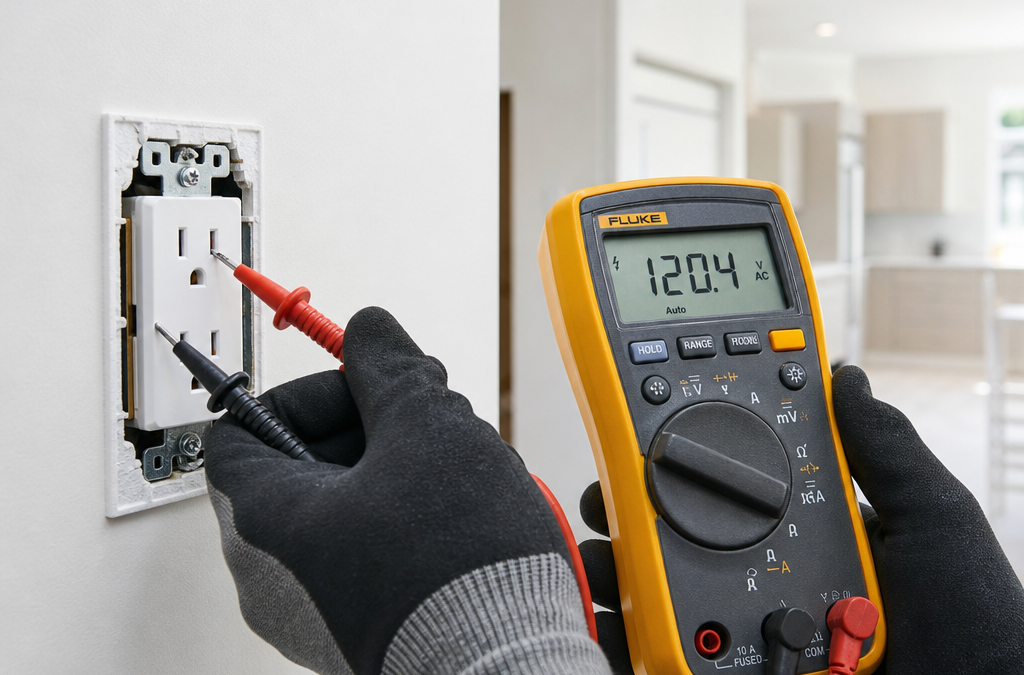
Electrical defects in new homes are far more common than most Queensland buyers expect. Industry data from the Queensland Building and Construction Commission shows that electrical and mechanical issues consistently rank among the top defect categories reported at handover. If you are purchasing a new home in Brisbane, Gold Coast, Logan, Ipswich, or Redland Bay and skipping a pre-handover inspection, you are accepting risk that no builder’s warranty will fully protect you from. This article breaks down the most frequent electrical defects in new homes in Queensland, what causes them, and what a proper construction defect inspection should catch before you take the keys.
Table of Contents
- Quick Takeaways
- Why Electrical Defects Go Undetected in New Builds
- The Most Common Electrical Defects Found at Inspection
- Who Is Responsible for Each Defect
- Comparing Inspection Approaches for Electrical Defects
- What a New Home Inspection Checklist Should Cover Electrically
- High-Rise Developments vs. Detached Houses: Different Electrical Risks
- What Happens After Electrical Defects Are Identified
- Frequently Asked Questions
- References
Quick Takeaways
| Key Insight | Explanation |
|---|---|
| Electrical defects are common at handover | Queensland QBCC data shows electrical issues are among the top defect categories reported by new home owners, making pre-handover inspection non-negotiable. |
| Most defects are trade-specific | Faulty GPOs, incorrect circuit labelling, and missing earth connections each trace back to specific licensed electricians, which is why reports must assign trade responsibility clearly. |
| Photo-enhanced reports accelerate rectification | Builders respond faster when defects are documented with photographs and precise locations rather than text descriptions alone. |
| Safety switch (RCD) failures are a legal compliance issue | Queensland law requires RCDs on all power and lighting circuits in new homes. Missing or incorrectly wired RCDs are not minor defects, they are compliance failures. |
| Switchboard labelling errors cause long-term problems | Incorrect or missing circuit labels at the switchboard create confusion during future maintenance and can delay emergency responses. |
| Pre-settlement inspections catch late-stage electrical issues | Some electrical defects only appear after fit-out, such as pendant light placements, exhaust fan wiring, and appliance circuit loads. Pre-settlement timing catches these. |
| Same-day reporting matters for handover timelines | Builders and developers work to tight handover schedules. A report delivered same-day gives them maximum time to address defects before settlement. |
Why Electrical Defects Go Undetected in New Builds
The assumption that a brand-new home is electrically sound is one of the most expensive mistakes a Queensland buyer can make. New construction moves fast, tradespeople work across multiple sites simultaneously, and quality control on individual properties is inconsistent. In practice, the final electrical inspection by the certifier checks for compliance with the approved plans, but it does not catch every installation error at the fitting level.
A common mistake buyers make is treating the certifier’s sign-off as equivalent to a thorough defect inspection. It is not. Certifiers assess structural and code compliance at a macro level. They are not walking through every room testing every GPO, checking pendant heights, confirming exhaust fan circuit connections, or verifying that switchboard labels match the actual circuits. That work falls to a dedicated construction defect inspection.
Pro tip: Schedule your pre-handover inspection at least five business days before your nominated settlement date. This gives your builder time to rectify defects and gives you time to confirm the work is done before you are legally obligated to complete.
The Most Common Electrical Defects Found at Inspection
After conducting inspections across new homes and developments in Brisbane, Gold Coast, Logan, Ipswich, and Redland Bay, certain electrical defects appear with striking regularity. These are not rare construction anomalies. They are recurring patterns that result from rushed installation schedules and insufficient site supervision.
Missing or Incorrectly Installed RCDs
Queensland’s electrical safety requirements under AS/NZS 3000 mandate residual current devices on all final sub-circuits supplying socket outlets and lighting in new residential construction. In practice, inspectors regularly find RCDs either missing from specific circuits or wired to protect the wrong circuits. This is a compliance failure with direct safety implications and must be documented as a priority defect.
Loose or Poorly Terminated GPOs and Light Switches
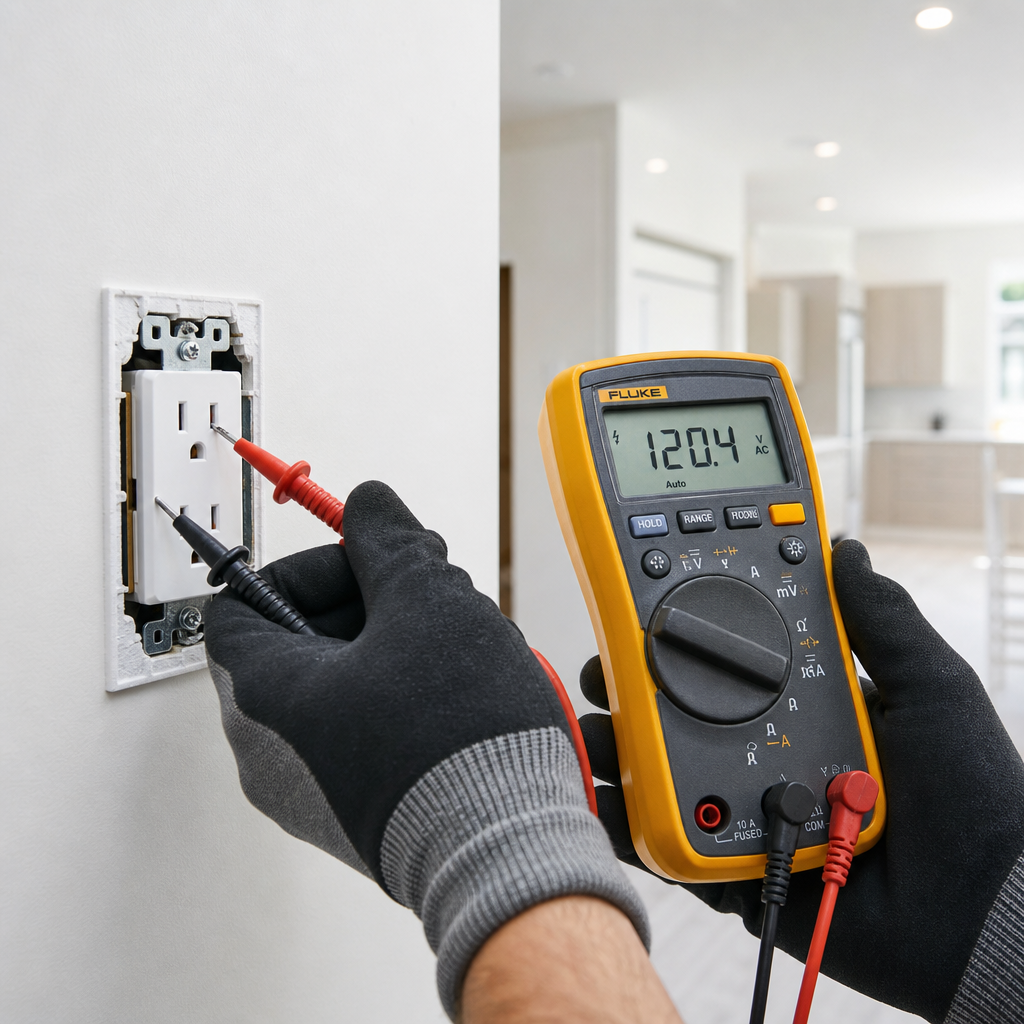
General purpose outlets and switches that are not flush-mounted, are loose in the wall, or have visible gaps around the faceplate are among the most frequently photographed defects. These are cosmetic and safety issues combined. Loose terminations inside the outlet can arc over time, creating a fire risk in a home that the buyer has just moved into.
Incorrect Switchboard Circuit Labelling
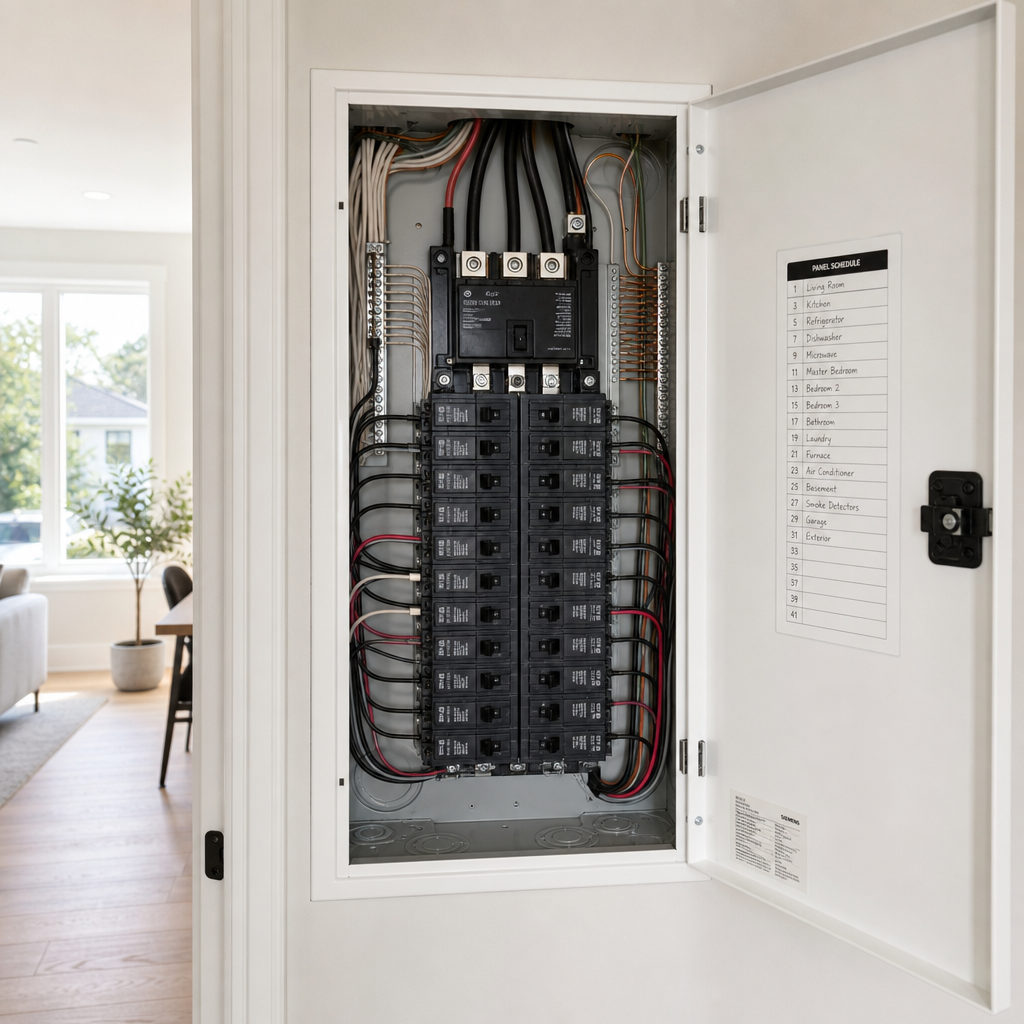
Switchboard labels that do not correspond to the actual circuits they control are consistently flagged in pre-handover reports. A label reading “Bedroom 1 lighting” that actually controls the garage circuit creates real problems during emergency isolation or future renovation work. This defect is preventable and purely the result of insufficient final checking by the electrical contractor.
Exhaust Fan Wiring and Timer Errors
Bathroom and laundry exhaust fans in new Queensland homes are frequently found wired without the required timer function or connected to the wrong switching circuit. Some fans are found not operational at all at handover. This is a combination of supply and installation fault that the electrical trade is responsible for rectifying.
Pendant and Downlight Placement Deviations
Light fittings installed in positions that do not match the approved electrical plans are common in high-volume residential projects. A pendant over a kitchen island bench is positioned by plan for a reason. When the installation deviates, the result is a lighting layout that does not function as designed and does not match what the buyer contracted for.
Unprotected Conduit Penetrations
Conduit passing through fire-rated walls or between garage and living areas must be sealed with fire-rated material at the penetration point. This is a fire compliance issue that is regularly missed during new construction and requires documentation with photographic evidence and trade assignment in the defect report.
Who Is Responsible for Each Defect
One of the key weaknesses in generic inspection reports is that they list defects without clearly identifying which trade is responsible for rectifying each item. This creates friction at the builder-subcontractor level because the builder cannot issue a direct rectification instruction without knowing which trade caused the defect. GoInspect’s photo-enhanced reports are built specifically to assign trade responsibility at the item level, which is why rectification happens faster.
For electrical defects specifically, the responsible parties break down as follows. Missing RCDs, incorrect wiring, and switchboard labelling errors are the responsibility of the licensed electrical contractor. Loose faceplate installations and alignment issues with GPOs are also electrical trade items. Conduit sealing at fire-rated penetrations may fall to either the electrical contractor or the builder’s site supervisor depending on whether the sealing was specified as an electrical scope item. This distinction matters when you are pushing for rectification within a handover window.
“The single most common cause of delayed electrical rectification is a defect report that does not tell the builder which trade to call. If the report just says ‘electrical issue in bedroom 2’, the builder has to investigate before they can act. That investigation takes time the buyer does not have at settlement.” Source: Queensland Building and Construction Commission consumer guidance on defect management.
Pro tip: When reviewing your inspection report, confirm that every electrical defect entry includes a photograph, a location descriptor, and a nominated responsible trade. If any of those three elements are missing, the report will slow down your rectification process.
Comparing Inspection Approaches for Electrical Defects
Not all pre-handover inspections handle electrical defects the same way. The methodology used directly affects how quickly defects are identified, reported, and rectified. Here is a comparison of the three common approaches used by inspection services operating in Queensland.
| Inspection Approach | Electrical Defect Coverage | Report Turnaround and Trade Assignment |
|---|---|---|
| Photo-enhanced trade-assigned reporting (GoInspect model) | Full visual and functional testing of GPOs, lighting circuits, RCDs, switchboard labelling, exhaust fans, and conduit penetrations. Each defect photographed and located precisely. | Same-day report delivery with each defect assigned to a responsible trade, enabling immediate builder action. |
| Standard checklist inspection (common industry approach) | Visual inspection against a standard checklist. GPOs and switches checked visually. Functional testing of RCDs and exhaust fans is inconsistent depending on the inspector. | Report typically delivered within 24 to 48 hours. Trade assignment often absent, requiring builder investigation before rectification can begin. |
| Builder’s own pre-handover walk-through | Conducted by the builder’s site supervisor or project manager. Conflict of interest means defects may be minimised or omitted. Electrical compliance checks are not independently verified. | Verbal or basic written record. No formal defect report structure. Offers no legal standing if disputes arise post-settlement. |
What a New Home Inspection Checklist Should Cover Electrically
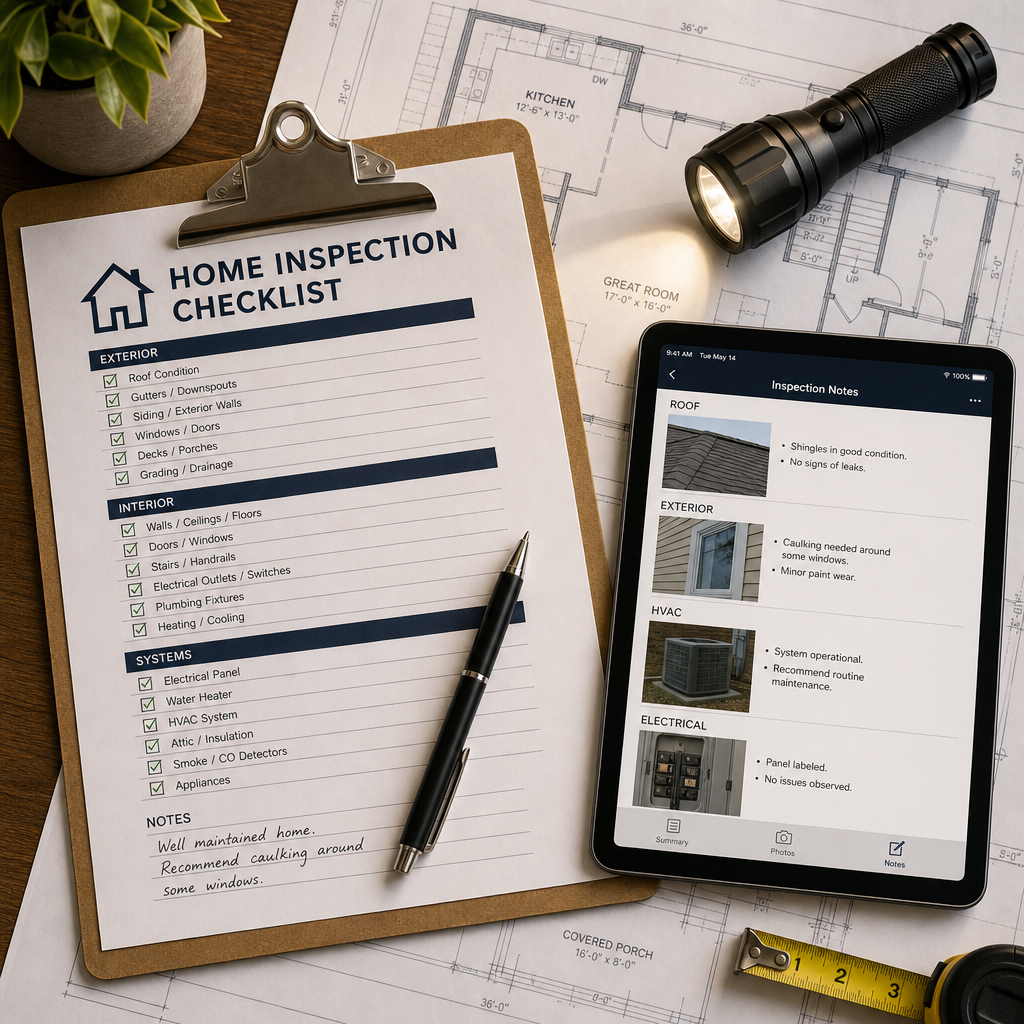
A robust new home inspection checklist for electrical items goes well beyond confirming that the lights turn on. In practice, a professionally conducted inspection covers the following areas in sequence, moving from the switchboard outward through the home.
At the switchboard, the inspector should verify that all circuits are correctly labelled and correspond to their actual function, that RCDs are installed on all required circuits, that no circuit breakers are tripped or show signs of heat damage, and that the overall installation matches the approved electrical drawings. These items take time to check properly and cannot be rushed without missing defects.
Moving through the home, each GPO should be tested with a socket tester to verify correct polarity, earth connection, and RCD protection. Light switches should be checked for correct operation, flush mounting, and matching to the lighting plan. Pendant heights should be verified against specification. Exhaust fans in bathrooms and laundries should be tested for operation and timer function where applicable.
External electrical items including alfresco lighting, garage door power circuits, air conditioning isolator switches, and any solar or battery system connections should also be inspected and documented. These items are frequently missed in checklist-only inspections because they fall outside the standard room-by-room walk-through pattern.
High-Rise Developments vs. Detached Houses: Different Electrical Risks
The electrical defect profile of a new apartment in a Brisbane high-rise development is meaningfully different from a detached house in Logan or Redland Bay. Understanding this distinction helps buyers and investors know what to prioritise during their inspection.
In high-rise developments, common electrical defects include incorrect apartment circuit isolation at the building’s main distribution board, shared corridor lighting connected to individual apartment circuits rather than common property circuits, and intercom or access control wiring faults. These defects affect not just the individual unit but can have implications for the building’s body corporate and other owners. GoInspect’s customised reports for high-rise developments are structured to capture both in-unit and common property electrical defects separately, which simplifies the rectification responsibility chain.
In detached new homes, the most frequent electrical defects relate to the individual switchboard, GPO and lighting circuits, and external connections for garages, air conditioning, and alfresco areas. The risk profile here is more straightforward but the volume of individual items to inspect is higher because there is no shared services infrastructure to concentrate the inspection effort.
What Happens After Electrical Defects Are Identified
The inspection report is the starting point, not the finish line. Once electrical defects are documented in the pre-handover or pre-settlement report, the buyer or their legal representative formally notifies the builder of the defects and requests rectification before settlement. The builder then engages the relevant trades to address each item.
The practical reality is that builders operating in high-volume markets across Brisbane, Gold Coast, and Southeast Queensland are managing multiple handovers simultaneously. A report that is clearly structured, trade-assigned, and photo-documented gets acted on faster than one that requires the builder’s team to interpret vague descriptions. Same-day report delivery, which GoInspect provides, gives the builder maximum working time before the settlement date.
If defects are not rectified by settlement, the buyer has several options depending on the nature and severity of the defects. Minor outstanding items can be managed through a retention of funds arrangement. Significant safety defects including compliance failures related to RCDs or fire-rated penetrations should not be accepted at settlement without a formal written commitment from the builder to rectify within a specified timeframe. The QBCC provides a dispute resolution pathway for buyers who cannot reach agreement with their builder on defect rectification.
Frequently Asked Questions
What are the most common electrical defects found during new home inspections in Queensland?
The most frequently identified electrical defects in new Queensland homes are missing or incorrectly wired RCDs, loose or misaligned GPOs and light switches, incorrect switchboard circuit labelling, non-functional exhaust fans, light fittings installed in positions that deviate from approved plans, and unsealed conduit penetrations through fire-rated walls. These defects appear across both detached houses and high-rise apartments, though the specific items vary by property type.
Is a builder’s pre-handover walk-through enough to identify electrical defects?
No. A builder’s internal walk-through carries a clear conflict of interest and is not a substitute for an independent inspection. Site supervisors checking their own work are unlikely to document defects with the same rigour as a licensed independent inspector. There is also no formal report produced, which means you have no documented evidence if defects arise post-settlement.
What Queensland laws govern electrical requirements in new homes?
New residential electrical installations in Queensland must comply with AS/NZS 3000 (the Wiring Rules), the Electrical Safety Act 2002 (Queensland), and associated Electrical Safety Regulations. The Queensland Building and Construction Commission also sets broader construction standards that apply to the electrical trade as part of the overall building contract. Non-compliant electrical work can be referred to the QBCC for investigation.
How does a photo-enhanced defect report help with electrical defect rectification?
A photo-enhanced report provides three things a text-only report cannot: precise visual evidence of the defect, an unambiguous location within the property, and a clear record for dispute resolution if the builder challenges the finding. For electrical defects specifically, photographs of switchboard labelling errors, loose GPO faceplates, or unprotected conduit penetrations remove any ambiguity about what was found and where. This reduces builder pushback and shortens rectification timelines.
How long does a pre-handover electrical inspection take?
A thorough pre-handover inspection of a standard detached home in Brisbane or Southeast Queensland typically takes between two and four hours depending on property size and the number of electrical items present. High-rise apartment inspections are generally shorter per unit but require additional time if common property areas are included in scope. The inspection time is separate from report preparation, and same-day report delivery means the report is in the client’s hands the same day the inspection is conducted.
Can electrical defects found at pre-handover inspection delay settlement?
Yes, and that is the point. Identifying significant electrical defects before settlement gives buyers legitimate grounds to request rectification before completing the purchase. Accepting a property with known electrical safety defects and then seeking rectification post-settlement puts the buyer in a weaker legal and practical position. Pre-handover inspection is specifically designed to identify and document defects while the buyer still has maximum negotiating leverage.
What is the difference between a pre-handover and a pre-settlement inspection?
A pre-handover inspection is conducted shortly before the builder officially hands over the property, typically while construction is substantially complete but before the handover meeting occurs. A pre-settlement inspection is conducted closer to the legal settlement date and often serves to verify that defects identified at pre-handover have actually been rectified. Both inspections are valuable, and for properties with significant defect lists, having both is the most protective approach.
Have you encountered electrical defects in a new Queensland home, or do you have questions about what to look for before your handover? Share your experience or ask below so others in the same situation can benefit from the discussion.
References
- Queensland Building and Construction Commission: official guidance on construction defects, dispute resolution, and homeowner rights in Queensland
- Energex: Queensland electrical safety and new connection standards for residential properties in Southeast Queensland
- WorkSafe Queensland: electrical safety regulations and compliance requirements for new residential construction
- Standards Australia: AS/NZS 3000 Wiring Rules and the national standards governing electrical installations in new homes
- Forbes: independent analysis of property defect risks and what homebuyers should inspect before settlement